
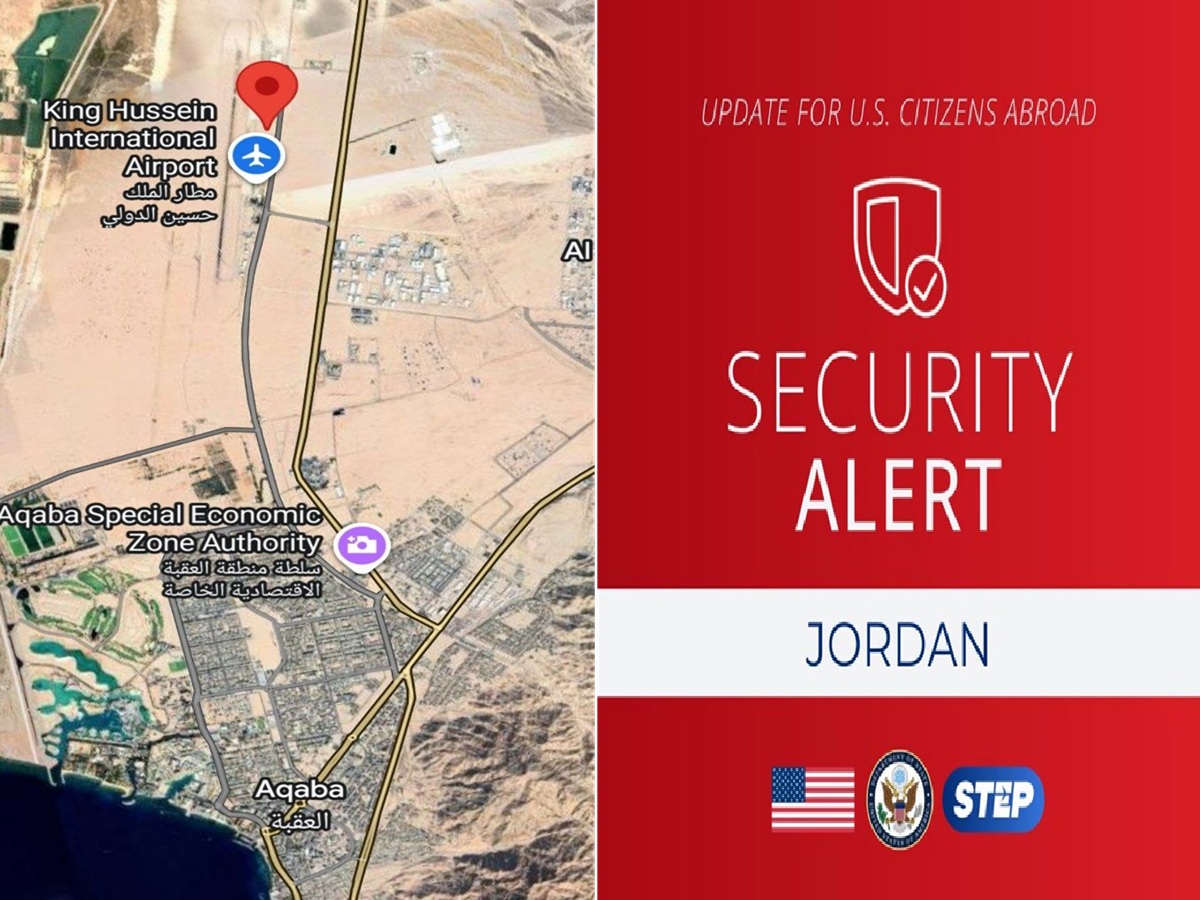
The United States issued a sudden, urgent security warning for its citizens residing in Jordan on Sunday. The alert cited an immediate danger in the critical southern port city of Aqaba. Specifically, the official notice claimed that a highly dangerous security situation was actively developing on the ground. Consequently, the public message stated that US says Aqaba airport, seaport evacuated after credible threat to protect civilian lives. The emergency notification directed all American citizens to stay completely away from both travel facilities immediately.
Security Alert: U.S. Embassy Amman – July 19. 2026
Due to a specific and credible threat, Jordanian authorities evacuated the international airport and seaport in Aqaba. We strongly advise all Americans to refrain traveling to either the airport or seaport. Continue to follow… pic.twitter.com/POmmwxYVsZ
— U.S. Embassy Amman (@USEmbassyJordan) July 19, 2026
However, the host nation quickly rejected the claim of an active operational shutdown. Jordanian government officials formally declared that no such security emergency existed anywhere in the coastal district. Furthermore, they explicitly clarified that both transport facilities remained fully functional and open to travelers. This rapid development created two starkly conflicting accounts between the longtime international allies. The diplomatic disagreement unfolds during a period of intense regional instability and cross-border military strikes.
The Core of the Diplomatic Standoff
The core issue centered around an emergency alert published by the American diplomatic mission in Amman. The notification advised American citizens that the US says Aqaba airport, seaport evacuated after credible threat earlier that morning. According to the advisory, the local international airport and the primary marine harbor were emptied of personnel. The statement did not provide any specific technical details regarding the exact nature of the danger. Additionally, the text did not identify any particular regional group as the source of the risk.
Shortly after the American warning spread, Jordan’s official leadership moved swiftly to minimize public anxiety. Government spokesperson Mohammad Al-Momani released a formal written statement through national media channels. He explicitly stated that relevant security agencies had not ordered any evacuations in Aqaba. Furthermore, he announced that local surveillance networks recorded zero potential hazards during the preceding hours. The communication minister maintained that air and sea transport continued without any interruptions.
American Security Protocols and Strict Warnings
Despite the official denials from Amman, the American embassy maintained its highly defensive security posture. Officials explicitly reminded citizens that the US says Aqaba airport, seaport evacuated after credible threat for a reason. The embassy actively urged all Americans to avoid large public gatherings and political demonstrations nationwide. Moreover, the alert instructed citizens to keep a low profile and stay away from heavy police deployments. Travelers were told to monitor local news programs closely for sudden tactical updates.
The State Department ordered the mandatory departure of non-emergency staff from Jordan on March 2, 2026.
Read More : Meghalaya Unveils 15-Foot Statues to Honor Forgotten Khasi Freedom Fighters
Additionally, the diplomatic mission pushed citizens to register via the Smart Traveler Enrollment Program (STEP). This internal registration system allows embassy teams to contact citizens rapidly during major regional crises. The alert also requested passengers with scheduled flights to check directly with their respective commercial airlines. Officials emphasized that security near known Western institutions must remain a top priority for all travelers.
Escalating Regional Confrontation Between Global Powers
This conflicting messaging happens during a highly volatile week of direct military clashes in the Middle East. The situation dramatically worsened after the US says Aqaba airport, seaport evacuated after credible threat report surfaced. Just one day prior, US Central Command confirmed a fatal strike inside Jordanian borders. An Iranian drone strike killed two American service members and left another individual missing. Consequently, Washington launched extensive retaliatory airstrikes against several Iranian assets in the area.
| Military Action | Target Location | Reported Outcome |
| Iranian Drone Strike | Base inside Jordan | 2 US troops killed, 1 missing |
| US Central Command Response | Iranian military facilities | Storage sites and air defenses hit |
| Airspace Interceptions | Jordanian Skies | Multiple Iranian missiles shot down |
Furthermore, the sovereign kingdom finds itself increasingly caught in the crossfire of this expanding international conflict. The nation’s armed forces have repeatedly intercepted foreign missiles traversing its sovereign skies. These continuous defense operations aim to protect local populations from stray ordnance and falling shrapnel. However, the ongoing exchange of fire severely tests the existing regional security agreements. The friction persists despite previous diplomatic efforts brokered by international mediators to maintain peace.
The Strategic Importance of Aqaba
Evidently, any threat to Aqaba creates deep concern because the city serves as Jordan’s only maritime trade window. Therefore, the phrase US says Aqaba airport, seaport evacuated after credible threat sent shockwaves through regional economic markets. The city handles the vast majority of the kingdom’s essential imports, including crucial energy and food supplies. As a result, even a temporary closure could trigger severe supply chain disruptions across the country. This economic vulnerability explains why local authorities reacted so quickly to deny the American embassy claims.
Concurrently, international maritime observers are keeping a very close watch on the vital shipping lanes of the Red Sea. They note that naval tensions nearby have reached their highest levels in several decades. Consequently, commercial shipping lines are already charging significantly higher insurance premiums for vessels entering the gulf. Both American and Jordanian authorities continue to monitor the border perimeters via advanced radar systems. Ultimately, the true nature of the secret intelligence that triggered the American warning remains heavily classified.