
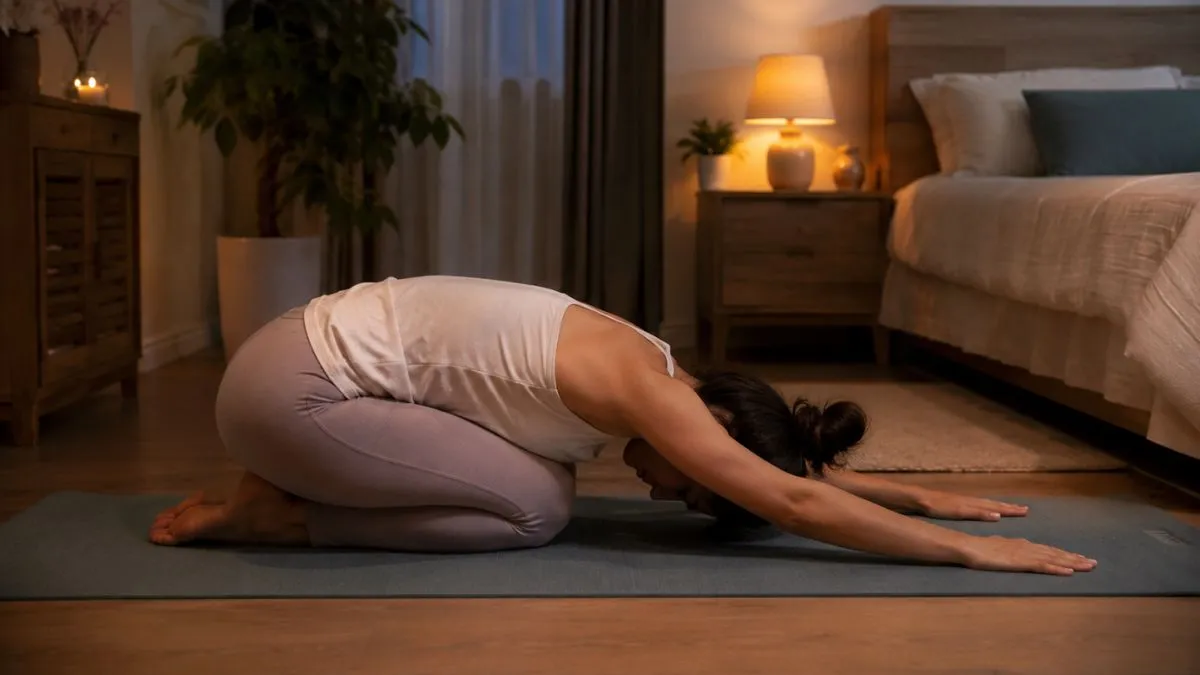
Yoga for Better Sleep is gaining attention as more people look for natural ways to improve their nightly rest. According to Dr Chief Wellness Officer at Kshemavana Naturopathy and Yoga Center, certain yoga asanas can help calm the nervous system, reduce muscle tension, and prepare the body for deep, restorative sleep.
Sleep problems have become increasingly common due to stress, long working hours, and excessive screen time. Experts believe that incorporating Yoga for Better Sleep into a bedtime routine may help create the right conditions for relaxation and improved sleep quality.
Start With Legs-Up-the-Wall Pose
One of the easiest and most effective poses for Yoga for Better Sleep is Viparita Karani, commonly known as the Legs-Up-the-Wall Pose.
The posture requires minimal effort. Practitioners simply lie on their backs and rest their legs against a wall. Despite its simplicity, the pose is known for improving circulation, reducing fatigue, and helping the body unwind after a busy day.
Also read : Sabja Seeds Benefits Make Them a Must-Have Ingredient for Summer Drinks
Dr notes that spending a few minutes in this position can help release physical stress and encourage relaxation before bedtime.
Child’s Pose Helps the Body Slow Down
Balasana, or Child’s Pose, is another popular posture that supports relaxation. The gentle forward fold allows the body to relax while encouraging slow and steady breathing.
As the forehead rests on the floor, tension in the shoulders, back, and hips gradually eases. Experts say this posture can help signal to the body that it is time to rest, making it an important part of Yoga for Better Sleep routines.
Reclining Bound Angle Pose Reduces Stress
Stress and anxiety are among the leading causes of poor sleep. Supta Baddha Konasana, also known as the Reclining Bound Angle Pose, is often recommended to address both concerns.
The pose opens the chest and promotes deeper breathing, helping the mind and body enter a more relaxed state. According to Dr , regular practice may reduce anxiety levels and support healthier sleep patterns.
Forward Bends Can Quiet the Mind
Paschimottanasana, a seated forward bend, is widely recognized for its calming effects. Practitioners gently bend forward while focusing on controlled breathing.
Also read : Sabja Seeds Benefits Make Them a Must-Have Ingredient for Summer Drinks
Yoga instructors often describe forward bends as introspective poses because they encourage stillness and help reduce mental chatter. For many people, this makes the posture a valuable addition to Yoga for Better Sleep practices before bedtime.
Shavasana Remains the Ultimate Relaxation Pose
Among all relaxation techniques, Shavasana remains one of the simplest yet most effective. The pose involves lying flat on the back while consciously relaxing every part of the body.
Though it may appear effortless, experts say Shavasana helps release both physical tension and mental fatigue. Dr considers it one of the most beneficial postures for preparing the body for sleep.
A Few Minutes Can Make a Difference
While no single pose can guarantee perfect sleep, health experts believe that practicing Yoga for Better Sleep regularly can help improve overall relaxation and sleep quality over time.
The benefits may extend beyond stretching and flexibility. Taking a few quiet minutes each evening to focus on breathing and gentle movement can help the mind disconnect from daily stress and create a smoother transition into restful sleep.
As modern lifestyles become increasingly demanding, simple yoga practices may offer a natural and accessible way to support better sleep and overall well-being.