
Every monsoon, millions of devotees gather across India to fill temple courtyards at dawn. They carry sacred water, line up for hours, and gently pour streams of Gangajal over the Shivling. This sacred period, known as Sawan or Shravan, is held to be the dearest month to Lord Shiva. Devotees observe strict fasts on Sawan Somwar (Mondays) and chant holy mantras to seek divine grace.
However, this widespread devotion is not a simple seasonal ritual. It stems from an ancient story that goes back to the cosmic creation itself. To understand why Sawan Shivratri jalabhishek offerings are performed with such devotion, one must revisit the sacred scriptures. The story of the cosmic ocean reveals why simple water and fresh bilva leaves remain the ultimate acts of worship.
| Aspect | Detail |
| Holy Season | Sawan (Shravan) Monsoon Month |
| Primary Rituals | Jalabhishek, Bilva Patra offerings, Fasting |
| Central Deity | Lord Shiva (Mahadev / Neelkanth) |
| Cosmic Event | Samudra Manthan (Churning of the Ocean) |
| Key Offering | Water (Gangajal), Milk, Belpatra |
Samudra Manthan: How the Lethal Poison Rose
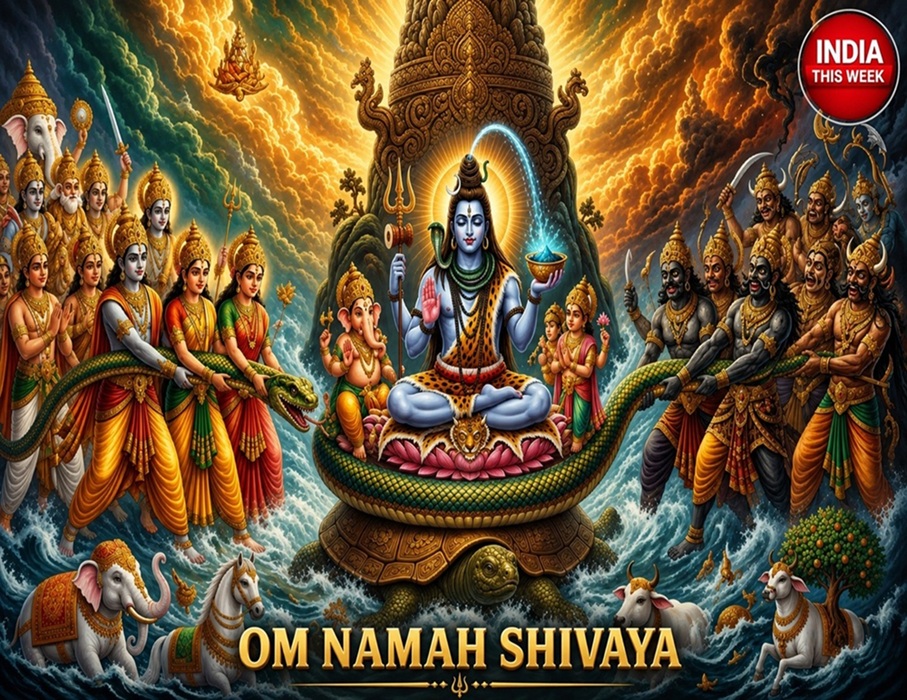
The Puranic texts tell the story of the Samudra Manthan, the great churning of the cosmic ocean. The Devas (gods) and Asuras (demons) joined forces to extract Amrit, the elixir of immortality. They used Mount Mandara as the churning rod and the great serpent Vasuki as the rope.
As both sides pulled the serpent back and forth, the ocean churned with immense power. Divine treasures, celestial beings, and holy objects emerged one by one. However, the churning also released a dark, burning substance known as halahal—a poison so lethal that its fiery heat threatened to consume all three worlds. Neither the gods nor the demons could withstand its destructive power. Desperate for relief, the creation turned toward Lord Shiva for protection.
| Stage of Churning | Event Significance |
| Primary Goal | Churning the cosmic ocean for Amrit (Immortality) |
| Emergence of Halahal | Deadly poison threatening to destroy creation |
| Cosmic Crisis | Neither Devas nor Asuras could handle the poison’s heat |
| Shiva’s Intervention | Lord Shiva steps forward to drink the lethal poison |
Shiva Becomes Neelkanth: The Great Sacrifice
Lord Shiva heard the cries of creation and took the ultimate sacrifice upon himself. He gathered the lethal halahal poison in his palm and drank it. However, to protect the cosmos inside his stomach, Mahadev held the burning liquid in his throat, neither swallowing it nor letting it fall.
The intense heat of the poison turned his throat a deep, dark blue. From that momentous day, Lord Shiva earned the name Neelkanth—the blue-throated protector.
Seeing their lord suffer from the unbearable, scorching heat of the poison, the gods rushed to comfort him. They poured cold holy water from the divine Ganga over his head to lower his body temperature. They also placed cooling herbs and bilva leaves on his head to soothe his burning throat. This divine act of relief laid the foundation for modern devotional practices observed every Sawan.
| Divine Element | Symbolic Role in Cooling Shiva |
| Ganga Water | Direct cooling agent poured over Mahadev’s head |
| Bilva Leaves | Natural herbal soothing agent placed on his throat |
| Neelkanth Form | Symbol of holding poison for world protection |
Why Sawan Shivratri Jalabhishek Offerings Use Water and Bilva Leaves
The legend directly shapes every ritual performed during the monsoon season. Devotees perform Sawan Shivratri jalabhishek offerings as a symbolic re-enactment of the gods cooling Mahadev’s throat.
- The Sacred Water (Jalabhishek): Pouring Gangajal, milk, or honey over the Shivling represents gratitude for Shiva’s cosmic sacrifice. The continuous stream cools the symbolic heat of the halahal poison.
- The Bilva Leaves (Belpatra): According to Ayurveda and Vedic traditions, the three-lobed bilva leaf carries natural cooling properties. Sacred texts view the three leaflets as representations of Shiva’s three eyes, or the three cosmic qualities (gunas).
Together, pure water and fresh belpatra form the simplest yet most potent worship. Lord Shiva is known as Ashutosh—the one who is easily pleased. He does not demand lavish gold or complex wealth. A sincere heart, a cup of water, and a single bilva leaf are enough to earn his eternal blessings.
Scriptural Proof: Why Shravan is Singled Out for Shiva
The Vedic Puranas praise Shravan as a month of unmatched spiritual power. During these weeks, spiritual energy is believed to be heightened, making even small acts of devotion immensely rewarding. The monsoon climate itself supports this spiritual shift. Rain refreshes the earth, streams overflow with fresh water, and green foliage blossoms everywhere.
The month takes its name from the Shravana nakshatra (star constellation). Vedic scholars state that fasting, self-restraint, and mantra chanting yield maximum benefits during this period. Devotees observe the Sawan Somwar fasts, perform Rudrabhishek rituals, and chant the sacred Mahamrityunjaya mantra to purify their minds and bodies.
“Offered with pure devotion, even a drop of water and a single belpatra soothe Mahadev’s heart,” state the ancient scriptures. “In Shravan, simple faith outweighs grand rituals.”
Ultimately, Sawan is not just about physical rituals. It serves as an annual reminder of sacrifice, protection, and spiritual surrender. By offering simple water and belpatra, devotees reconnect with the supreme lord who drank the world’s poison to save creation.