
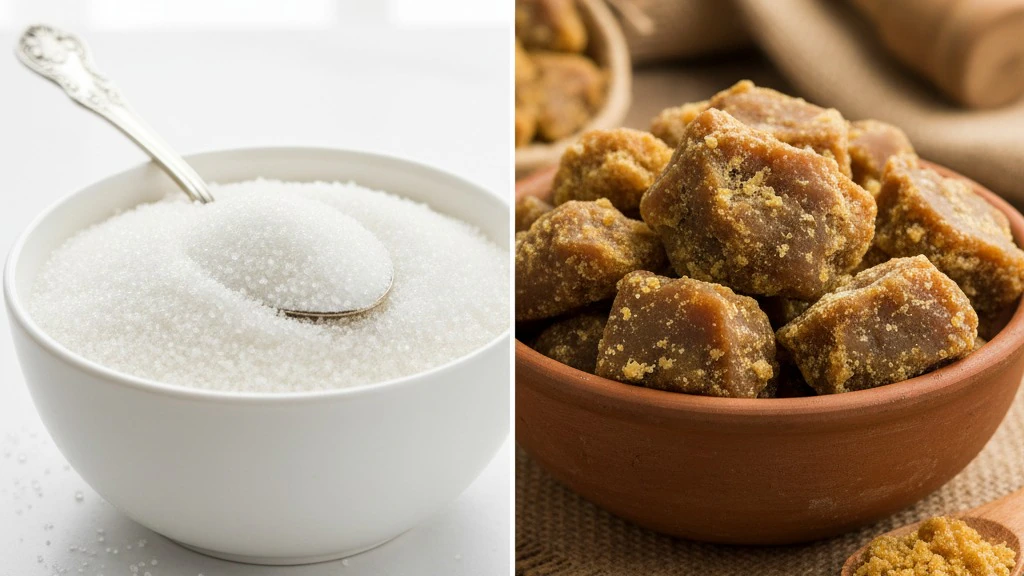
New Delhi: For years, jaggery has been promoted as a healthier substitute for white sugar, especially among people looking for natural sweeteners. Many believe that jaggery for diabetes is a safer option because it is less processed and contains some essential minerals. However, health experts say the reality is more complex.
Understanding the Difference Between Sugar and Jaggery
Both sugar and jaggery are derived from sugarcane, but they undergo different processing methods. White sugar is heavily refined and crystallized, while jaggery is produced through a simpler process that allows it to retain molasses.
Because of this, jaggery contains small amounts of nutrients such as iron, magnesium, calcium, potassium, zinc, and phosphorus. In contrast, most of these minerals are removed during the refining of white sugar, making it largely a source of empty calories.
Does Jaggery Raise Blood Sugar Levels?
One of the biggest misconceptions surrounding jaggery for diabetes is that it does not significantly affect blood sugar levels. Experts warn that this belief can be misleading.
Also read : Eye Twitching Not Always Serious, Say Experts; Know the Real Reasons
Is Jaggery for Diabetes a Better Choice?
Many people assume that sugar causes an immediate spike in blood glucose while jaggery does not. In reality, jaggery can also trigger a rise in blood sugar, although the extent may vary depending on portion size, individual metabolism, and what it is consumed with.
When considering jaggery for diabetes, experts emphasize that nutritional value and blood sugar response are two separate issues. While jaggery may offer small amounts of beneficial minerals, these nutrients do not offset its high sugar content.
What Experts Recommend
Health professionals advise people with diabetes to treat jaggery and sugar with similar caution. Moderation and portion control remain essential. Replacing sugar with jaggery does not automatically make a diet diabetes-friendly.
The key takeaway is that jaggery for diabetes should not be viewed as a free-pass sweetener. Individuals managing diabetes should monitor their intake carefully and consult healthcare professionals before making significant dietary changes.
While jaggery may be less processed and contain more nutrients than white sugar, it is still a form of sugar that can raise blood glucose levels. The idea that jaggery for diabetes is completely safe is a myth. Both jaggery and sugar should be consumed mindfully, especially by those managing diabetes and blood sugar concerns.