
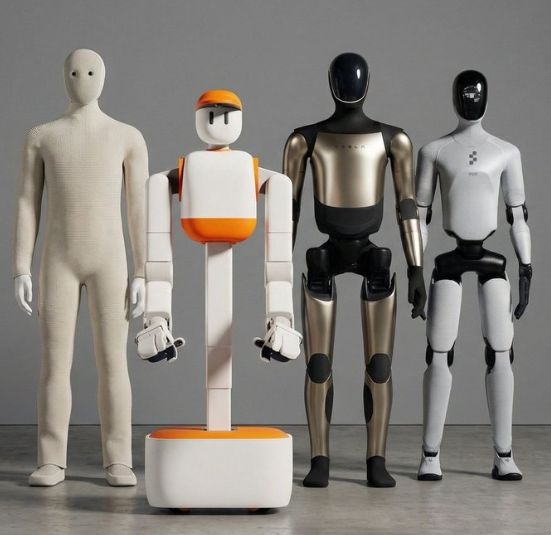
NEW DELHI — The intersection of advanced automation and local demographic realities has triggered an intense national debate this year. The expanding India employment crisis AI impact dominates policy discussions following critical warnings from top economic advisors and industry veterans. With over sixty-five percent of the national population residing under the age of thirty-five, the stakes remain incredibly high. Consequently, policymakers are forced to question whether rapid artificial intelligence deployment represents a progressive leap or a dangerous threat.
The ongoing transformation across local software hubs and financial offices has accelerated corporate restructuring at an unprecedented pace. Recent employment metrics indicate a sharp drop in traditional entry-level recruitment cycles, sparking immense anxiety among young engineering graduates. Moreover, the recently concluded India AI Impact Summit 2026 at Bharat Mandapam highlighted deep structural shifts in global labor demands. While technology firms celebrate massive productivity gains, millions of educated citizens now face a highly uncertain professional future.
The Automation Influx: Disruption vs. Productivity Enhancements
The primary driver behind the India employment crisis AI impact involves the rapid adoption of generative systems. According to recent corporate talent reports, nearly seventy-three percent of domestic white-collar professionals now use automated digital allies regularly. This widespread integration has completely transformed routine programming, data verification, and consumer support workflows. However, these efficiency enhancements come at a heavy cost to traditional corporate job creation models.
Read More : Two Chinese Nationals Sentenced for Illegally Entering India Via Nepal Border
The Economic Survey 2025–26 officially flagged artificial intelligence as the single largest structural disruption facing the modern workforce. The comprehensive parliamentary report specifically warned about a potential technology valuation bubble that could trigger broader macroeconomic instability. Additionally, former tech executives openly acknowledge that profit-driven service providers will likely shrink their massive headcount requirements permanently. This contraction directly threatens the stability of the urban middle class, which relies heavily on backend technical operations.
Navigating the Skills Divide: Is India Prepared for Agentic Tech?
The sudden emergence of multi-agent cognitive systems has significantly amplified the India employment crisis AI impact. These autonomous networks easily execute complex multi-step workflows, completely replacing entire teams of junior administrative executives. Therefore, the traditional academic infrastructure faces immense criticism for producing lakhs of degree holders who lack modern analytical competencies. This widening institutional mismatch leaves fresh university graduates practically unemployable from the moment they step off campus.
[Rigid Legacy Education System]
│
▼
[Mass Production of Rote Learners]
│
▼
[AI Systems Automate Cognitive Tasks]
│
▼
[Severe White-Collar Unemployment Spike]
To counter this disruption, central administrators are aggressively pushing for a bottom-up, application-led national technology strategy. National upskilling initiatives like FutureSkills Prime and Digital India are trying to pivot focus toward specialized algorithmic governance. Furthermore, tech leaders advise young engineers to treat automation as an essential co-pilot rather than an adversarial force. The national goal must shift away from mimicking Western software models toward building hyper-local tools that solve physical problems.
Building a Human-Centric Cushion Against Machine Replacement
The absolute scale of the India employment crisis AI impact requires an immediate reassessment of vocational respectability. Fortunately, the official economic review emphasizes that several major employment categories remain completely immune to algorithmic replication. Roles rooted in deep empathy, emotional intelligence, and complex social interactions cannot be effectively reproduced by software. These safe havens include early childhood education, specialized nursing, psychological counseling, and advanced patient-centric medical diagnostics.
Additionally, highly unstructured physical trades like artisanal craftsmanship, adaptive plumbing, and electrical engineering operate in unpredictable environments. Machines completely falter when facing dynamic physical landscapes that require spontaneous human judgment and physical dexterity. Consequently, state planning committees are actively working to make these essential vocational career choices highly attractive to GenZ. By formalizing labor codes and raising wage protections, the government hopes to absorb displaced white-collar workers into resilient sectors.
As the financial year progresses, the true test of this technological transition will rest entirely on execution. The undeniable reality of the India employment crisis AI impact proves that unguided automation can worsen wealth inequality. Ultimately, artificial intelligence will only be the right choice for a high-population country if it expands human capabilities. Without strict corporate accountability and massive structural reskilling, the promised digital dividend could easily turn into a severe social crisis.