
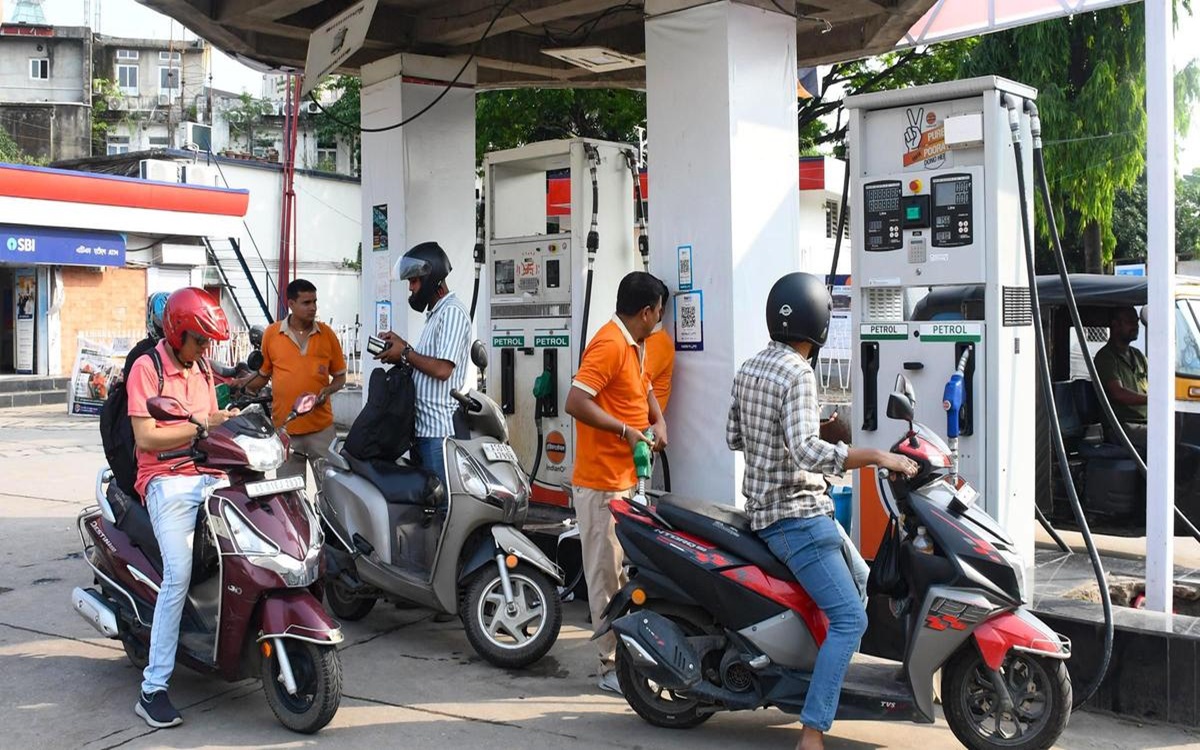
NEW DELHI — Millions of Indian households faced a fresh financial burden on Monday, May 25, 2026, as state-owned oil marketing companies announced another steep revision. This latest fuel price shock saw petrol prices surge by Rs 2.61 per litre, while diesel rates climbed by Rs 2.71 per litre. Crucially, this marks the fourth consecutive upward revision in less than two weeks, bringing the cumulative fuel hike to nearly Rs 7.5 per litre since May 15. Consequently, retail petrol in the national capital of New Delhi has officially crossed the symbolic threshold, jumping from Rs 99.51 to Rs 102.12 per litre.
The rapid sequence of price hikes follows a prolonged period of relative price freeze by domestic retailers. However, the escalating West Asia conflict and blockades along the critical Strait of Hormuz shipping lanes have pushed global crude markets into severe volatility. India imports approximately 85% of its crude requirements, making the domestic matrix highly vulnerable to landing costs. Oil marketing companies like Indian Oil Corporation are facing massive under-recoveries, prompting them to pass the import cost burden down to end consumers.
The Burden on Daily Commuters and Marginalised Earners
The sudden fuel price shock has elicited sharp reactions from middle-class families and fixed-income workers nationwide. Daily commuters driving two-wheelers report that their monthly transport allowances are no longer sufficient to sustain basic operations. For individuals earning entry-level salaries, a persistent rise in transport expenses directly takes away from essential savings. Furthermore, parallel increases in Compressed Natural Gas (CNG) rates have effectively eliminated the economic buffer that budget-conscious motorists previously relied upon.
Also Read : PM Modi–Marco Rubio Talks Highlight India US Relations Meeting Agenda
Commercial transport operators are feeling the financial squeeze most acutely. Auto-rickshaw drivers and taxi operators note that their base fares remain completely unchanged despite skyrocketing fuel operational costs. This earnings gap forces drivers to work extended hours under harsh summer conditions just to maintain basic household earnings. Many transport unions are already demanding immediate government intervention to subsidize daily operational inputs or authorize structured public fare hikes.
Macroeconomic Vulnerabilities and Core Inflationary Hazards
From an economic perspective, the secondary effects of this ongoing fuel price shock are projected to ripple across essential supply chains. Because diesel serves as the primary fuel source for national freight logistics and agricultural machinery, shipping costs will naturally rise. Industrial experts warn that higher freight rates will immediately influence wholesale prices for everyday essential goods. Items such as fresh milk, vegetables, and packaged bread are expected to turn more expensive by next month.
Independent market analysts observe that the cascading effect could heavily complicate monetary policy. While immediate consumer price index (CPI) numbers might show a minimal direct variance initially, the systemic spillover remains highly dangerous. If landing costs for crude remain near current elevated baselines, production expenses for manufacturing units will steadily elevate. Consequently, the central banking authorities may face additional pressure to maintain a restrictive stance on interest rates to curb retail inflation.
Conclusion: Navigating Global Volatility and Local Affordability
Ultimately, managing the current global energy crisis requires a delicate balance between fiscal prudence and public relief. The severe fuel price shock highlights India’s deep structural exposure to geopolitical shifts and international shipping chokepoints. As public frustration grows, calls for reducing central excise duties and state value-added taxes are gaining momentum. Whether the government introduces temporary tax cushions or absorbs further market shocks will determine domestic economic stability heading into the next fiscal quarter.