
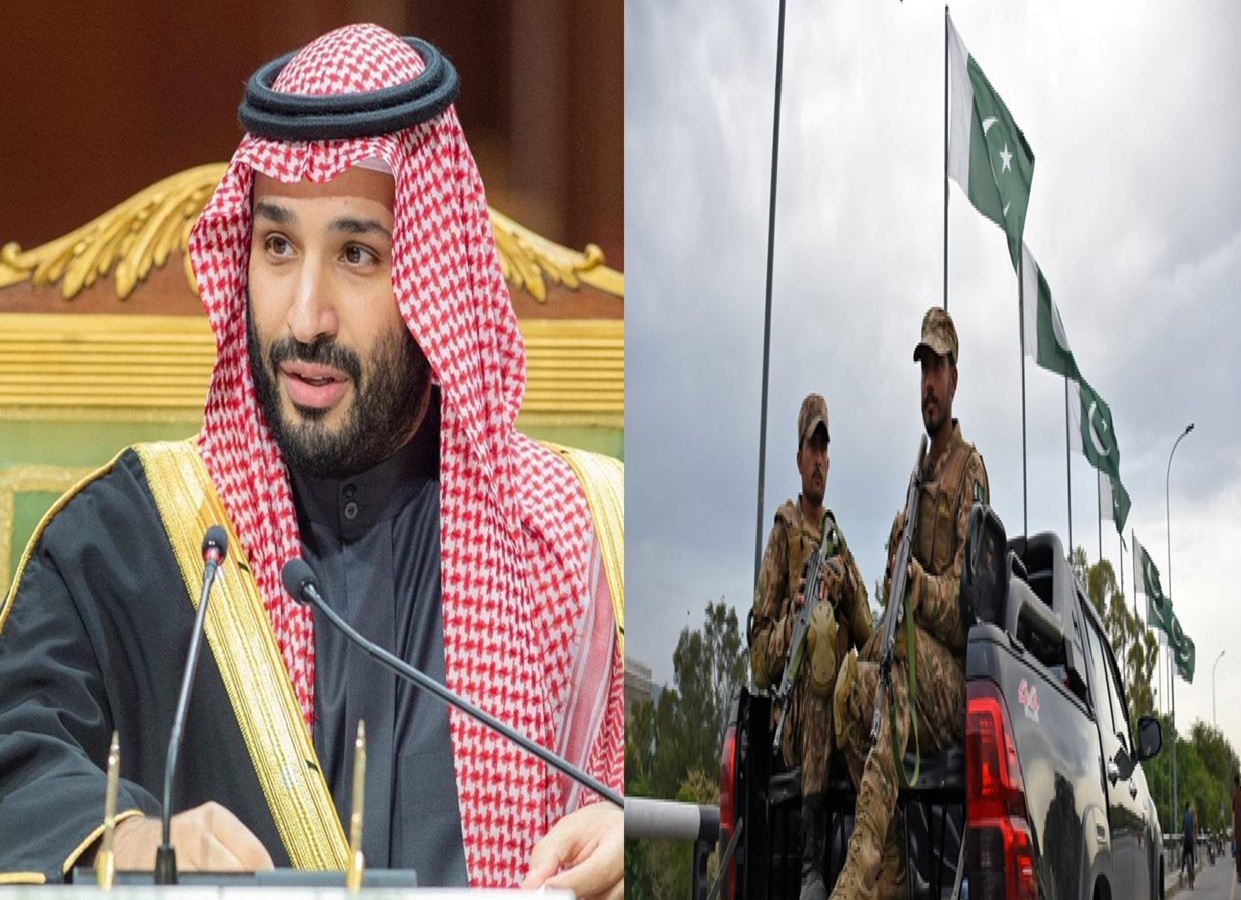
Pakistan has deployed a substantial, combat-capable military force to Saudi Arabia under a confidential mutual defense pact. This strategic decision comes at a delicate time. Islamabad currently serves as the principal mediator in the ongoing US-Iran war.
According to senior security and government sources, the deployment includes an estimated 8,000 troops. Additionally, Islamabad dispatched a full squadron of fighter jets and an advanced air defense system to the kingdom.
A Major Deployment Under the Strategic Pact
The massive movement of military assets occurred quietly over the last few weeks. This fulfill obligations under the Strategic Mutual Defence Agreement. The two nations signed this historic security alliance last year.
Also Read : Trump Reviewing Fresh Iran Proposal: Military Strikes Could Resume if They Misbehave
Insiders confirm that Pakistan sent approximately 16 JF-17 fighter aircraft to Saudi soil in early April. These jets were developed jointly with China. Furthermore, the deployment features two full squadrons of military drones. A Chinese-made HQ-9 surface-to-air missile system protects these aerial assets.
Pakistani military personnel operate all the deployed equipment. However, the Saudi government completely finances the multi-million-dollar operation.
The defense agreement requires both nations to defend each other during foreign aggression. Previously, Pakistani officials implied that this agreement places Saudi Arabia under Pakistan’s nuclear umbrella.
Balancing Combat Readiness with Peace Diplomacy
The scale of this operation shows that Pakistan has sent far more than a symbolic mission. Security officials state that the newly arrived personnel will primarily hold advisory and training roles. However, the force remains fully combat-capable. They will actively support the Saudi military if the kingdom faces further external strikes.
This deployment complicates Pakistan’s current diplomatic position in the region. The nation remains the sole acknowledged backchannel between Washington and Tehran.
Islamabad recently helped broker a temporary ceasefire that has held for six weeks. Additionally, the city hosted direct peace talks attended by high-ranking American and Iranian delegations.
Guarding the Kingdom Against Rising Escalation
The dynamic between Saudi Arabia and Iran remains incredibly tense. Earlier regional strikes targeted vital Saudi energy infrastructure, causing a tragic loss of life. These events initially triggered the rapid deployment of Pakistani fighter jets.
Reports indicate that Saudi Arabia later launched unpublicized retaliatory strikes inside Iran. Consequently, the secret terms of the defense pact allow for massive troop expansions. The agreement provides for the possibility of up to 80,000 Pakistani troops deploying to protect Saudi borders.
Historically, Pakistan has provided consistent military training and support to Saudi Arabia. In return, Riyadh regularly delivers critical financial assistance to Islamabad during economic crises.
This latest development shows how regional powers are reshaping security dynamics independently. Pakistan continues to navigate this delicate balance carefully. The country keeps continuous contact with both Iran and the United States to preserve the fragile peace.