
Haryana Cabinet approves Municipal Bill 2025, unifying urban governance across 87 municipalities and modernizing administration and finance.
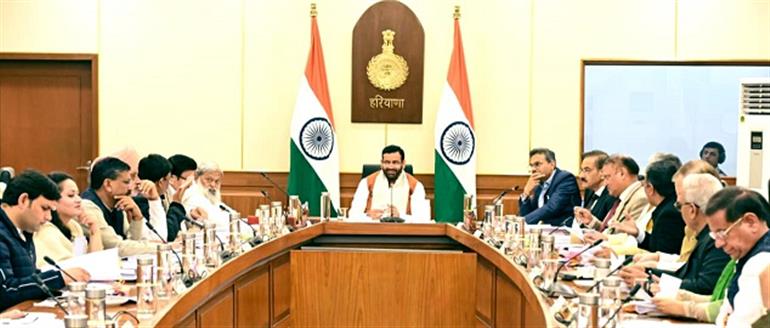
The Haryana Cabinet, convened under the chairmanship of Chief Minister Sh. Nayab Singh Saini , sanctioned a significant reform in urban governance through the enactment of the Haryana Municipal Bill 2025. This legislation is intended to supersede the current Haryana Municipal Act, 1973, and the Haryana Municipal Corporation Act, 1994.
The newly enacted unified Act has been formulated to consolidate all categories of municipalities—Municipal Corporations, Municipal Councils, and Municipal Committees—within a single legal framework. Currently, 87 municipalities in the state operate under two distinct Acts, resulting in administrative complexities, inconsistent service provision, and difficulties in interpreting regulations. The department has conducted comprehensive consultations over the past two years to develop the draft legislation, integrating pertinent provisions from the Model Municipal Law issued by the Government of India.
The Haryana Municipal Bill, 2025 seeks to enhance governance, eliminate ambiguities, modernize municipal administration, and reinforce the financial independence of urban local bodies. Key provisions encompass authorizing municipalities to set taxes and fees within specified minimum and maximum limits established by the government; includes provisions for credit ratings to support market borrowings, among other measures.
The Act additionally incorporates provisions for urban transportation planning, urban forestry, and the prohibition of unauthorized settlements, analogous to the Haryana Development and Regulation of Urban Areas Act, 1975. For municipal personnel, the Act proposes standardized service regulations to minimize litigation resulting from transfers and promotions governed by distinct legal frameworks. Additionally, provisions have been established for the appointment of a municipal magistrate to oversee the trials of municipal offenses, and penalties and sanctions for various violations have been increased.
The initiative represents a crucial advancement in the development of a modern, standardized, and effective municipal governance system throughout Haryana, in accordance with the present and forthcoming demands of urbanization.