
Foreign Trail in Delhi Blast: Syria, Turkey & Handlers
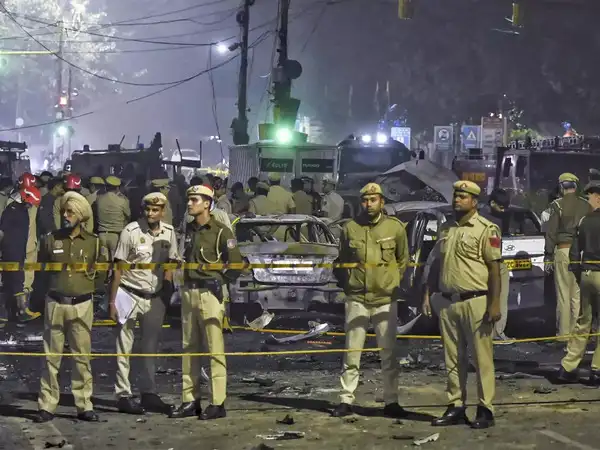
The investigation into the 2025 Delhi car explosion near Delhi’s iconic Red Fort reveals a chilling web of foreign links. Officials say a Syrian operative met with the bomber in Turkey, while Pakistani handlers guided the process. The focus now is on tracing the full “foreign trail” behind the attack.
Authorities identify the Delhi blast foreign trail as central to understanding the plot’s depth. They say that in 2022 the suspect, Dr Umar Nabi, travelled to Turkey for a secret meeting with the Syrian operative upon instruction from a Pakistani handler named Ukasha. After the Turkey meeting, Umar enrolled in Al Falah University in Faridabad and built the terror module further. Investigators say encrypted communication, bomb-making videos and a wide network mark the case.
Meeting in Turkey, Syrian Handler & Pakistan Role
Sources say the meeting in Turkey in 2022 brought Umar and three associates face-to-face with a Syrian operative described as “highly trained”. The operative allegedly convinced Umar to take part in a larger operation. Meanwhile, the Pakistani handler named Ukasha coordinated the meeting and the broader module. Additionally, another handler dubbed “Colonel” — believed to be Md Faisal — is under investigation for radicalising engineering students in southern India and linking them to past blasts in Tamil Nadu and Karnataka.
Investigators say the foreign trail in the Delhi blast runs across Turkey, Syria and back into India. It spans encrypted video uploads, social-media messaging and financial transfers. For instance, one handler sent 42 bomb-making videos to one Indian doctor via encrypted chat apps.
Encrypted Communications, Bomb-Making & Indian Nexus
The probe has uncovered a sophisticated digital skeleton behind the attack. Investigators traced how the terror cell used encrypted channels like Signal and Session to share instructions and video tutorials. The cell allegedly received more than 40 bomb-making tutorials from abroad. This digital trail is a key element in the Delhi blast foreign trail. Moreover, the module appears linked to an earlier terror grid in the south of India — including the Rameshwaram, Mangalore and Coimbatore blasts.
Indian investigators also found strong ties to the university and city where the attackers worked. The accused were doctors at Al Falah University in Faridabad. After the Turkey meeting, Umar joined the university and built the module locally. Meanwhile, the recovery of 2,900 kg of explosives from a Faridabad site and car-borne IED evidence underscores the seriousness of the plot.
Implications for India’s Security & Next Steps
This deep foreign trail exposes vulnerabilities in India’s counter-terror architecture. Analysts say the event underlines how global terror networks are using students, professionals and benign institutions as fronts. The Delhi blast foreign trail now drives demands for stricter oversight of foreign travel, encrypted communications and campus radicalisation.
The National Investigation Agency (NIA) has already taken over the case and is coordinating across states and agencies to dismantle the network. Investigations include financial audits of the educational institution and scrutinising funds linked to foreign handlers. Meanwhile, heightened security measures are in effect nationwide, especially at high-profile locations and transport hubs.
The uncovering of an international chain — from Syria to Turkey to India — changes the narrative. It is no longer just a local plot but a global operation foiled at its final stage. As the probe advances, India’s law-enforcement agencies hope to identify all culprits, sever the network’s links and build preventive frameworks for the future.