
Punjab launches the Navi Dishaa Scheme to provide sanitary pads to 13.6 lakh women monthly, ensuring transparent distribution with IT monitoring and quality checks.
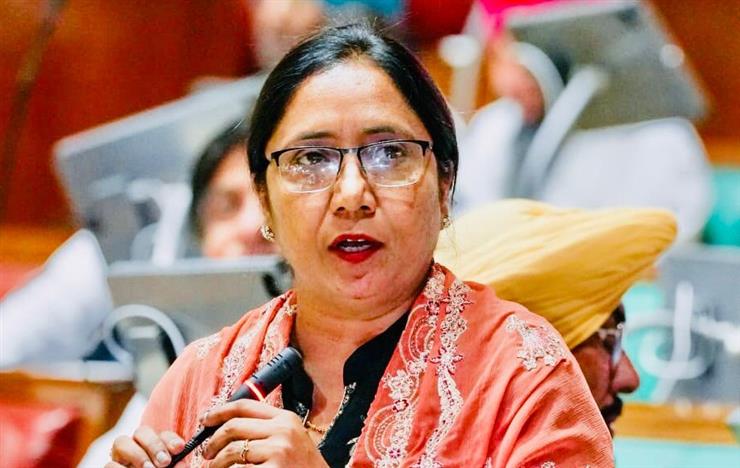
The Punjab Cabinet, led by Chief Minister S. Bhagwant Singh Mann, has authorized the reorganization of the free sanitary napkin distribution program, which is now known as the “Navi Dishaa Scheme,” according to Punjab Social Security, Women, and Child Development Minister Dr. Baljit Kaur. The goal of this significant decision is to guarantee a more dependable, efficient, and gap-free implementation procedure throughout the state.
Also read : Second Unity March in Ludhiana Celebrates Sardar@150
As part of the redesigned program, Anganwadi Centers (AWCs) will regularly supply nine sanitary napkins to underprivileged women each month. The program targets a minimum of 13,65,700 women each month, with a threshold of 50 recipients each AWC. In order to guarantee that all qualified women receive the benefit, she continued, efforts would be taken to substantially expand the number of beneficiaries. The Punjab Cabinet granted ₹53 crore for the redesigned scheme to ensure its seamless and efficient implementation.
In order to eliminate irregularities, Dr. Baljit Kaur clarified that the new organization contains clear criteria for distribution, transportation, procurement, monitoring, and quality testing. To improve implementation at the local level, the program also offers incentives to Anganwadi Workers.
Also read : Punjab CM Bhagwant Mann Reasserts Claim on Chandigarh, River Waters at Zonal Meet
The plan would leverage IT tools, such as digital dashboards and mobile applications, to record and examine real-time implementation data in order to increase accountability and transparency. In order to educate women and adolescent girls on healthy menstrual habits and general well-being, an awareness and IEC component has also been added.
She also mentioned that after two years, the scheme’s implementation will be examined in order to evaluate its progress and fortify its delivery systems.