
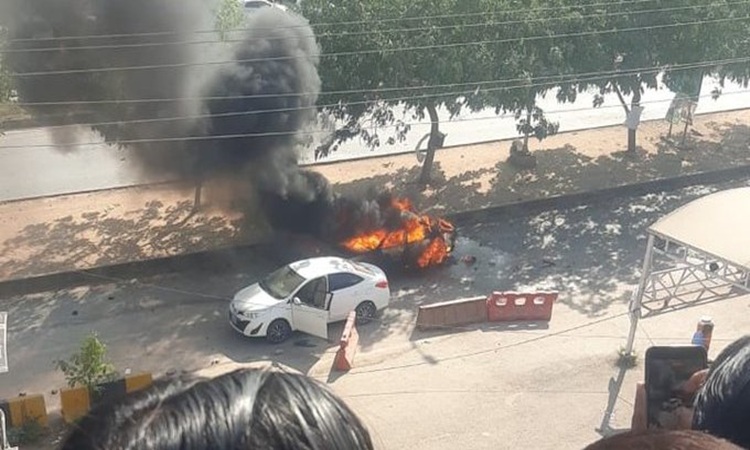
Blast outside Islamabad court kills 12, injures 27
Suicide attack outside the district judicial complex in Islamabad, at least 12 people were killed and 27 others wounded on Tuesday morning, according to Pakistan’s Interior Minister Mohsin Naqvi.
The bomber attempted to enter the complex but detonated explosives near a police vehicle after waiting 10-15 minutes.
Witnesses described chaotic scenes with victims lying near an entrance normally crowded with visitors and lawyers.
Forensic clues and suspect motives
Investigators found the device contained a mix of ammonium nitrate and fuel oil, indicating a high-intensity blast.
Although no group has yet claimed responsibility, officials suspect the militant group Tehreek‑e‑Taliban Pakistan (TTP) or its proxies may be involved. Interior Minister Naqvi alleged links with “Indian-backed elements and Afghan Taliban proxies.”
The attacker reportedly detonated the bomb after failing to gain access to the complex, targeting the police vehicle instead.
Security response and broader tensions
Following the blast, an immediate high alert was declared in Islamabad and surrounding areas, including at key judicial and security facilities. Security forces cordoned off the site and launched an urgent investigation.
The attack comes amid a resurgence in militant violence in Pakistan, particularly involving the TTP, which many analysts link to unstable cross-border dynamics with Afghanistan.
Prime Minister Shehbaz Sharif condemned the attack and vowed that attackers would be held accountable.
Implications for regional security and justice system
The target— a judicial complex— sends a stark message: even high-security institutions in Islamabad are vulnerable. The blast occurred during peak hours when litigants, lawyers and staff converge.
Moreover, the use of advanced explosives highlights militant sophistication and raises questions about internal and external aid to terrorist networks.
Pakistan’s legal and security apparatus now faces the challenge of safeguarding high-risk sites while pursuing accountability and disrupting terror cells.