
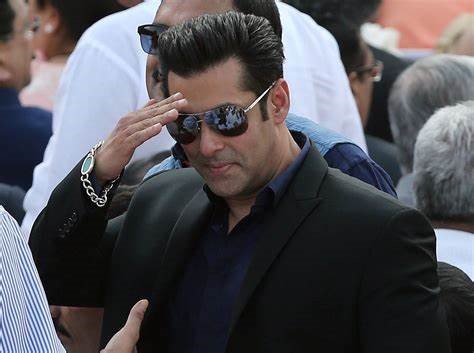
Salman Khan Faces Backlash After Riyadh Forum Remarks
Riyadh/New Delhi, October 26: Bollywood superstar Salman Khan has landed in a diplomatic controversy after his remarks about Balochistan at the Joy Forum 2025 in Riyadh triggered outrage across Pakistan. Reports suggest that the Pakistani government has placed him under the 4th Schedule of the Anti-Terrorism Act (1997) — a category meant for individuals suspected of involvement in or support for terrorism.
The decision, though yet to be officially confirmed by Pakistan’s Interior Ministry, implies strict monitoring of the actor’s movements and possible legal restrictions if he enters Pakistani territory.
Salman made the remark during a panel discussion featuring Shah Rukh Khan and Aamir Khan, where the trio spoke about the rising global appeal of Indian cinema, especially in the Middle East.
He said, “Right now, if you make a Hindi film and release it here (in Saudi Arabia), it will be a superhit. If you make a Tamil, Telugu, or Malayali film, it will do hundreds of crores in business because so many people from other countries have come here. There are people from Balochistan, there are people from Afghanistan, there are people from Pakistan… everyone is working here.”
The mention of Balochistan and Pakistan as separate entities immediately sparked outrage in Islamabad, with officials interpreting it as a violation of Pakistan’s territorial integrity.
Pakistan’s Response and Political Repercussions
Sources in Pakistan’s Interior Ministry reportedly classified the statement as “politically insensitive and provocative.” Several Pakistani media outlets accused Salman Khan of promoting a “separatist narrative” by recognizing Balochistan as distinct from Pakistan.
Under Pakistan’s Anti-Terrorism Act (1997), individuals listed under the 4th Schedule are subject to travel restrictions, financial scrutiny, and surveillance. If enforced, it would be the first time a foreign celebrity has been included in the list for an offhand public remark.
Social media platforms in Pakistan have since been flooded with criticism of the actor, with hashtags like #BanSalmanKhan and #RespectPakistanSovereignty trending nationwide. Meanwhile, several Indian users have defended Salman’s comment as a “non-political observation” made in a neutral, cultural context. In India people welcomed the stand by Salman Khan, many claimed it a bold statement for the rights of Baloch People
Support from Baloch Activists and Global Reaction
In contrast to Pakistan’s anger, Baloch nationalist groups have welcomed Salman Khan’s remark as a rare acknowledgment of their struggle for autonomy.
Mir Yar Baloch, a prominent advocate for Baloch independence, praised the actor for indirectly recognizing Balochistan’s distinct identity. “By recognizing Balochistan as separate, Salman Khan has done what many governments hesitate to do. It’s a symbolic act of soft diplomacy that has brought happiness to six crore Baloch people,” he said in a social media post.
International analysts noted that this episode underscores how cultural statements by public figures can carry deep political consequences in South Asia’s volatile landscape. Some human rights groups even suggested that Pakistan’s reaction reflects its sensitivity to global discourse surrounding Balochistan’s political status.
Balochistan: The Longstanding Conflict
Balochistan, Pakistan’s largest province by area, has been at the center of separatist movements for decades. Although it makes up nearly 46% of Pakistan’s landmass, it houses only about 6% of the population.
Despite its vast reserves of natural gas, coal, and minerals, the region remains economically underdeveloped. Reports suggest that over 70% of its population lives below the poverty line, fueling resentment among locals.
Baloch separatists have long accused Islamabad of economic exploitation and human rights violations, while Pakistan’s government maintains that the region’s instability is fueled by foreign interference.
Salman Khan’s remark, though seemingly harmless, has reignited discussions on cultural representation, political sensitivity, and India–Pakistan relations.
Bollywood’s Silence and Global Spotlight
So far, Salman Khan and his representatives have not issued any official statement in response to the controversy. Sources close to the actor indicate that his remark was “misinterpreted” and “taken out of context.”
The controversy comes at a time when Bollywood’s presence in international markets, particularly in the Gulf region, is rapidly growing. Analysts warn that political reactions to celebrity comments could impact India’s soft power diplomacy and cultural exports.
Film industry observers note that Salman’s global recognition gives him a platform that transcends borders, but also exposes him to cross-border political scrutiny.