
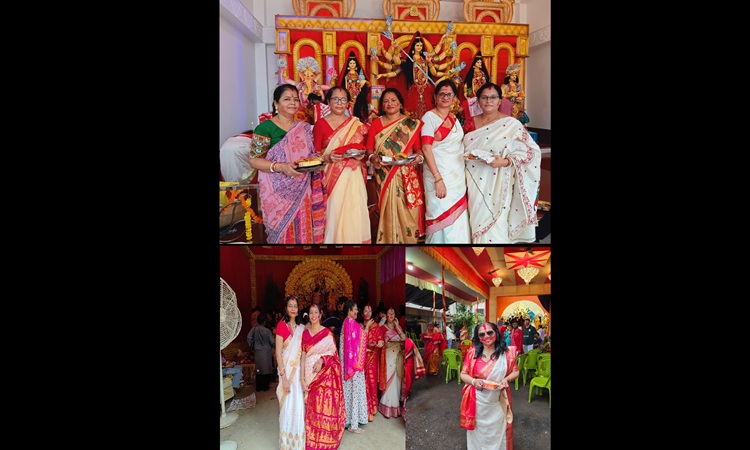
A Tradition Rooted in Faith and Culture
Sindoor Khela, meaning the “play of vermillion,” is one of the most striking rituals of Durga Puja. Observed on Vijayadashami, the final day of the festival, married Bengali women smear vermillion (sindoor) on the goddess Durga and then on each other. This ritual, steeped in centuries of faith, symbolizes the blessings of long marital life, family prosperity, and feminine solidarity.
While the practice began as a local Bengali custom, Sindoor Khela has now spread across India and even among global diaspora communities. The visual spectacle of red vermillion, white sarees with red borders, and joyous chants has become an iconic cultural symbol of Durga Puja celebrations.
Why Married Women Play Sindoor Khela
The ritual carries deep spiritual and social meanings. Married women apply sindoor to Durga’s forehead and feet, praying for the goddess to bless their husbands with longevity and their families with happiness. Afterward, they playfully smear sindoor on one another, strengthening the bond among women in the community.
Traditionally, sindoor in Hindu culture is a symbol of marriage and auspiciousness. In Sindoor Khela, this symbolism expands beyond personal marriage to a collective wish for shared prosperity. Moreover, the act of applying sindoor on Durga before bidding her farewell reflects a heartfelt prayer for her safe return the next year.
Although it is mostly performed by married women, many modern celebrations have expanded the ritual to include unmarried women, widows, and even men, symbolizing inclusivity in today’s society.
Growing Popularity Across India
In recent years, Sindoor Khela has gained popularity outside Bengal. From Mumbai to Delhi and from Assam to Odisha, puja committees organize large-scale sindoor celebrations. The tradition has also found space in cultural events abroad, particularly in the United States, Canada, and the UK, where the Bengali diaspora keeps the spirit of Durga Puja alive.
Social media has played a significant role in popularizing this ritual. Images of women in red-and-white sarees with vibrant vermillion have become viral during Durga Puja. Many communities also live-stream Sindoor Khela for devotees who cannot attend physically. This digital presence has transformed a local ritual into a global cultural phenomenon.
Relevance in Modern Bengali Society
Beyond its religious value, Sindoor Khela represents community bonding and women’s empowerment. For many women, it is not only about prayers but also about expressing joy, solidarity, and strength. The ritual creates a sense of belonging, where women celebrate each other and reaffirm the importance of family and culture.
Cultural activists note that the evolution of Sindoor Khela reflects changing social values. Traditionally limited to married women, the ritual is now being reinterpreted in inclusive ways. In some cities, widows, divorcees, and single women also participate, symbolizing equality and a break from rigid social norms.
At its heart, Sindoor Khela continues to embody the essence of Durga Puja—victory of good over evil, the power of feminine energy, and the celebration of community life.