
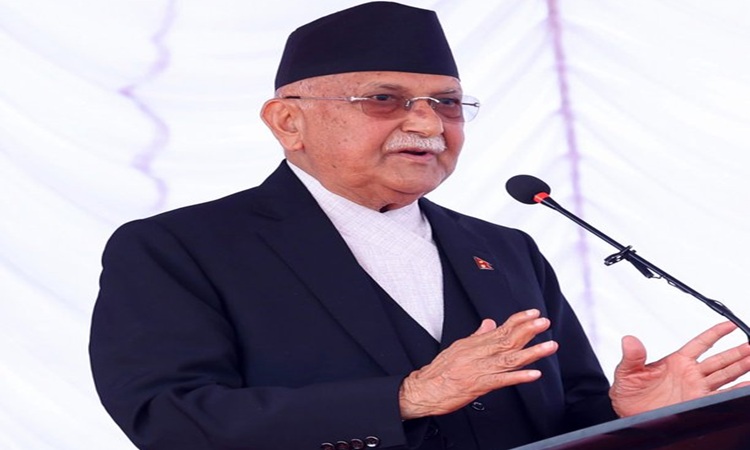
Oli resigns under Gen-Z pressure
Kathmandu : Nepal’s former Prime Minister KP Sharma Oli has reappeared in public for the first time since resigning amid unprecedented Gen-Z-led protests. Oli stepped down on September 9 after mass demonstrations swept across the country, accusing his government of corruption, censorship, and nepotism.
The protests, led mostly by Nepali youth, erupted after the government attempted to tighten restrictions on social media. Demonstrators demanded accountability, economic reforms, and an end to systemic corruption. The movement turned violent, with over 20 people killed and several government buildings torched, including the Parliament building and Oli’s private residence in Kathmandu.
Facing mounting pressure, Oli submitted his resignation to President Ram Chandra Poudel, who accepted it on September 10. For several days, rumors swirled about Oli’s location, fueling speculation about his safety.
Relocation under tight security
Ten days after his resignation, Oli was flown by army helicopter from the Shivapuri military barracks to Bhaktapur, where a house has been rented for him. His move comes after protesters attacked multiple properties linked to him, including his ancestral home in Jhapa and his residence in Damak.
According to officials, Oli had taken refuge at the Shivapuri barracks following his ouster. He was kept under military protection due to the widespread unrest and threats to his life. The government later secured a rented home in Bhaktapur, where he will stay under continued army surveillance.
Upon arrival at his new residence, Oli was greeted by a small group of loyal supporters. Security forces maintained strict control around the area to prevent further clashes.
Gen-Z protests reshape Nepal’s politics
The September uprising, driven largely by Gen-Z activists, has shaken Nepal’s political establishment. Protesters rallied under slogans demanding transparency and reforms, fueled by anger over rising inequality and unemployment.
Social media played a central role in mobilizing the movement, with young Nepalis sharing videos, slogans, and live updates despite attempts at censorship. The government’s decision to impose a social media ban backfired, intensifying public anger and expanding the protests nationwide.
Several cabinet ministers, fearing retribution, also took refuge at Shivapuri alongside Oli. Protesters accused the government of shielding corrupt leaders while ignoring public demands.
The movement has been described as one of the most significant youth uprisings in Nepal’s democratic history, drawing comparisons to the 2006 People’s Movement that ended absolute monarchy.
What lies ahead for Oli and Nepal
Oli’s resignation has left a power vacuum in Nepal’s fragile political system. Discussions are ongoing among major parties about forming a caretaker government until fresh elections are held. Analysts say the protests highlight growing generational divides in Nepalese politics, with young people rejecting traditional power structures.
For Oli, political rehabilitation appears uncertain. His properties have been destroyed, his party fractured, and his credibility damaged by allegations of corruption. While he retains some loyal supporters, observers believe his influence is waning.
The army continues to play a key role in maintaining stability. Officials assured that compensation for victims of the unrest will be considered, though public trust in institutions remains fragile.
Nepal now faces the dual challenge of addressing youth demands while ensuring political stability. The Gen-Z protests have underscored that ignoring calls for accountability and reform could trigger even deeper unrest in the future.