
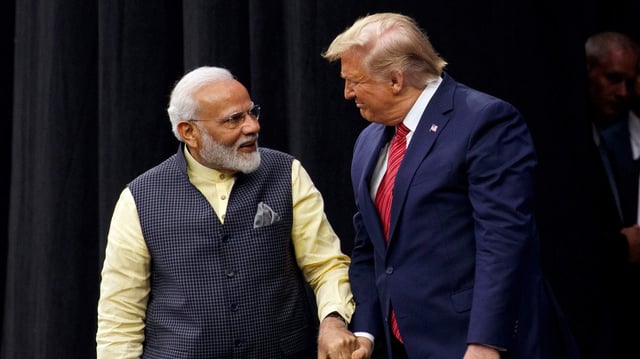
Trump Praises Modi Amid Trade Strain
New Delhi, 6 September 2025 — Prime Minister Narendra Modi has responded warmly to former US President Donald Trump’s “always friends” remark, saying he “deeply appreciates” and “fully reciprocates” the positive sentiment.
The exchange comes at a time of heightened trade tensions between India and the United States, marked by steep tariff hikes and pointed political messaging. Despite the frictions, both leaders have sought to emphasize their personal rapport and the enduring importance of the bilateral relationship.
Speaking to reporters at the White House on Friday, Trump described Modi as a “great prime minister” and stressed that the friendship between the two countries remained strong. “I’ll always be friends with Modi,” Trump said. “He’s great. But I just don’t like what he’s doing at this particular moment. India and the United States have a special relationship. There’s nothing to worry about. We just have moments on occasion.”
Modi Highlights Strategic Partnership
In a post on X (formerly Twitter), Modi offered his first direct comment on ties with Trump since Washington imposed additional tariffs on Indian goods. “India and the US have a very positive and forward-looking comprehensive and global strategic partnership,” the prime minister said, underscoring the depth of collaboration between the two nations.
Deeply appreciate and fully reciprocate President Trump’s sentiments and positive assessment of our ties.
India and the US have a very positive and forward-looking Comprehensive and Global Strategic Partnership.@realDonaldTrump @POTUS https://t.co/4hLo9wBpeF
— Narendra Modi (@narendramodi) September 6, 2025
Modi’s message sought to balance acknowledgment of Trump’s personal goodwill with a reminder that bilateral ties extend far beyond any single dispute. His remarks highlighted cooperation in defense, technology, and regional security, all of which continue to anchor the India–US relationship despite disagreements on trade policy.
Tariff Dispute Deepens
Relations between the two countries have been tested in recent months. Trump imposed 50 percent tariffs on Indian imports, citing concerns over New Delhi’s continued purchase of Russian oil. The move came after an earlier round of duties in August, when Washington imposed an additional 25 percent levy.
India has criticized the tariffs as “unjustified,” accusing the US of unfairly targeting its trade with Russia while overlooking similar arrangements by other nations. New Delhi has also signaled that it will pursue reciprocal measures if the restrictions are not eased.
The tariffs have reignited concerns among exporters and trade analysts, who warn that the dispute could disrupt sectors ranging from pharmaceuticals and textiles to IT services.
Trump’s China Remark Raises Eyebrows
In another sharp comment, Trump claimed on social media that the US risked losing India to “darkest China.” Writing on his platform Truth Social, the former president said, “Looks like we have lost India and Russia to deepest, darkest China. May they have a long and prosperous future together!”
The remark came just days after Modi attended the Shanghai Cooperation Organisation (SCO) summit in Tianjin, where he appeared alongside Chinese President Xi Jinping and Russian Premier Vladimir Putin. The imagery of camaraderie among the three leaders drew global attention, particularly in Washington.
India has so far declined to directly respond to Trump’s statement about its supposed drift toward Beijing. Analysts note that New Delhi has sought to maintain a delicate balancing act, strengthening ties with both Western partners and Asian powers.
Balancing Global Alignments
Experts say Trump’s comments reflect growing anxiety in Washington over India’s role in the geopolitical landscape. As the world’s most populous democracy, India is seen as a critical counterweight to China’s influence. Yet its deepening energy and defense ties with Russia, along with renewed diplomatic engagement with Beijing, complicate US expectations.
“India does not want to be boxed into one camp,” said a New Delhi–based foreign policy analyst. “It values its partnership with the US, but it will also pursue independent relationships with Russia and China.”
This balancing approach has at times led to friction with Washington, particularly when trade or energy issues intersect with broader strategic concerns.
Looking Ahead
Despite current tensions, the India–US relationship remains anchored in shared democratic values and long-term interests. Both sides continue to engage in joint military exercises, technology partnerships, and dialogue on regional stability in the Indo-Pacific.
For Modi, Trump’s warm words offer an opportunity to reaffirm personal ties even as his government pushes back against punitive trade measures. For Trump, who has long emphasized personal diplomacy, the friendship narrative helps maintain a positive frame amid disputes.
As the tariff standoff unfolds, observers will be watching whether the two countries can navigate their differences without undermining the strategic depth of their partnership.