
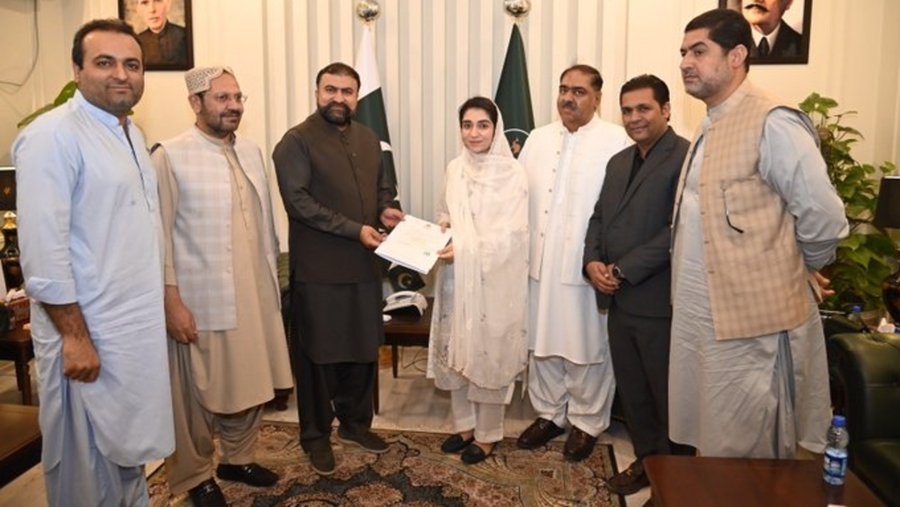
Kashish Chaudhary Becomes First Hindu Woman Assistant Commissioner in Balochistan
In a landmark moment for Pakistan’s marginalized communities, Kashish Chaudhary, a 25-year-old from Noshki in the remote Chagai district of Balochistan, has become the first Hindu woman to be appointed as an Assistant Commissioner in the province’s history. Her achievement—clearing the Balochistan Public Service Commission (BPSC) examination—has not only marked a personal milestone but also represents a growing movement of empowered minority women stepping into public service roles.
Rising from the Margins
Kashish’s journey to the provincial capital of Quetta, where she recently met Chief Minister Sarfaraz Bugti, is one that reflects determination, resilience, and vision. Coming from a Hindu minority community that remains vastly underrepresented in government positions, especially in Balochistan, her appointment is nothing short of historic.
“I want to work for my women and my community,” Kashish said during her visit to Quetta, reinforcing her commitment to social upliftment and inclusive governance.
A Father’s Pride, A Nation’s Moment
Her father, Girdhari Lal, a mid-level trader, was visibly emotional when speaking to media after the meeting.
“It is a matter of great pride for me that my daughter has become an assistant commissioner due to her hard work and commitment,” he said.
He recalled that Kashish had long dreamt of studying and creating opportunities for women like her, especially in areas where gender and religious identity often limit access to education and employment.
Chief Minister Bugti Commends Kashish
Balochistan Chief Minister Sarfaraz Bugti lauded Kashish’s achievement, calling her a symbol of pride for the entire province.
“Kashish is a symbol of pride for the nation and Balochistan. It is a proud moment when individuals from minority communities rise to public office through dedication,” he said.
His statement signals growing recognition of the importance of diversity in governance and the need to support inclusive leadership.
Part of a Growing Movement Among Hindu Women
Kashish is the latest in a wave of Hindu women breaking barriers in Pakistan’s civil services. Others have paved the way in recent years:
- Manesh Ropeta made headlines in 2022 as the first Hindu woman appointed Superintendent of Police in Karachi.
- Pushpa Kumari Kohli, a sub-inspector in the Karachi police force, passed the Sindh Public Services Exam and serves with distinction.
- Suman Pawan Bodani, a civil judge in Hyderabad, began her judicial career in Shahdadkot in 2019.
These women serve as trailblazers, challenging long-standing societal norms and inspiring younger generations of minority girls to pursue public service.
Education as a Tool for Change
Despite these successes, structural barriers remain. In Sindh, where the majority of Pakistan’s Hindus live, education remains a battleground for gender and minority rights.
Dr. Ramesh Kumar Vankwani, a Sindhi Hindu politician, has been vocal about these issues.
“Our young women are doing us proud. But Sindh needs better educational infrastructure to truly empower the Hindu community,” he said.
He also flagged the alarming trend of underage Hindu girls being abducted and forcibly converted, emphasizing that education is the most powerful defense against such social ills.
Minorities in Pakistan: A Glance at the Numbers
Pakistan’s Hindu population stands at approximately 7.5 million, according to official estimates, though community leaders claim the number is closer to 9 million. While most reside in Sindh, small but resilient Hindu communities exist in Balochistan, Punjab, and Khyber Pakhtunkhwa.
The rise of women like Kashish from these marginalized communities signals a slow but crucial shift in Pakistan’s socio-political fabric—toward greater inclusivity, representation, and empowerment.