
US asked Pakistan to De-Escalate Immediately After Failed Attack on India, Warns Against Terror Support
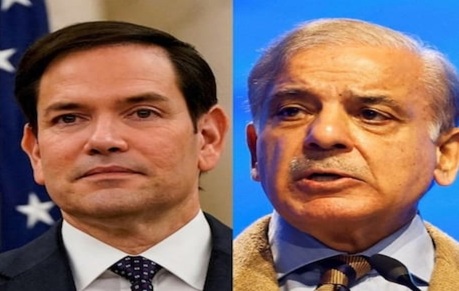
Washington, D.C. / Islamabad – May 9, 2025 : In the wake of Pakistan’s foiled attempt to target multiple strategic locations in India, the United States has issued a strong call for immediate de-escalation. US Secretary of State Marco Rubio urged Pakistan Prime Minister Shehbaz Sharif to exercise restraint and take definitive action against terrorist networks operating within the country.
The development comes amid heightened tensions in South Asia following Pakistan’s alleged attempt to strike at 15 high-value Indian locations, including Jammu Airport, Udhampur army base, and critical zones in Akhnoor, Pathankot, and Jaisalmer. Indian defence forces, bolstered by cutting-edge systems like the S-400 missile defense system, neutralized the incoming threats, reportedly including two Pakistani drones shot down near Jammu University.
US Calls for De-Escalation and Accountability
According to State Department Spokesperson Tammy Bruce, Secretary Rubio held separate conversations with Prime Minister Shehbaz Sharif and Indian External Affairs Minister S. Jaishankar, urging both nations to maintain open channels of communication and avoid further escalation.
“Secretary Marco Rubio spoke today with Pakistani Prime Minister Muhammad Shehbaz Sharif. The Secretary emphasised the need for immediate de-escalation and expressed sorrow for the reported loss of civilian lives in the current conflict,” Bruce said.
Rubio also reiterated Washington’s demand for Pakistan to “take concrete steps” to end support for terrorist groups, a persistent concern in US-Pakistan relations over the past two decades.
Solidarity with India and Condemnation of Terrorism
The United States conveyed strong support for India in the fight against terrorism, especially after the recent attack in Pahalgam that left several civilians dead and dozens injured. Secretary Rubio offered his condolences and reaffirmed America’s commitment to counter-terror efforts in collaboration with India.
“The Secretary reaffirmed the United States’ commitment to work with India in the fight against terrorism,” Bruce added.
This latest diplomatic engagement underscores Washington’s dual-track approach: urging stability while condemning terror activities that threaten regional peace.
Background: Pakistan’s Failed Strike on Indian Territory
Late Thursday night, Pakistani forces reportedly attempted a coordinated attack on Indian military and civilian installations. Sources in the Indian Defence Ministry told Times Now that Indian air defense systems responded swiftly, intercepting projectiles and neutralizing threats before any damage occurred.
Among the key sites targeted were:
- Jammu Airport – a dual-use facility critical to military logistics
- Army installation in Udhampur
- Strategic military zones in Akhnoor, Pathankot, and Jaisalmer
This represents one of the boldest cross-border provocations by Pakistan in recent years, potentially dragging both nuclear-armed neighbours into a broader conflict.
International Implications and Diplomatic Pressure
The US’s public call for restraint is significant, especially as global attention is refocusing on South Asia after several months of relative calm. With the Russia-Ukraine conflict and tensions in the South China Sea dominating global headlines, the India-Pakistan flashpoint serves as a stark reminder of how quickly regional disputes can spiral out of control.
Washington’s statement also signals to Islamabad that continued terror affiliations will come at a diplomatic cost, particularly as the country seeks IMF support and improved trade relations with Western partners.