
Massive Protests Rock Kathmandu
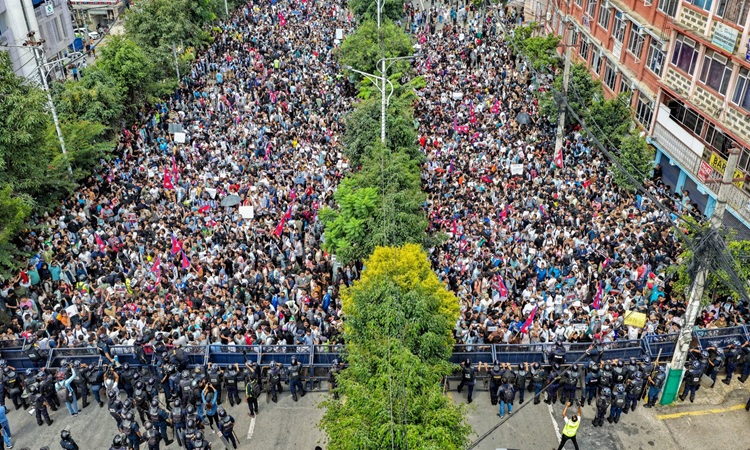
KATMANDU : At least 16 people were killed and more than 100 injured in violent protests across Kathmandu, Nepal, on Saturday. The unrest followed widespread anger against corruption and a government-imposed ban on several social media platforms, including TikTok.
According to local media, thousands of mostly young demonstrators defied curfew restrictions and stormed restricted areas near Parliament. Authorities responded with water cannons, tear gas, and baton charges, while the Nepal Army was deployed to assist police in restoring order.
The protests mark one of the largest youth-led uprisings in recent years, highlighting growing frustration among Nepal’s Gen-Z population over unemployment, rising prices, and limited digital freedom.
Government Bans Social Media Apps
The protests erupted earlier this week after the government announced a controversial ban on multiple social media apps, citing concerns about “misinformation” and “national security.” However, critics argue the move was politically motivated, aimed at silencing dissent and curbing digital activism.
Young protesters claim the ban has cut them off from platforms that not only serve as sources of information but also provide avenues for small businesses, freelance work, and social interaction.
“Social media is our voice. By banning it, the government is trying to silence us,” said one protester outside the Parliament building, as quoted by local outlets.
Police Crackdown Turns Violent
The demonstrations turned deadly when protesters clashed with security forces after breaking police barricades near Singha Durbar, the administrative hub in Kathmandu. Eyewitnesses reported scenes of chaos as security personnel fired tear gas shells while water cannons pushed crowds back.
Despite the curfew, groups of young protesters continued to regroup across the city, chanting slogans against corruption and demanding Prime Minister Pushpa Kamal Dahal’s resignation.
Hospitals in Kathmandu confirmed receiving dozens of injured protesters, many with head and chest injuries. Rights groups have urged the government to show restraint and respect democratic freedoms.
Army Deployment Raises Alarm
The decision to deploy the Nepal Army has sparked concerns about excessive force. The army’s presence in civilian protests is rare and usually reserved for extreme crises.
Officials defended the move, saying it was necessary to protect government buildings and maintain order after protesters attempted to storm restricted zones.
However, opposition leaders criticized the government’s heavy-handed approach. Former Prime Minister Sher Bahadur Deuba condemned the crackdown, calling it “an assault on democratic rights.”
Growing Anger Over Corruption
Beyond the social media ban, the protests reflect broader frustration with Nepal’s governance. Young citizens accuse politicians of corruption, mismanagement, and ignoring the aspirations of a new generation.
With unemployment rates among youth exceeding 20%, many see social media platforms as essential for economic opportunities. The sudden restrictions have added to their anger.
“First, they failed to give us jobs. Now they have taken away our platforms to work and connect,” said another protester.
What Lies Ahead for Nepal
The unrest in Kathmandu has drawn international attention, with human rights organizations warning of further escalation if the government fails to engage with protesters.
Diplomatic observers note that Nepal’s political leadership faces a delicate challenge: balancing governance and security while addressing legitimate concerns of the youth.
Analysts warn that if the crisis is mishandled, it could deepen political instability in the Himalayan nation, already struggling with economic challenges and public distrust in institutions.
As of now, curfew orders remain in place in several parts of Kathmandu, and internet services have been disrupted in protest-hit areas.