
Iran Wedding Gown Scandal: Elite Daughter Wears Strapless Dress Amid Hijab Crackdown
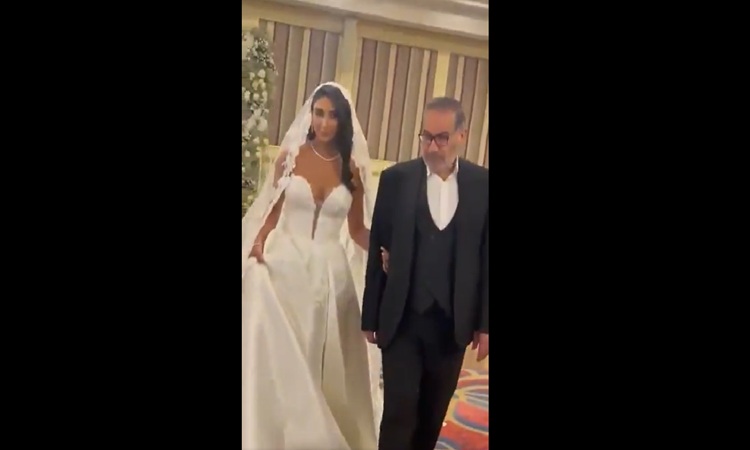
A leaked wedding video showing the daughter of Ali Shamkhani – one of Iran’s top defence and security aides – wearing a strapless gown has set off a major uproar in the Islamic Republic. The incident has reignited criticism over the regime’s severe hijab laws while its own elite appear to flout them.
The daughter of Ali Shamkhani one of the Islamic Republic’s top enforcers had a lavish wedding in a strapless dress. Meanwhile, women in Iran are beaten for showing their hair and young people can’t afford to marry. This video made millions of Iranian furious. Because they… https://t.co/MAb9hNgBnN pic.twitter.com/WoRgbpXQFA
— Masih Alinejad 🏳️ (@AlinejadMasih) October 19, 2025
The footage, reportedly from the 2024 wedding held at Tehran’s luxury Espinas Palace Hotel, shows the bride in a revealing strapless dress with shoulders exposed and a minimal veil. Many attendees appear with uncovered hair and Western-style gowns.
Critics say the political aide’s family benefited from freedoms denied to ordinary Iranian women, especially those forced to obey strict dress codes under threat of arrest. “The daughter of Ali Shamkhani… had a lavish wedding in a strapless dress. Meanwhile, women in Iran are beaten for showing their hair,” wrote activist Masih Alinejad on social media.
The Figure at the Centre: Ali Shamkhani’s Role and Reaction
Ali Shamkhani, a senior aide to Ayatollah Ali Khamenei and former head of Iran’s Revolutionary Guard-linked security apparatus, has long enforced Islamic morality laws, especially against women’s dress code violations and protest movements.
Yet the spectacle of his daughter’s wedding – opulent, Western-styled and hijab-free – is triggering accusations of blatant double standards. Reformist media noted the ceremony cost around 1.4 billion tomans (over US$20,000) while Iran suffers deep economic hardship.
Shamkhani responded to the criticism with a post on X (formerly Twitter) in Hebrew: “Bunch of bastards, I’m still alive.” The sharp-edged reply underscored the sensitivity of the controversy.
Why the Wedding Gown Sparked a Wider Backlash
The scandal comes at a fraught time. Iran is preparing to bolster a new wave of “morality police” to reinforce hijab and modesty rules, a step many citizens view as further repression.
Against that backdrop, the visuals of the bride in a western gown and guests without hijabs felt jarringly contradictory. “They preach modesty while their own daughters parade in designer dresses,” one activist commented.
The incident isn’t just about one wedding. It highlights wider grievances: economic inequality, unchecked power of the elite, and enforcement of rules for the many but not for the few. One Iranian user posted:
“This video is the Islamic Republic in miniature. Rulers forcing hijab on the people while holding hijab-free luxury weddings for their own children.”
Broader Context: Dress Codes, Crackdown and Conflicted Messaging
Since the death of Mahsa Amini in 2022 – after being arrested for alleged hijab non-compliance – Iran has faced sustained women’s rights protests and global condemnation for its morality enforcement.
Yet this wedding serves as a stark contradiction: a figure behind enforcement enjoys liberties denied to wider society. Critics argue such displays deepen distrust and fuel alienation among younger Iranians.
While some defenders claim the wedding was a private female-only ceremony and therefore exempt from public dress rules, the optics remain toxic for a regime already facing internal and external pressures.
What This Means for Iran’s Authorities and Society
The scandal exposes fragile legitimacy for the regime’s strict social policies. As economic malaise worsens and the younger generation demands more freedom, glimpses of elite privilege widen the divide.
Moreover, analysts say the controversy may embolden activism. Public outrage over visible hypocrisy can become a rallying point for broader discontent not just about dress codes but about fairness, accountability and elite privilege.
For the authorities, the challenge is how to respond: ignore the video and risk further backlash, or address the optics and risk undermining their own narrative of modesty and self-sacrifice.