
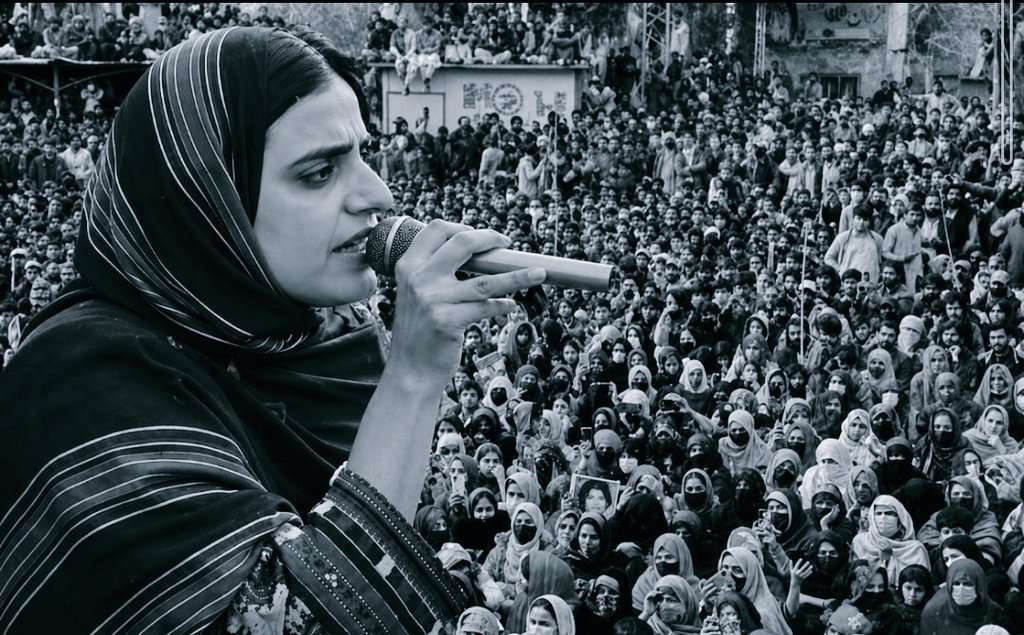
QUETTA, PAKISTAN :The political landscape of Pakistan faces immense turmoil following a major judicial decision in Balochistan. Consequently, international human rights organizations are closely watching the situation unfold. An anti-terrorism court in Quetta delivered a highly controversial verdict on Monday. The court handed down the Mahrang Baloch life sentence, which shocked rights advocates nationwide. Specifically, the court convicted the 33-year-old activist alongside her close associate, Sibghatullah Shah. Both individuals received life imprisonment terms from Judge Muhammad Ali Mobeen.
Mahrang Baloch, Sibghatullah Baloch and Balach Qadir have been sentenced to life imprisonment by #ATC #Quetta. #MahrangBaloch #Balochistan pic.twitter.com/ySphGazsLu
— Zara baloch (@Zara_Baloch26) June 22, 2026
The state prosecution alleged that the activists incited a violent mob in Gwadar. This demonstration occurred during the 2024 Baloch Rajee Muchi gathering. According to state officials, the angry crowd subsequently attacked a security vehicle. Consequently, a Frontier Corps soldier, Shabbir Baloch, lost his life during the violent clashes. However, the Baloch Yakjehti Committee (BYC) vehemently denies these serious allegations. The group labels the entire judicial process as a coordinated state conspiracy. Therefore, this landmark ruling has immediately intensified the ongoing debate over regional autonomy.
The Controversial Trial and Evidence Claims
The legal proceedings took place inside a high-security prison facility in Quetta. Initially, the court began the trial in the coastal town of Gwadar. However, authorities shifted the venue due to severe security concerns and active protests. Government prosecutors asserted that they presented undeniable evidence during the formal trial. They argued that the leaders directly mobilized demonstrators to attack law enforcement personnel. Furthermore, provincial spokesperson Shahid Rind supported the court decision. He stated that the case centered on murder rather than peaceful political dissent.
More News : Keir Starmer Resigns: Why the UK Prime Minister Stepped Down
Conversely, defense lawyers and human rights defenders strongly criticized the judicial process. They pointed out significant contradictions within the registered police files. For instance, the defense noted that two separate First Information Reports (FIRs) existed. Meanwhile, Mahrang Baloch and her legal team boycotted the trial proceedings entirely. They claimed the judicial environment lacked basic transparency and fairness. Her sister, Nadia Baloch, described the venue as a faceless court. Additionally, she announced immediate plans to appeal the unfair verdict. Therefore, the Mahrang Baloch life sentence remains a deeply divisive issue across the country.
Mass Protests and Regional Economic Strain
The regional response to the judicial announcement was instantaneous and powerful. Specifically, the Baloch Unity Committee announced a massive, province-wide shutter-down strike. They called upon local traders, students, and transport workers to halt operations. Consequently, major commercial centers across Balochistan remained entirely closed on Tuesday. This collective action highlights the deep public anger surrounding the Mahrang Baloch life sentence. Observers note that such strikes frequently paralyze the local economy.
Read More: Who Is Parastoo Ahmadi? Iranian Singer Sentenced to barbaric 74 Lashes For Hijab-Free Online Concert
Balochistan is the most resource-rich yet chronically underdeveloped province in Pakistan. It holds immense strategic value for national development projects. For example, the region hosts the multi-billion-dollar China-Pakistan Economic Corridor (CPEC). However, local populations rarely enjoy the economic benefits of these massive investments. Instead, decades of structural neglect have fueled persistent nationalist movements. Rights groups frequently accuse state security agencies of systematic abuses and enforced disappearances. Naturally, Islamabad consistently denies these allegations of heavy-handed state suppression. Thus, the current Mahrang Baloch life sentence exacerbates these long-simmering ethnic tensions.
Growing International Scrutiny and E-E-A-T Outlook
The sentencing has quickly evolved far beyond a localized legal matter. It has become a significant litmus test for Pakistan’s democratic credibility. Independent experts argue that treating peaceful dissent as terrorism undermines national stability. Moreover, international observers are raising serious concerns regarding freedom of expression. Prominent activist Sammi Deen Baloch shared her thoughts on social platforms. She claimed that the judiciary merely strengthened the hands of powerful state oppressors. Therefore, public trust in local judicial institutions has reached an all-time low.
Furthermore, the timing of this verdict raises critical questions for analysts. It coincides with separate state crackdowns against political activists in Pakistan-occupied Kashmir (PoK). This broader context fuels widespread anxiety about human rights across the region. Consequently, global watchdogs are demanding an independent review of the trial records. They emphasize that a transparent appeal process is absolutely necessary. Clearly, the Mahrang Baloch life sentence places immense international pressure on Islamabad. The state must now balance its security priorities with fundamental democratic rights.
The Road Ahead for the Baloch Movement
The long-term implications of this historic ruling remain highly uncertain. Many experts believe that harsh prison sentences will not silence the human rights movement. In fact, the BYC stated that this tyranny marks a new phase of resistance. They firmly assert that prisons cannot stop a popular struggle for basic rights. Meanwhile, the central government maintains that the judiciary operates with absolute independence. Officials insist that lawbreakers must face accountability regardless of their political standing.
However, the international community remains largely unconvinced by these official state explanations. As appeals move to higher courts, political instability will likely intensify. The Mahrang Baloch life sentence has effectively turned a young surgeon into a powerful symbol. She now represents a broader struggle against state high-handedness. Ultimately, the resolution of this crisis will shape the future of political dissent in Pakistan.