
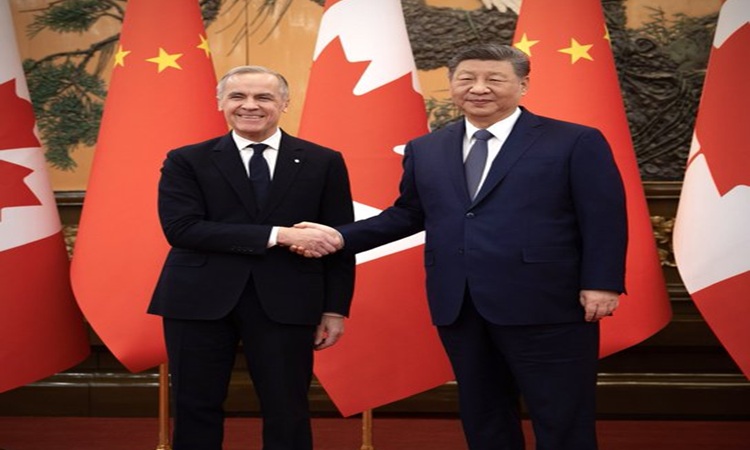
Canada China Trade Deal 2026: A Historic Economic Pivot
CANADA / CHINA — Canada and China have reached a historic trade agreement that could reshape bilateral economic ties and offer new opportunities for exporters and manufacturers. The Canada China trade deal announced on January 16, 2026, lowers tariffs on Chinese electric vehicles (EVs) entering Canada while easing duties on Canadian agricultural exports. The move marks a strategic shift as Ottawa seeks to diversify trade beyond its traditional reliance on the United States.
We’ve secured a new trade agreement with China — unlocking more than $7 billion in export markets for Canadian workers and businesses.
Watch my full remarks ⬇️ pic.twitter.com/0Nyrilm1DM
— Mark Carney (@MarkJCarney) January 17, 2026
Canadian Prime Minister Mark Carney, while on an official visit to Beijing — the first by a Canadian leader in nearly a decade — heralded the pact as a landmark step forward in rebuilding economic cooperation. He outlined how the deal balances Canada’s domestic priorities with evolving global trade pressures.
“This agreement positions Canada for success in a changing global economy,” Carney said, adding that the deal lays the foundation for deeper engagement in sectors such as clean technology and agriculture.
Key Elements of the Agreement
Under the terms of the deal, Canada will allow up to 49,000 Chinese electric vehicles to enter the market annually under a significantly lower tariff rate of 6.1%, down from the previous 100% level. This quota arrangement aims to make EVs more affordable for Canadian consumers and encourage increased investment in the EV sector.
In return, China agreed to slash tariffs on Canadian canola seed and other agricultural products, with duties on canola expected to fall to around 15% by early March. These reductions are expected to restore market access that was heavily restricted during past tariff disputes.
Carney said this tariff realignment reflects a pragmatic approach to trade in a fractured global economy. “We’re positioning Canada for success by opening markets and creating opportunities for workers and businesses,” he told reporters.
The agreement also includes broader commitments to expand two-way investment, deepen cooperation in sectors like energy and finance, and support cultural and people-to-people ties.
Also Read : U.S. Lawmakers Push Back as Trump Escalates Bid to Control Greenland
Strategic Goals and Economic Rationale
Canada’s economy has been influenced by broader geopolitical dynamics, particularly rising U.S. protectionist policies that have hit Canadian industries with steep tariffs on steel, aluminum, and other exports. In this context, Ottawa sees the Canada China trade deal as a way to diversify trade partnerships and reduce vulnerability to external shocks.
While Canada remains a staunch ally of the United States, analysts note that deeper trade ties with China provide a hedge against economic pressures from Washington. Carney’s strategy underscores the need to respond to what he described as new global realities where trade lacunae must be bridged for Canada to succeed internationally.
Nonetheless, the approach has not been without controversy. Some domestic critics warn that expanded access for Chinese EVs could pose risks to Canada’s automotive industry. U.S. officials also voiced concerns, with some warning Canada may “regret” the decision if it undercuts North American supply chains.
Domestic and International Reactions
Reactions in Canada were mixed. Some agricultural and prairie province leaders welcomed the tariff cuts on canola and other farm products as a long-awaited boost for producers who lost significant market share amid previous Chinese duties.
At the same time, critics in Ontario and from parts of the automotive sector argued that lifting barriers for Chinese EVs could undermine domestic manufacturing competitiveness and complicate Canadian trade relations with the U.S.
Internationally, the deal signals a pivot in Canada’s foreign economic policy — one that acknowledges evolving trade landscapes and seeks to engage with major global markets on both sides of the Pacific. Experts say this trend could redefine Canada’s role in global supply chains and trade governance.
What Comes Next
Implementation of the Canada China trade deal will involve follow-up negotiations, regulatory alignments, and ongoing consultations between industry stakeholders. Both governments have committed to continue dialogues that expand cooperation across diverse sectors including clean tech, financial services, and energy.
Carney emphasised that the agreement is not an endpoint but a framework for sustained engagement and expansion of trade opportunities that benefit both nations.