
Canadian Report Exposes Khalistani Funding Networks
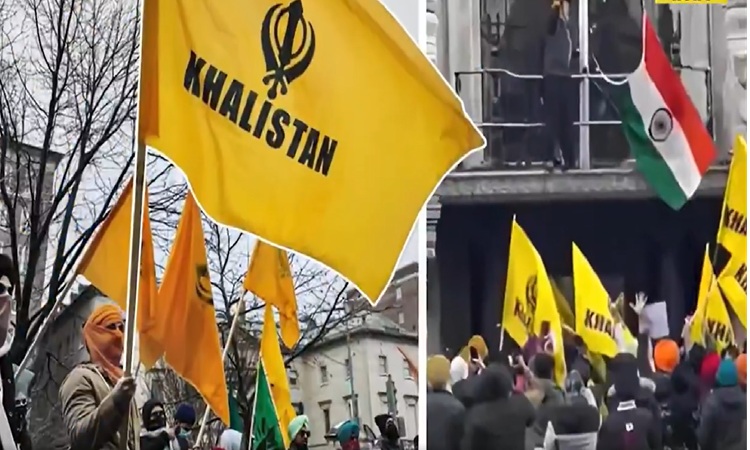
New Delhi, September 6, 2025: In a significant admission, the Canadian government has confessed that Khalistani groups are operating and receiving funding within its borders. The revelation comes through a recent government report that explicitly names organizations such as Babbar Khalsa International (BKI), International Sikh Youth Federation (ISYF), and Sikhs for Justice (SFJ).
The report states that these groups are exploiting Canada’s financial system and civil freedoms to fuel separatist propaganda against India. This acknowledgment is the first official confirmation from Ottawa that such groups not only exist but also thrive on financial and logistical support in Canada.
Funding Channels Under Scrutiny
The findings highlight that Khalistani groups are adopting multiple channels to raise funds. These include:
- Crowdfunding platforms often disguised as community initiatives.
- Cryptocurrency transfers to bypass traditional banking scrutiny.
- Misuse of money service businesses (MSBs) and banks.
- Charity fraud and exploitation of non-profit organizations (NPOs).
- Criminal activities and alleged state funding.
By diversifying financial streams, separatist groups maintain steady inflows of resources while evading strict monitoring.
Longstanding Inaction Raises Questions
Despite repeated warnings from India, successive Canadian governments have been accused of turning a blind eye to these activities. Videos and public statements from Khalistani leaders regularly emerge from Canada, often glorifying separatist violence and calling for anti-India actions.
Former Prime Minister Justin Trudeau faced consistent criticism for failing to act decisively against such groups. His successor, Mark Carney, has also been accused of maintaining silence despite rising concerns.
Analysts argue that electoral compulsions tied to diaspora politics may explain Canada’s reluctance to crack down on these elements.
A Growing Diplomatic Flashpoint
The Khalistan issue has remained one of the biggest irritants in India-Canada relations. New Delhi has repeatedly lodged protests against Ottawa’s inaction and demanded concrete measures to dismantle terror financing networks.
Indian officials say this latest admission strengthens their case. A senior security expert noted, “For years, India has raised alarm about Khalistani groups using Canada as a base. Ottawa’s own report now validates those concerns.”
Diplomats expect the revelation to put fresh strain on bilateral ties, especially with upcoming high-level meetings on trade and security cooperation.
India’s Response and Security Concerns
New Delhi is expected to demand stronger enforcement mechanisms from Ottawa, including:
- Freezing financial assets of banned Khalistani outfits.
- Curtailing visa misuse by extremists.
- Strengthening intelligence-sharing on terror networks.
- Investigating NPOs and charities linked to extremist financing.
India’s Ministry of External Affairs has not yet issued an official statement, but government insiders suggest that diplomatic pressure will intensify in the coming weeks.
Broader Implications for Canada
The Canadian government now faces a dual challenge: maintaining its international credibility as a democracy committed to fighting terrorism while balancing domestic political pressures.
Experts say Ottawa risks alienating a strategic partner like India if it fails to act swiftly. Moreover, Canada’s international image may suffer as the admission suggests it has become a safe haven for extremist elements.
Conclusion
The Canadian report confirming the funding of Khalistani terrorists and separatist groups is a watershed moment in India-Canada relations. While it validates India’s long-standing concerns, the revelation also puts the onus squarely on Ottawa to act decisively.
Failure to clamp down on extremist financing could further escalate tensions, undermining diplomatic, trade, and security cooperation between the two countries. The coming weeks will determine whether this acknowledgment marks the beginning of corrective action or continues the cycle of inaction.