
Baloch Liberation Army Destroys Pakistani Military Surveillance Towers in Balochistan
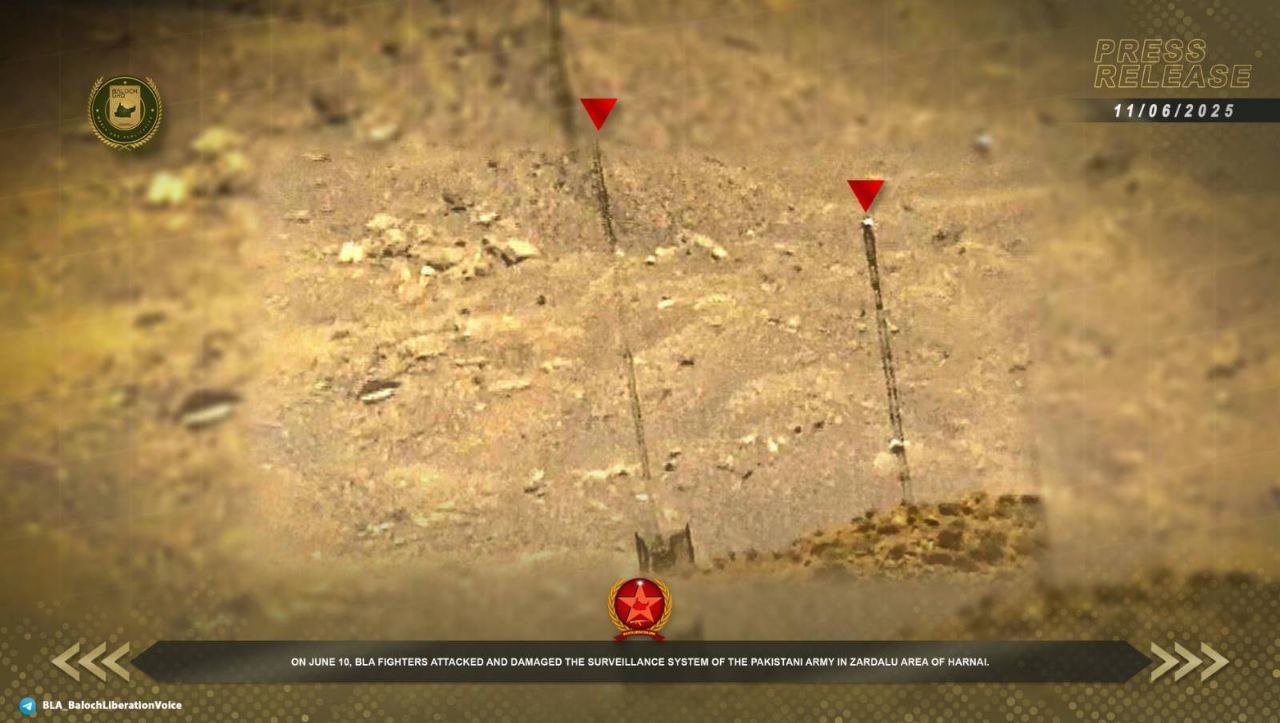
In a dramatic escalation of its separatist campaign, the Baloch Liberation Army (BLA) has claimed responsibility for a series of strategic attacks on Pakistani military infrastructure, including the destruction of surveillance towers in the Zardalou area of Harnai district, Balochistan. The attacks mark a significant shift in tactics, targeting intelligence-gathering capabilities that are critical to counterinsurgency efforts by the Pakistan Army.

Balochistan Declares Independence from Pakistan: A New Bangladesh Moment?
Who Is the Baloch Liberation Army?
The BLA is one of the most prominent armed separatist groups in Balochistan, a mineral-rich but socioeconomically marginalized province of Pakistan. Established in the early 2000s, its roots lie in long-standing Baloch nationalist movements that began soon after Pakistan’s annexation of Balochistan in 1948.
- Goal: The BLA seeks an independent, sovereign Balochistan.
- Tactics: It has launched numerous attacks against military posts, infrastructure, and foreign interests—especially those linked to the China-Pakistan Economic Corridor (CPEC).
- Designation: The group is banned in Pakistan and designated a terrorist organization by the UK and others, though many Baloch nationalists view it as a resistance movement.
June 10: A Day of Coordinated Strikes Across Balochistan
- Surveillance Towers Destroyed – Harnai District
According to an official statement from the BLA, fighters targeted surveillance towers equipped with long-range cameras in Zardalou, Harnai district. These installations were used by the Pakistani military to track the movements of Baloch insurgents.
“All the cameras were damaged. Our organization, Baloch Liberation Army, accepts responsibility,” said the group in a public release.
The destruction of this surveillance infrastructure is a tactical blow to the army’s ability to monitor insurgent activity in remote mountainous regions.
- Armed Attack on Military Post – Bibi Nani, Bolan District
On the same day, the BLA launched an armed offensive on a military checkpoint in Bibi Nani, located in Bolan district. The group claimed that several Pakistani soldiers were killed in the attack, although no official confirmation has been issued by Pakistani authorities.
- Rocket Attack – Johan Area, Kalat District
A rocket-propelled grenade and heavy weapons were used in a separate assault in Johan, Kalat district. The BLA alleged that two security personnel were killed.
- Earlier Attack – Shekhari, Kalat (June 7)
Days before the coordinated June 10 attacks, the BLA had also launched an extended assault in Shekhari, Kalat district. Using automatic weapons and rockets, they reportedly killed three soldiers and injured three more in a battle that lasted several hours.
The Strategic Shift: Disabling Military Surveillance
The destruction of surveillance towers marks a significant shift in the BLA’s approach—from ambushing convoys and isolated posts to now dismantling Pakistani intelligence and monitoring infrastructure. This move not only complicates military operations in the rugged terrain of Balochistan but also sends a powerful symbolic message: that Baloch fighters are organized, mobile, and capable of breaching hardened surveillance zones.
Balochistan’s Unresolved Conflict
Key Drivers of Unrest:
- Resource Exploitation: The province holds vast reserves of natural gas, copper, and gold, yet local communities remain impoverished.
- Military Presence: Pakistan maintains a heavy troop deployment in the region, with frequent allegations of enforced disappearances, torture, and extrajudicial killings.
- Political Marginalization: Many Baloch residents believe they have little to no say in national governance or developmental decisions.
According to Amnesty International and Human Rights Watch, the region continues to be plagued by systemic human rights abuses, worsening the alienation of the local populace.
Implications for Regional Stability and CPEC
The BLA’s intensified activity also casts a shadow over the future of foreign investments, especially the multi-billion-dollar China-Pakistan Economic Corridor (CPEC). Chinese nationals and CPEC-linked projects have frequently been targeted by Baloch insurgents, who see them as symbols of exploitation.
Security experts note that repeated BLA attacks on military surveillance and infrastructure may:
- Force greater militarization in the province,
- Increase foreign risk perception, and
- Strain Pakistan’s internal security budget.
BLA’s Broader Message to the World
In its communiqué titled “A New Order Has Become Inevitable in the Region,” the BLA warned international powers against supporting Pakistan, calling it “a creator and patron of terrorist networks.” It emphasized its aim of establishing an independent Baloch state, vowing to continue its operations until “complete liberation” is achieved.
Conclusion
The coordinated destruction of surveillance towers and military assaults underscore a deepening insurgency that shows no sign of abating. As Balochistan becomes an increasingly volatile flashpoint, both Pakistan and global stakeholders invested in the region must confront the complex web of local grievances, strategic missteps, and international implications.
Until meaningful dialogue and inclusive political reforms are initiated, the cycle of violence between the Pakistani state and Baloch separatist groups like the BLA is likely to persist—if not intensify.