
A Major Milestone for Food Security in Punjab
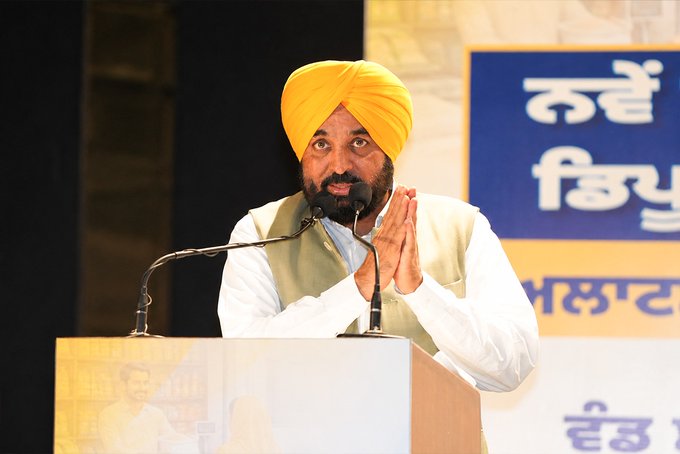
The Punjab government has taken a monumental step toward reinforcing food security and localized employment across the state. Chief Minister Bhagwant Singh Mann officially handed over new distribution permits at a high-profile state event at Vikas Bhawan in Sahibzada Ajit Singh Nagar (Mohali). This comprehensive rollout targets the structural issues of localized supply chains.
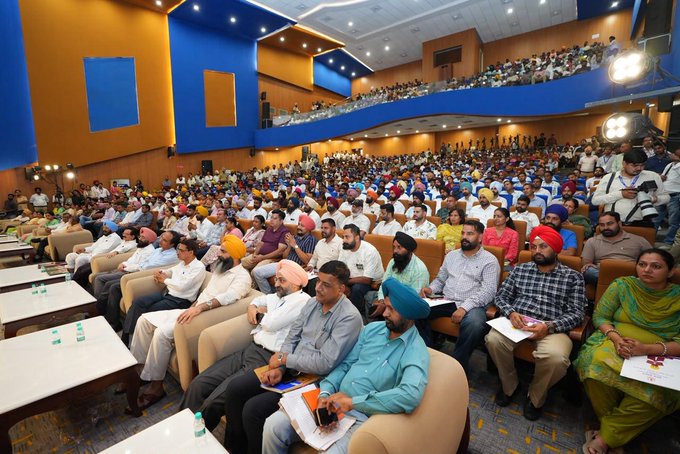
Punjab Ration Depot Licences: CM Bhagwant Mann Allots 2,800 Allotments in Mohali
The administration distributed exactly 2,800 new ration depot licences to newly selected operators. Consequently, this major administrative expansion directly elevates the daily living standards of nearly 5.5 lakh registered ration cardholders. Beneficiaries will no longer face logistical hurdles, grueling travel distances, or exhausting queues to claim their essential monthly provisions.
Also Read : AAP Punjab Membership Grows as Bhupinder Pal Singh…
Through this decentralized framework, the government aims to eliminate structural inefficiencies inside the regional supply chains. This localized infrastructure means daily wage workers will no longer lose their vital wages simply to collect government-subsidized grains. Additionally, the initiative converts standard welfare distribution into a sustainable engine for community-level entrepreneurship. Thousands of selected families are now gaining independent financial stability while providing crucial public services.
Radical Transparency in Public Distribution
Historically, the distribution of regional food storage permits suffered from systemic political favoritism and nepotism. Previous administrations frequently weaponized these permits to reward political workers, which damaged service standards. However, the current government completely dismantled these legacy structures. The state introduced a rigorous, interview-based selection process to maintain complete transparency.
This strict data framework demonstrates an unprecedented commitment to deep structural inclusion. By embedding social justice directly into the state supply chain, the government provides immediate economic representation to marginalized groups. The rigorous interview metric ensures that individual merit, operational capability, and ethical accountability dictate who manages public food resources.
Expanding the Smart Ration Card Scheme
This expansion coordinates perfectly with Punjab’s larger food security goals, notably the Smart Ration Card Scheme. Under this extensive umbrella, the state government supplies free wheat alongside its comprehensive ‘Meri Rasoi’ food kits. The distribution network reliably reaches approximately 40 lakh low-income families statewide. These specialty household kits feature essential culinary staples, including high-quality pulses and vital spices.
The addition of these 2,800 new operational units ensures seamless last-mile delivery across remote territories. The administration explicitly warned all new operators to perform their public duties with absolute integrity. Every operator must prioritize vulnerable citizens, specifically targeting the elderly, economically backward households, and differently-abled individuals. If needed, depot managers are legally obligated to provide direct doorstep drop-offs to disabled individuals who cannot visit physical storefronts.
Furthermore, Food and Civil Supplies Minister Lal Chand Kataruchak confirmed that the state doubled the operational margin money for depot holders. This strategic financial increase, the first major adjustment in eight years, keeps local distribution centers highly profitable. Satisfactory financial margins protect operators from economic strain and eliminate the incentive for corrupt grain diversions.
Fiscal Accountability and Future Visions
During the Mohali convention, the administration emphasized strict public finance management. Every rupee collected through state taxes is funnelled directly into real asset creation and citizen welfare. The state actively redirects public funds away from political advertisements and into robust, long-term developmental infrastructure.
The government’s definitive roadmap involves building functional distribution spots in every single village and urban neighborhood across Punjab. By prioritizing systemic equity, eliminating deep political corruption, and supporting local business owners, the province establishes an unshakeable template for grassroots governance. This broad public distribution reform moves the state closer to realizing its vision of a vibrant, healthy, and self-sustaining region.