
CHANDIGARH: The public mobility sector in northern India is witnessing an unprecedented, historic transformation. Under the visionary leadership of Chief Minister Bhagwant Mann, the state has officially initiated a monumental Punjab public transport revolution. Punjab Finance and Transport Minister Harpal Singh Cheema announced a massive addition of 1,279 new state-run vehicles to the regional transit network. This aggressive strategy aims to elevate Punjab to the top spot nationwide in terms of public transport infrastructure.
This historic fleet expansion marks the single largest state transit investment in over two decades. Specifically, the expansion will increase the state’s total active fleet strength by an incredible 56%. The existing pool will grow from a modest 2,267 buses to a massive 3,546 operational units by the end of December 2026. Consequently, this strategic upgrade will provide smoother, safer, and highly efficient travel experiences for lakhs of daily commuters.
Read More : Punjab Government Bus Services to Get Online Ticketing,…
Direct Procurement Breakdown for PRTC and PUNBUS
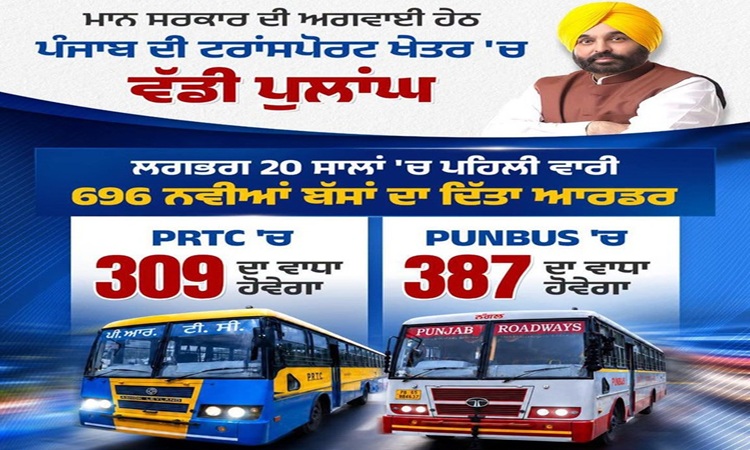
To power this Punjab public transport revolution, the state transport department has already finalized manufacturing contracts for 696 standard ordinary buses. The allocation splits the vehicles logically to address micro-regional commuting demands. Specifically, PEPSU Road Transport Corporation (PRTC) will receive 309 brand-new buses. Concurrently, Punjab Roadways (PUNBUS) will induct 387 standard units into its active regional grid.
According to official state timelines, the manufacturing units will deliver the vehicles in structured phases. Around 300 standard ordinary buses will hit the regional highways by November 2026. The remaining vehicle backlog will seamlessly integrate into regional service schedules before December 2026 concludes. Additionally, the administration has successfully procured 100 dedicated midi-buses for PRTC. These specialized mid-sized units will join the fleet by September 2026 to bridge crucial rural and urban connectivity gaps.
Fleet Expansion and Rollout Timeline
| Transit Department Asset | Number of New Buses Added | Targeted Operational Deadline |
| PUNBUS Ordinary Fleet | 387 Units | November – December 2026 |
| PRTC Ordinary Fleet | 309 Units | November – December 2026 |
| PRTC Midi-Bus Fleet | 100 Units | September 2026 |
| Leased Kilometre Scheme | 483 Units | Phased Rollout (Ongoing) |
Official Projection: This comprehensive overhaul will significantly alter per-capita vehicle availability. The public bus density will instantly surge from 7 buses up to nearly 12 buses per one lakh citizens. This leap positions Punjab well above India’s baseline national average for State Transport Undertakings.
Smart Technology Upgrades for Next-Gen Mobility
The modern Punjab public transport revolution goes far beyond merely expanding the number of vehicles on the road. The Mann government is systematically retrofitting every single incoming vehicle with top-tier electronic security architectures. Commuters will benefit from advanced onboard safety systems designed to prevent accidents and monitor passenger well-being in real time.
1.Advanced Onboard GPS Navigation:Real-time Tracking.
Every new vehicle communicates directly with a centralized monitoring room via high-precision GPS tracking devices.
2.Dual-View DashCams and CCTV:Active Monitoring.
Onboard surveillance networks record both driver performance and cabin activity to ensure an optimal transit environment.
3.UPI QR-Code Cashless Payments:Instant Ticketing.
Conductors carry handheld digital ticketing machines that allow commuters to pay instantly using any retail UPI application.
Prioritizing Women’s Safety on State Highways
A core objective driving this Punjab public transport revolution is the absolute security of female passengers. Official data reveals that women make up approximately 54% of the total daily commuter base utilizing state transport services. This high ridership follows the successful implementation of the state’s free travel policy for women.
Therefore, integrating continuous internal CCTV camera surveillance acts as a powerful deterrent against harassment. These smart safety measures ensure that mothers and daughters can travel across regional routes with complete peace of mind. Additionally, the department is conducting satellite-based travel pattern surveys. These advanced studies will locate underserved sub-routes, ensuring that safe public transit extends even to remote borders.
Strengthening Last-Mile Rural Connectivity
For decades, remote villages across the state lacked consistent access to affordable public transit services. Fortunately, this massive fleet upgrade solves that challenge by routing vehicles directly into deep rural interiors. The addition of leased vehicles under the competitive Kilometre Scheme will further supplement these high-frequency operations.
In total, 483 leased buses will eventually join the broader network to support the state-owned units. Over 250 of these leased vehicles are already operational on key corridors. Additionally, another 100 ordinary and 50 premium air-conditioned buses will join the fleet by October 2026. This multi-layered strategy provides citizens with reliable options while effectively shutting down illegal private transport syndicates.