
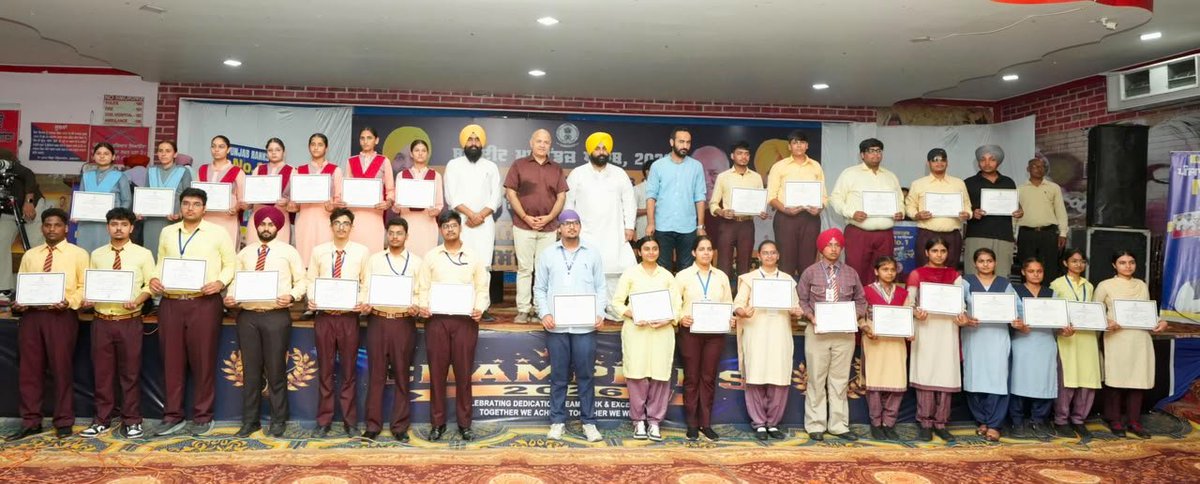
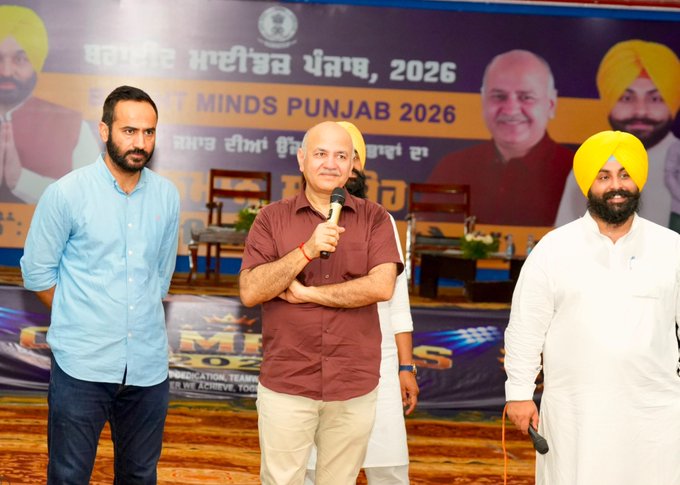
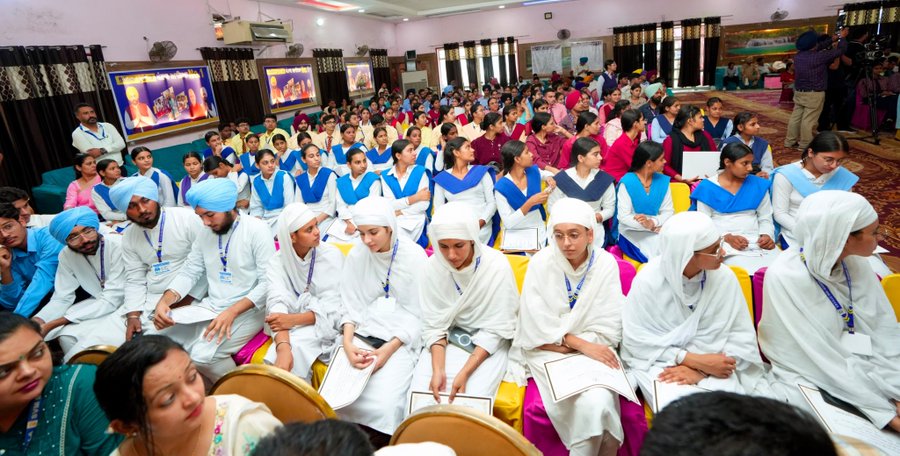
Recently, a remarkable event unfolded during the high-profile Bright Minds Punjab 2026 program held in Barnala district. Former Delhi Education Minister Manish Sisodia and Punjab Education Minister Harjot Singh Bains interacted directly with local students. During this interactive educational summit, an extraordinary grassroots success story caught the attention of top policymakers. A bright Class 12 student successfully established a functional micro-enterprise within his village locality. Amazingly, the young boy generated a solid profit of ₹700 from a very modest initial seed investment of just ₹1,000. This inspiring breakthrough highlights a massive structural transformation happening inside Punjab government schools this year. The state administration is actively shifting its focus from traditional rote learning toward practical, real-world skill development. Consequently, hundreds of ordinary children from modest backgrounds are now breaking traditional barriers to become confident business leaders.
How Punjab Government Schools are Turning Class 12 Students Into Young CEOs
The Seed Money Revolution Transforming Rural Classrooms
Historically, public educational institutions focused solely on preparing young minds for routine corporate employment. To change this rigid mindset, the state government launched the ambitious Business Blaster Young Entrepreneur Scheme. Under this progressive program, the state education department provides direct seed money funding to students. Specifically, the administration distributes a standard amount of ₹2,000 to individuals to test their unique business concepts.
Currently, this comprehensive initiative is running successfully across more than 1,900 senior secondary institutions statewide. This extensive coverage ensures that over two lakh active students receive hands-on training in financial literacy. Furthermore, the specialized curriculum helps teenagers identify pressing problems within their immediate local neighborhoods. Students then form small collaborative teams to design practical, low-cost commercial solutions. This experiential methodology successfully brings corporate boardroom dynamics straight into rural Punjab government schools. As a result, children learn critical economic principles through direct field implementation rather than dense textbooks.
Read More : How Punjab Government Schools Beat Kerala to Become India’s Number One Education Powerhouse
Creating Dynamic Job Providers Instead of Job Seekers
The profound impact of this targeted educational policy extends far beyond simple classroom exercises. During his official visit to Barnala, Manish Sisodia explicitly emphasized the core philosophy driving these structural changes. He stated that the progressive Bhagwant Mann administration remains deeply committed to shaping youth into innovative job creators. Therefore, the curriculum actively discourages the old, unsustainable habit of merely chasing limited institutional employment.
How Punjab Government Schools are Turning Class 12 Students Into Young CEOs
Moreover, this practical approach is yielding phenomenal financial results at the absolute grassroots level. According to recent 2026 data, the state is supporting over 65,000 ambitious student entrepreneurs this year. School teams are building diverse ventures ranging from custom organic fertilizers to innovative local delivery systems. Local industrial experts and established corporate mentors regularly visit campuses to evaluate these student prototypes. This consistent professional guidance helps young minds refine their production processes and maximize profit margins safely. Clearly, Punjab government schools are successfully proving that financial constraints cannot restrict raw, localized innovation anymore.
Expanding Entrepreneurship Studies to Lower Secondary Batches
Fortunately, this unique educational triumph is not limited to senior secondary classes alone anymore. Building upon the spectacular success of the initial rollout, the state recently took a massive expansion step. Education Minister Harjot Singh Bains announced a fresh collaboration with the renowned Udhyam Learning Foundation. Consequently, the state signed a comprehensive three-year memorandum of understanding to scale the program further.
Crucially, the administration is now expanding this mandatory entrepreneurship framework down to Classes 9 and 10. This strategic expansion will comfortably benefit over 6.4 lakh young students across all districts. The main objective is to cultivate essential life skills like critical thinking and decision-making early. Therefore, even non-graded junior batches now participate in interactive project exhibitions regularly. This systemic continuity ensures that the entrepreneurial mindset becomes an permanent part of a child’s developmental journey. By the time these teenagers graduate, they possess immense confidence to navigate competitive market realities.
Fostering a New Era of Economic Self-Reliance
To celebrate these historic milestones, educational authorities are hosting large-scale Business Blaster Melas across the state. These vibrant public exhibitions allow student teams to display their operational businesses directly to genuine buyers. Thousands of proud parents, local shopkeepers, and venture capitalists attend these events to support young innovators. This extensive community engagement successfully restores immense public faith in the state-run school system.
Concurrently, the education department is preparing to introduce a futuristic Artificial Intelligence curriculum very soon. This technological addition will complement the business program, allowing students to build tech-driven startups easily. The ongoing transformation inside Punjab government schools provides a solid, repeatable blueprint for national public sector reform. By trusting the creative instincts of young children, the state is building a highly self-reliant generation. These young student entrepreneurs from Barnala and beyond are no longer just dreaming about a better future. Instead, they are actively constructing it with their own hands.