
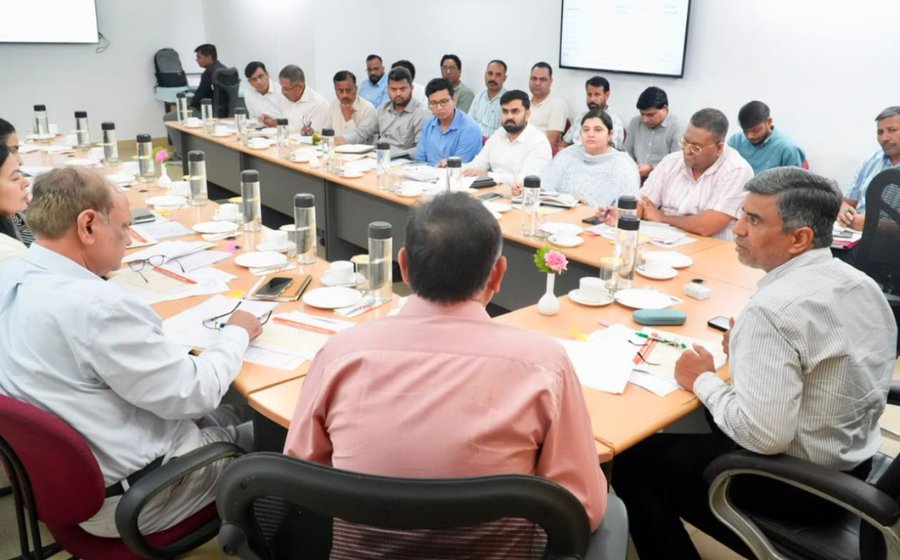
The state administration has completed a comprehensive Haryana government schools survey. Officials evaluated basic amenities across all public institutions to improve overall educational standards.
Consequently, experts mapped district-wise structural gaps and immediate facility needs. Development plans are moving forward based on exact ground requirements.
Furthermore, civil construction and campus repair work will receive fast-tracked approvals. Authorities confirmed that needed development funds will clear without administrative delays.
Strategic Blueprint for Infrastructure Upgrades
Data gathered from the Haryana government schools survey guides new district infrastructure initiatives. Officials aim to equip targeted classrooms with comfortable dual desks by November 2026.
Meanwhile, procurement tenders are already progressing swiftly to maintain this timetable. Furthermore, administrators selected 250 institutions to become state-level CM-EEE model schools.
These campuses mirror PM-SHRI school benchmarks to elevate academic environments. Specialized upgrade plans will revamp learning facilities and campus layouts systematically.
Expanding Academic Programs and Language Studies
Infrastructure changes complement broader updates to academic offerings in state classrooms. For instance, public institutions now teach foreign languages like French and German.
French classes operate in 26 campuses after 60 teachers completed embassy training. Similarly, 80 educators are completing German instruction courses alongside international experts.
Additionally, administrators expanded the prestigious Super 100 competitive coaching initiative. Available seats increased from 400 to 500 for competitive exams.
Moreover, two offline coaching centers have been set up to support NEET and IIT candidates. Therefore, student preparation for national exams will improve significantly.
Decentralized Power for Local School Committees
The state strengthened School Management Committees to ensure rapid project delivery. These local groups now hold enhanced financial powers for essential repairs.
For example, local leaders can execute minor works up to ₹1 lakh directly. Furthermore, Additional Deputy Commissioners can approve larger infrastructure projects reaching ₹25 lakh.
This decentralized structure eliminates bureaucracy and speeds up campus updates. As a result, schools can solve local issues without waiting for central approvals.
Also Read : Happening Haryana 2.0 Mumbai: Deals Worth Over ₹66,000 Crore Signed
Primary Foundation and Digital Learning Tracking
The state also expanded early education programs alongside physical construction work. For instance, the NIPUN mission now extends through Class 5 benchmarks.
Teachers currently track foundational learning levels using specialized mobile applications. Consequently, digital assessments help tailor future textbooks to real classroom needs.
Field inspections verify that basic amenities meet essential health standards. Local officials perform regular visits to inspect clean drinking water and functional toilets.
In conclusion, findings from the Haryana government schools survey guide comprehensive reforms. Prompt funding ensures better learning spaces for students statewide.