
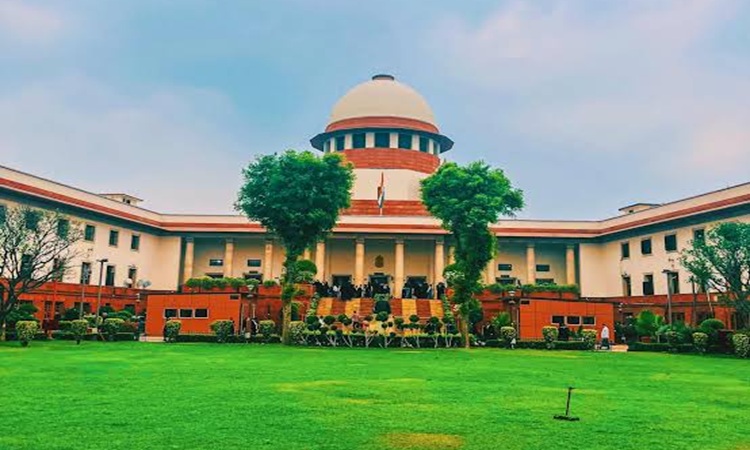
Delhi Pollution: Supreme Court Orders Suspension of Toll Plaza Collection to Tackle Toxic Air
The Supreme Court on Wednesday intensified its intervention in the Delhi pollution crisis, directing authorities to suspend toll plaza collection as part of urgent measures to curb toxic air in the National Capital Region. The court expressed deep concern as air quality continued to remain in the “severe” category across several parts of Delhi and adjoining NCR areas, posing serious health risks to residents.
Hearing a batch of matters related to air pollution, the bench stressed the need for realistic and enforceable solutions. “Let us think of pragmatic and practical solutions to this menace,” the court observed, signalling impatience with repeated policy failures and weak enforcement despite years of judicial directions.
The bench, headed by Chief Justice of India Surya Kant along with Justices Joymalya Bagchi and Vipul M Pancholi, asked the Delhi government to come up with a concrete plan to ensure no toll plaza operations until January 31 next year. The court gave the government one week to act on the directions.
Traffic Congestion at Toll Plazas Flagged as Pollution Trigger
During the hearing, the court was informed about severe traffic congestion at the Municipal Corporation of Delhi toll plaza near Gurugram. Long queues of vehicles reportedly stretch for hours, resulting in excessive idling, fuel wastage and higher vehicular emissions.
CJI Surya Kant made sharp observations on the issue, stating that toll plazas generate more litigation and pollution than revenue. “We do not want the income you generate. You definitely generate a lot of litigation,” he remarked. The court underlined that toll-related congestion spills over towards Delhi, further worsening regional air quality.
Rejecting claims that concerns were exaggerated, the Chief Justice said the problem was a lived reality. “These are not allegations. These are truths that people experience every day,” he noted, reinforcing the urgency of suspending toll operations.
Construction Workers’ Welfare Under Court Scanner
The Supreme Court also addressed the plight of construction workers rendered jobless due to pollution curbs. It directed the Delhi government to verify affected workers and ensure direct benefit transfers reach their bank accounts without leakages.
The court cautioned that funds must not “disappear or travel to another account,” stressing accountability in welfare disbursals. Additionally, it asked the government to explore alternative employment options for workers impacted by construction bans.
Responding to the court, the Delhi government informed the bench that nearly 7,000 construction workers had been verified so far. However, around 2.5 lakh workers are estimated to be affected. Authorities assured the court that verified workers would receive financial assistance directly.
Supreme Court Slams Lax Enforcement and Lifestyle Choices
The observations came amid continued monitoring of pollution control measures by the apex court. Senior advocate and amicus curiae Aparajita Singh told the bench that air quality remained “severe” despite multiple Supreme Court orders over the years.
She flagged slow implementation and weak enforcement of pollution-control protocols. The court agreed, noting that non-compliance had become routine.
The bench also criticised the lifestyle choices of affluent sections. The Chief Justice pointed out that many continue to use large diesel vehicles and generators despite restrictions. “It is the poor and working classes who suffer the worst health consequences,” the court observed, highlighting environmental inequality.
Transport Sector Biggest Polluter: CAQM Data
Data submitted by the Commission for Air Quality Management revealed that the transport sector contributes 41 per cent of Delhi-NCR’s ambient air pollution load. Dust and construction activities account for 21 per cent, industries 19 per cent, power plants 5 per cent and residential sources 3 per cent.
Other sources together contribute 11 per cent. CAQM clarified that stubble burning remains a periodic factor limited to a short window. However, emissions from vehicles and construction remain constant throughout the year.
The court also noted violations of its earlier orders barring sporting events for children during severe pollution periods. Organisers continue to sidestep restrictions, exposing children to hazardous air, the amicus informed.
Why This Supreme Court Order Matters
The Delhi pollution Supreme Court order marks a decisive push for immediate administrative action. By targeting toll plazas, the court has linked traffic management directly with public health. If implemented strictly, the suspension could reduce congestion-related emissions during peak pollution months.
However, the bench made it clear that orders alone are not enough. Effective enforcement, behavioural change and institutional accountability remain critical to addressing Delhi’s chronic air crisis.