
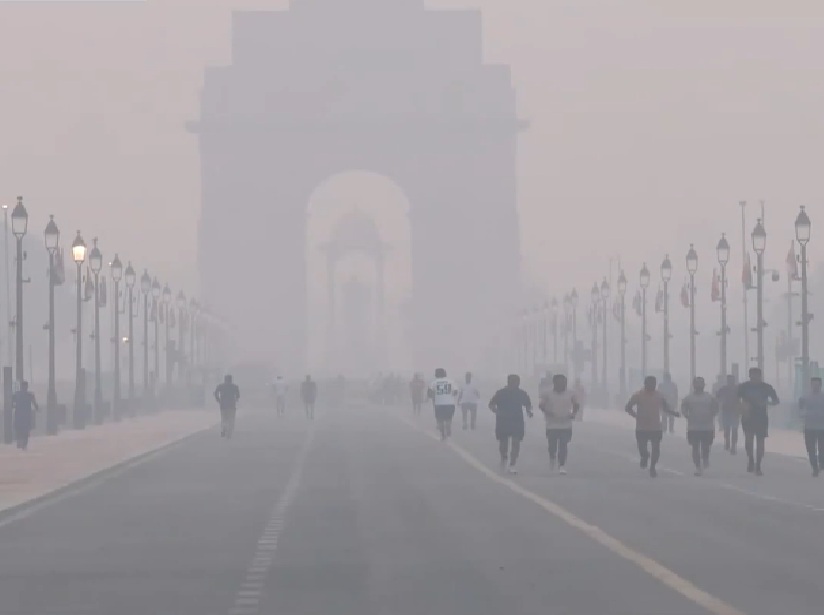
First Poor Air Quality Day of the Winter Season Hit
The headline milestone where Delhi Air Quality Touches 245 marked the official arrival of winter pollution challenges across the National Capital Region. On Wednesday, the city registered an Air Quality Index (AQI) reading of 245, falling directly into the ‘Poor’ category.
This reading represents a 100-day high for the capital’s air monitoring stations. The last time the city recorded a comparable index was on July 13, when the overall AQI reached 246. In response, anti-pollution authorities activated immediate emergency protocols across Delhi, Haryana, Uttar Pradesh, and Rajasthan.
Also read : https://indiathisweek.in/india/fssai-food-safety-action-on-quick-commerce-firms/
CAQM Invokes Stage 1 Graded Response Action Plan
Following the confirmation that Delhi Air Quality Touches 245, the Commission for Air Quality Management (CAQM) invoked Stage I of the Graded Response Action Plan (GRAP). This step mandates strict anti-pollution measures across all municipalities in the capital region.
Enforcement teams must now implement dust control measures at active construction sites and ban open burning of biomass or garbage. Furthermore, traffic police departments are checking vehicles for valid Pollution Under Control (PUC) certificates while impounding visibly polluting or overage petrol and diesel vehicles.
Impact of Stubble Burning and Weather Conditions
A major factor explaining why Delhi Air Quality Touches 245 involves the sharp increase in crop residue burning across neighboring agricultural states. Forecasts by the Decision Support System for Air Quality Management show that farm fire contributions rose to over 13 percent on Thursday, up from 8 percent on Wednesday.
However, scientific modeling projects that farm fire contributions will drop to 10.369 percent by Friday. Simultaneously, dropping seasonal temperatures and stagnant calm winds prevent pollutants from dispersing, trapping heavy particulate matter close to ground level across urban neighborhoods.
| Serial No. | Environmental Air Quality Parameter | Recorded Scientific Metric | Primary Regulatory Action |
| 1 | Wednesday Overall AQI Reading | 245 Index Score (‘Poor’ Category) | Invokes Stage-1 GRAP Measures |
| 2 | Peak Stubble Burning Contribution | Over 13% Contribution to NCR Air | Drives Regional Agricultural Monitoring |
| 3 | Projected Friday Stubble Share | Declines to 10.369% Contribution | Tracks Regional Air Quality Trends |
| 4 | Previous Comparable AQI High | 246 Index Score Recorded July 13 | Ends 100-Day Clean Air Window |
Restrictions on Interstate Buses and Vehicle Movements
The enforcement framework established after Delhi Air Quality Touches 245 places firm restrictions on transport networks entering the capital. Inter-city and inter-state buses originating from Haryana, Uttar Pradesh, and Rajasthan cannot enter NCR unless they operate on electric, CNG, or BS-VI diesel engines.
Additionally, municipal authorities must intensify field inspections across industrial clusters, brick kilns, and hot-mix plants. Traffic management divisions are deploying additional personnel at major bottlenecks to smooth traffic flow and reduce idling emissions at busy intersections.
| Serial No. | Key Environmental Metric | Official Recorded Status | Strategic Public Health Value |
| 1 | Focus Category Keyword | Delhi Air Quality Touches 245 | Directs national environmental reporting |
| 2 | Statutory Oversight Authority | Commission for Air Quality Management | Enforces Regional GRAP Mandates |
| 3 | Permitted Interstate Bus Types | Electric, CNG, and BS-VI Diesel Only | Limits Cross-Border Exhaust Smoke |
| 4 | Primary Local Dust Controls | Mandatory Construction Site Curtains | Prevents Airborne Particulate Spikes |
Festive Celebrations and Seasonal Dispersal Challenges
The air quality deterioration recorded as Delhi Air Quality Touches 245 coincided with post-Dussehra celebrations, during which effigies packed with firecrackers burned at several locations across Delhi-NCR. While air quality worsened around festive grounds, meteorological experts note that slowing wind speeds remain the primary driver of persistent winter smog.
Environmental agencies urge residents to limit individual vehicle usage, report open waste burning on civic mobile apps, and adopt public transport to help control regional emissions.