
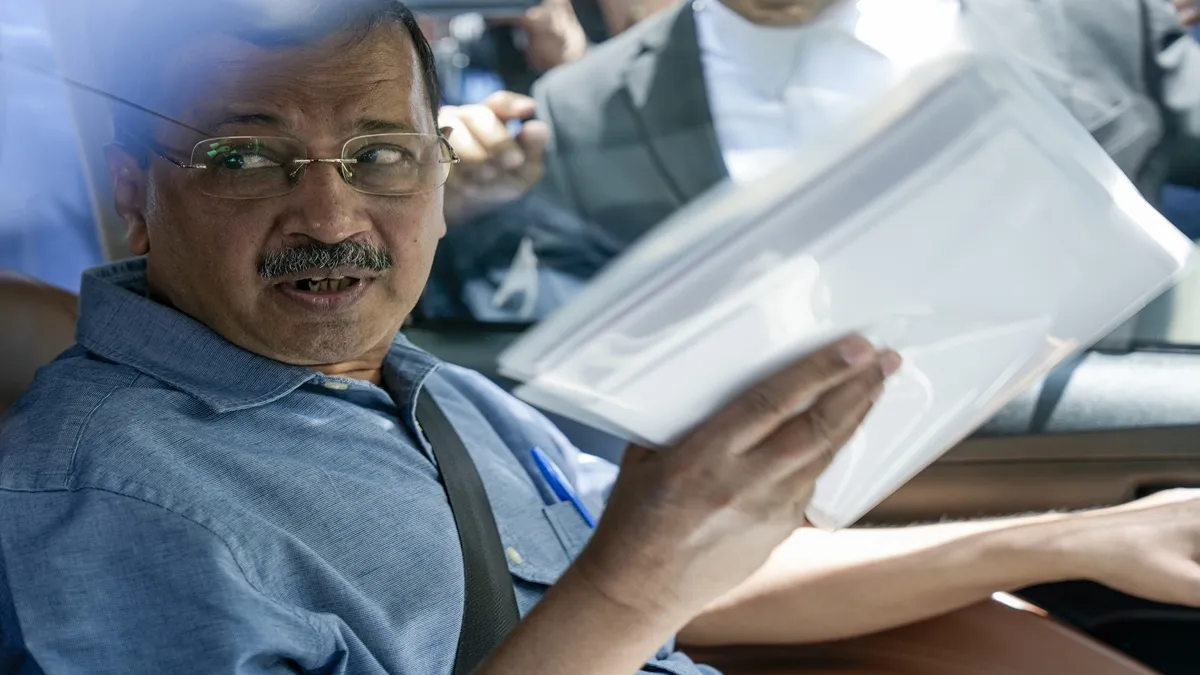
The Arvind Kejriwal Delhi High Court Hearing in the liquor policy case witnessed detailed legal arguments as Aam Aadmi Party (AAP) national convenor Arvind Kejriwal appeared personally before the court in connection with the Central Bureau of Investigation (CBI) plea. The Arvind Kejriwal Delhi High Court Hearing also saw senior law officers including Solicitor General Tushar Mehta and Additional Solicitor General S.V. Raju representing the CBI side.
At the beginning of the Arvind Kejriwal Delhi High Court Hearing, Kejriwal stated that he holds full respect for the judge and the court. The bench responded that respect is mutual and advised him to remain focused on legal issues. The Arvind Kejriwal Delhi High Court Hearing continued with the court asking him to present specific submissions related to his plea seeking recusal of the judge.
Kejriwal Raises Objection in Arvind Kejriwal Delhi High Court Hearing Over Fairness and Prior Court Order
During the Arvind Kejriwal Delhi High Court Hearing, Kejriwal argued that he is being treated as an accused despite being acquitted by the trial court. He also objected to a previous order passed on March 9, stating that it was issued without the presence of respondents and raised concerns about fairness in the process.
Also read : AAP Leader Saurabh Bhardwaj Raises Alarm Over Judicial Bias in IndiaMLA Fund Boosts
He further said in the Arvind Kejriwal Delhi High Court Hearing that the court had observed prima facie flaws in the trial court’s judgment without examining the full set of documents, which include a 40,000-page chargesheet. According to him, this raises questions about procedural correctness.
The Arvind Kejriwal Delhi High Court Hearing also included his legal argument that the key issue is not actual bias but whether a reasonable apprehension of bias exists in the mind of a litigant. He stated that he would present multiple legal grounds supporting this claim and referred to Supreme Court judgments on similar principles.
Earlier, in the same matter, the CBI strongly opposed his plea during the Arvind Kejriwal Delhi High Court Hearing, calling the allegations baseless and inappropriate. The agency also pointed out that several other accused persons had filed similar recusal requests, which the court noted could be considered together.
The background of the Arvind Kejriwal Delhi High Court Hearing includes the trial court’s February 27 decision, where Kejriwal, Manish Sisodia, and others were acquitted and the CBI’s case was criticized for lack of reliable evidence. However, the High Court proceedings have continued after the CBI challenged aspects of the trial court’s findings.
The Arvind Kejriwal Delhi High Court Hearing remains an important development in the ongoing liquor policy case, with further proceedings expected to determine the outcome of the recusal plea and related legal arguments.