
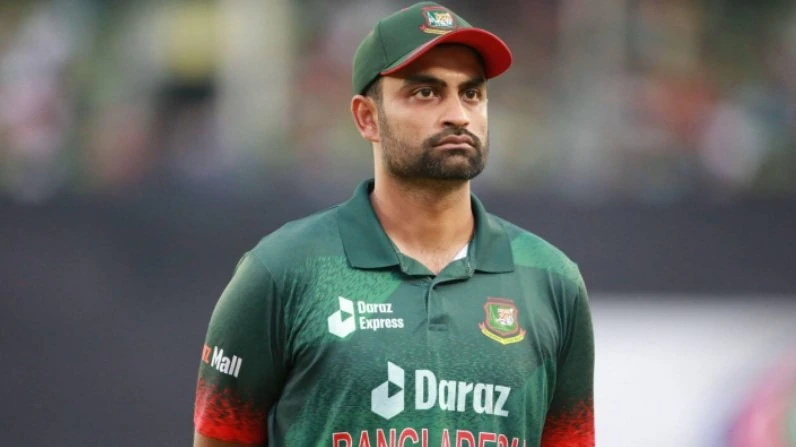
Tamim Iqbal speaks out on India-Bangladesh cricket tensions, urging BCB to prioritize financial stability, ICC compliance, and Bangladesh cricket’s future.
Tamim Iqbal, a veteran cricketer, has encouraged the Bangladesh Cricket Board (BCB) to take a pragmatic approach, saying that the country’s cricketing future is dependent on its relationship with the International Cricket Council.
The Financial Reality Check
As the BCB considers a boycott of Indian-hosted matches, Tamim emphasized the potentially disastrous economic ramifications. He stated that the majority of Bangladesh’s cricket money comes directly from ICC revenue distributions. What I’m saying is that before making such a decision, the interests of Bangladesh cricket, as well as its future, must be addressed. There is nothing better than resolving an issue through discussion,” Tamim told the Daily Star.
“What I feel, and I believe I would have done the same if I were there, is that because this is a sensitive issue, we should debate it internally before making public statements. Because when you make a public statement, right or wrong, it is tough to withdraw from that position. Bangladesh cricket’s future comes first, and the ICC provides 90 to 95 percent of the funds, so decisions must be taken in accordance with what will benefit Bangladesh cricket,” Iqbal remarked.
Caution Against Isolation
Tamim’s comments serve as a “realist” alternative to the radical positions espoused by some board members and government officials. While acknowledging the national mood, the former captain stressed that:
The ICC is the governing body, and defying a direct requirement to travel to the host country (India) could result in Bangladesh being dubbed a “non-compliant” member.
Also read : BCB Confirms Mustafizur Rahman Won’t Return to IPL Amid Row With BCCI
Precedent of Forfeiture: If Bangladesh refuses to participate, the ICC will most likely award points to their opponents, thereby ending their World Cup campaign before it begins.
Long-term Damage: The loss of worldwide commercial interest and the withdrawal of international sponsors (as evidenced with brands like as SG) could result in a large deficit for the BCB.
Internal pressure rises.
Tamim’s viewpoint is consistent with a rising faction within BCB that is concerned about the “National Dignity First” strategy if it leads to complete sporting isolation.
This “internal house” is now increasingly divided between those obeying the Sports Advisor’s strict directions and those, like Tamim, who fear the financial collapse of Bangladeshi sports.