
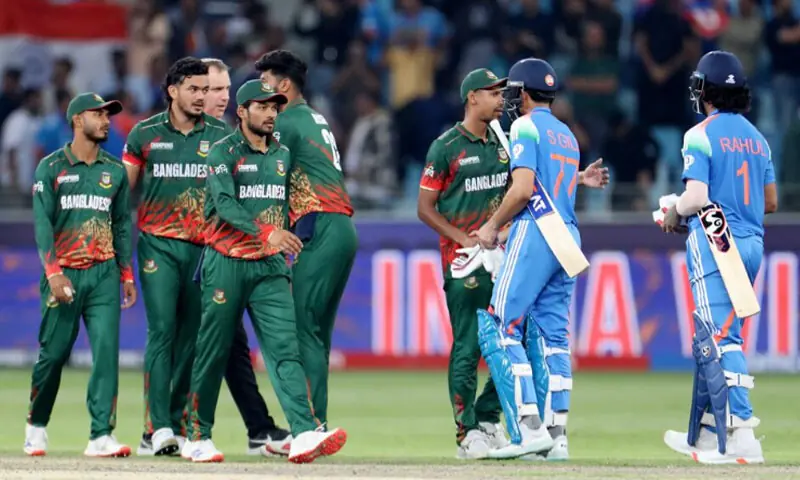
Bangladesh refuses to travel to India for T20 World Cup 2026 citing player safety. ICC evaluates neutral venue proposal amid cricketing tensions.
Concerns about player safety have grown since bowler Mustafizur Rahman’s contentious departure from the Indian Premier League (IPL), prompting a direct directive from Bangladesh interim administration.
The Catalyst “Safety Concerns”
After the BCCI allegedly ordered the Kolkata Knight Riders (KKR) to release Mustafizur Rahman, even though the team had bought him for a hefty ₹9.20 crore at the most recent auction, the conflict escalated.
The tense political situation between the two neighbors and local backlash are said to have had an impact on BCCI’s directive.
Asif Nazrul, the sports adviser for Bangladesh, has been outspoken in his criticism, saying that if one contracted player, such as Mustafizur, is not considered safe or welcome in India, then the same reasoning must be applied to the entire national team.
In a social media post that has since gone viral, Nazrul said, “The board must make it clear that if a Bangladeshi cricketer cannot play in India despite being under contract, the entire team cannot feel safe traveling there.”
Also read: Shubman Gill Pushes for 15-Day Test Camps as Fans Criticize IND vs SA Loss
The “Neutral Venue” Solution Under Proposal
Three of Bangladesh’s Group C games—against the West Indies, Italy, and England—will take place at Kolkata’s famed Eden Gardens. The team’s last group match will take place in Mumbai.
The BCB has suggested relocating these games to Sri Lanka, which is currently co-hosting the competition and will host all of Pakistan’s games under a comparable “neutral venue” arrangement.
ICC and BCCI’s Logistical Position
Although the BCB is requesting an urgent move, BCCI has rejected the idea as a “logistical nightmare.” Air tickets, hotel reservations, and broadcasting crews for all participating teams have reportedly already been confirmed for the tournament, which is scheduled to start on February 7, 2026.
At this point, moving four high-profile games would require exceptional coordination and would interfere with the plans of several other countries.
The deadlock represents one of the biggest crises in South Asian cricket history while the ICC considers the request.