
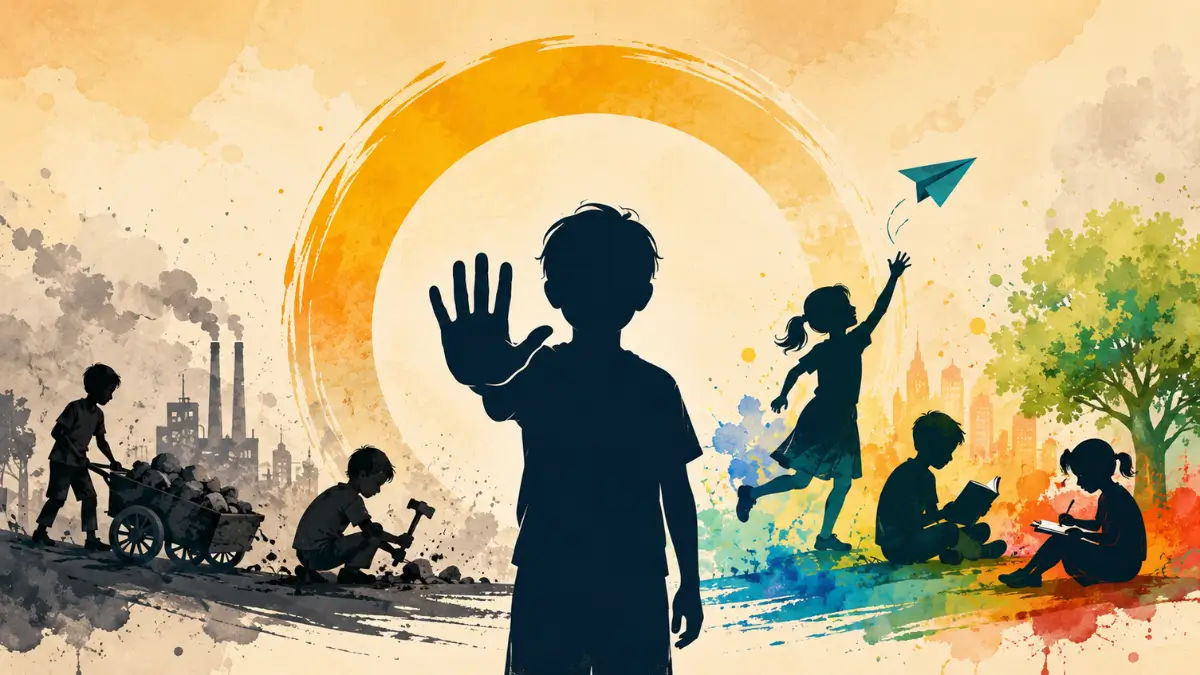
The observance of the World Day Against Child Labour on June 12 serves as a powerful global reminder that millions of children continue to be deprived of education, safety, and a normal childhood due to child labour. Established by the International Labour Organization (ILO) in 2002, the day highlights the urgent need for coordinated global action to eliminate child labour in all its forms.
The World Day Against Child Labour is not only a day of awareness but also a call to action for governments, businesses, communities, and individuals to strengthen efforts toward protecting children’s rights and ensuring their development in safe and nurturing environments.
Understanding the Reality of Child Labour
On the occasion of the World Day Against Child Labour, experts once again emphasized the difference between child work and child labour. While helping in family activities or age-appropriate tasks may contribute to learning, child labour refers to work that harms a child’s physical, mental, or emotional well-being and interferes with education.
The World Day Against Child Labour also draws attention to the worst forms of exploitation, including forced labour, trafficking, hazardous work environments, and recruitment of children into armed conflict. These practices continue to threaten millions of children worldwide.
Global Situation and Ongoing Concerns
Despite progress over the past two decades, the World Day Against Child Labour highlights that child labour remains a major global issue. Children are still engaged in industries such as agriculture, mining, manufacturing, construction, and informal work sectors, often under unsafe conditions and for minimal or no pay.
The COVID-19 pandemic further worsened the situation, pushing vulnerable families into economic distress and increasing the risk of child labour. On this World Day Against Child Labour, international organisations continue to warn that stronger global commitment is needed to meet elimination targets.
Child Labour in India and Ongoing Efforts
In India, the World Day Against Child Labour highlights both progress and ongoing challenges. The country has introduced several legal frameworks and welfare programmes aimed at reducing child labour, including the Right to Education Act, midday meal schemes, and scholarship initiatives that encourage school attendance.
However, child labour continues to exist in sectors such as agriculture, small industries, domestic work, and informal businesses. On this World Day Against Child Labour, experts stress that poverty, migration, and uneven access to quality education remain key challenges that must be addressed.
Education as the Strongest Weapon Against Child Labour
The World Day Against Child Labour strongly reinforces the role of education as the most effective solution to ending child exploitation. Education not only provides knowledge but also protects children from exploitation by keeping them in safe learning environments.
Also read ; Parama Ekadashi Remedies Focus on Tulsi Worship, Donation and Puja Practices
Collective Responsibility to End Child Labour
On the World Day Against Child Labour, global leaders reiterate that ending child labour requires joint action from governments, businesses, and communities. Governments must enforce strict labour laws, while businesses must ensure ethical supply chains free from child exploitation.
Communities also play a vital role by identifying at-risk children and supporting families through awareness and social programs. The World Day Against Child Labour highlights that collective responsibility is essential to achieve meaningful and lasting change.
Role of Individuals in Creating Change
The World Day Against Child Labour also encourages individuals to contribute to the fight against child exploitation. Supporting ethically sourced products, reporting violations, and participating in awareness campaigns are small but impactful steps.
Experts emphasize that challenging social acceptance of child labour is crucial. Every effort made at the individual level contributes to the larger goal highlighted on the World Day Against Child Labour—a world where every child is protected and educated.
Conclusion: Building a Future Free of Child Labour
As the world observes the World Day Against Child Labour 2026, the message remains clear: children belong in classrooms, not workplaces. Despite ongoing challenges, global efforts have shown that progress is possible when societies commit to protecting children’s rights.
The World Day Against Child Labour serves as both a reminder and a responsibility—to ensure every child has the opportunity to learn, grow, and dream in a safe environment. Ending child labour is not just a moral duty but a necessary investment in a more just and prosperous future for all.