
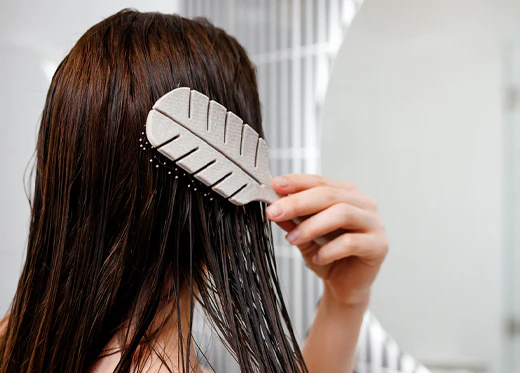
Sleeping with wet hair may seem harmless, but it can cause breakage, scalp irritation, fungal infections, and frizz. Here’s why drying your hair before bed matters.
Wet Hair Damage: For some individuals, alleviating tension after a long, exhausting day concludes with taking a bath prior to sleep. Many individuals bear the guilt of rushing through the nighttime routine and collapsing into bed with damp hair from the late shower. When their energy is depleted, they slumber with damp hair. Although it appears to be a simple, even self-indulgent, manner of resting with the pillow supporting the moist hair. Nonetheless, retiring to bed with moist hair can be detrimental to hair health.
The longer hair takes to dry from moisture, the more it will stretch and weaken, leading to breakage and split ends. The cuticles on the hair lift due to hydration, resulting in frizz and increased tangling. In addition to the risk of acquiring a cold from sleeping with wet hair, various other scalp-related issues may also develop. Here is what occurs when you consistently sleep with damp tresses.
Is Sleeping with Damp Hair Detrimental to Your Health
Fragility: Hair that is wet is more susceptible to damage than dried hair. There is persistent friction between the hair and the surface on which you rest. This could result in greater hair breakage than you might have anticipated.
Also read : 7th PTTA Asia Conference in Boracay Celebrates Filipino Martial Arts
Irritation: A distinction exists between moisture retention within the scalp and moisture accumulation on the surface layers of the scalp. Although the former is preferred, the latter is not. This moisture and perspiration trap may result in scalp irritation or dandruff.
Fungal Infection: Extended periods of slumber with damp hair may lead to an undesirable fungal infection of the scalp.
Tangled Affair: When hair is damp, it exhibits increased fragility and elasticity. This indicates that it can interweave with other strands of hair, resulting in the formation of tangles. You may also secure your hair in a loose plait to reduce tangles and minimize breakage. Ensure that the chamber in which you are sleeping is not excessively humid.
Retiring to bed with damp hair imperceptibly undermines the health of your hair, leading to breakage, fungal infections, and weakening. These may influence the shine and appearance of the hair. Therefore, sleeping with damp hair once or twice is acceptable; however, it should not become a regular practice.