
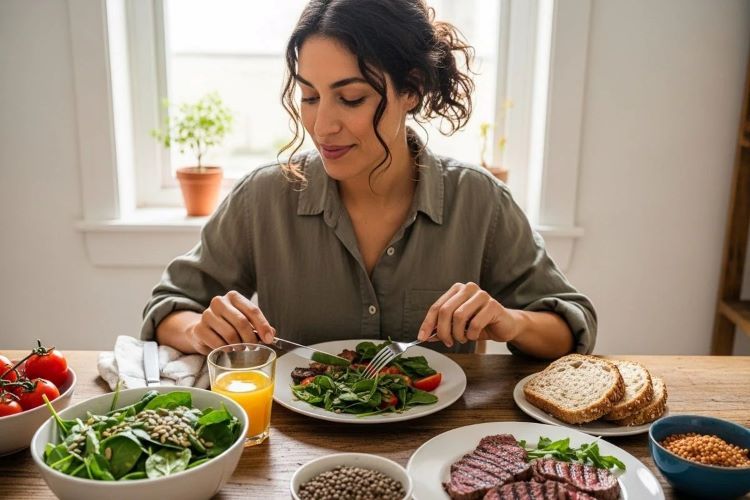
Beat iron deficiency naturally. Discover foods, vitamin C combos, and easy diet tips to restore energy and prevent anemia.
New Delhi : Iron deficiency is more than just fatigue from a long day at work; it’s your body subtly alerting you to a problem and waiting for you to pay attention. Dr. Joseph Salhab, a gastroenterologist in Florida who specializes in nutrition and digestion, recently posted an Instagram video explaining how diet can naturally treat anemia.
Iron deficiency, which is frequently misdiagnosed, manifests subtly as palpitations following mild activity, chronic pale complexion, and lightheadedness when standing. For many, a plate full of the correct meals serves as their first line of defense instead of a pill.
Why dietary iron is important
Although supplements are helpful, food is a much more effective way to absorb nutrients. According to Salhab, “beef, chicken, turkey, oysters, clams, mussels, and sardines” are the foods that contain the highest absorbable iron. The body absorbs these haem-iron sources more easily, making them perfect.
Non-haem iron sources are still acceptable for vegetarians; consider quinoa, spinach, kidney beans, lentils, chickpeas, and pumpkin seeds. But there’s a trick: to greatly increase absorption, combine them with meals high in vitamin C, such as oranges, berries, pineapple, or kiwis. Salhab explains, “Vitamin C also helps absorb the iron.”
Also read : Vinayak Chaturthi 2025: Puja Muhurat, Rituals & Lord Ganesha Blessings
Easy food changes that can alter your iron tale
To improve your iron status naturally, try these five wise substitutions:
- Replace manufactured breakfast cereal with pumpkin seeds, spinach, and fortified oats.
- Include a serving of lean meat or fish twice a week, if you consume such foods.
- At lunch, serve beans or tofu with a salad high in vitamin C or citrus fruits.
- As an iron boost, add sardines or shellfish (clams, mussels) once a week.
- Water should be had immediately after meals instead of tea or coffee, as these beverages may prevent the absorption of iron.
When to safely consult your physician
Changes in diet are helpful, but pay attention to the warning signs. It’s time for a checkup if you experience frequent shortness of breath, pale skin, or dizziness. To get the whole picture, your doctor may test for ferritin, hemoglobin, and iron-binding capacity. Anaemia can conceal more serious health problems, so don’t wait if you eliminate your food but still feel unwell.
Anaemia is your body’s way of saying, “Help me,” rather than merely “low iron.” Although it may seem easy, altering your diet could be the best thing you do for your health this year. Make your plate your companion. Allow your food to serve as medication.