
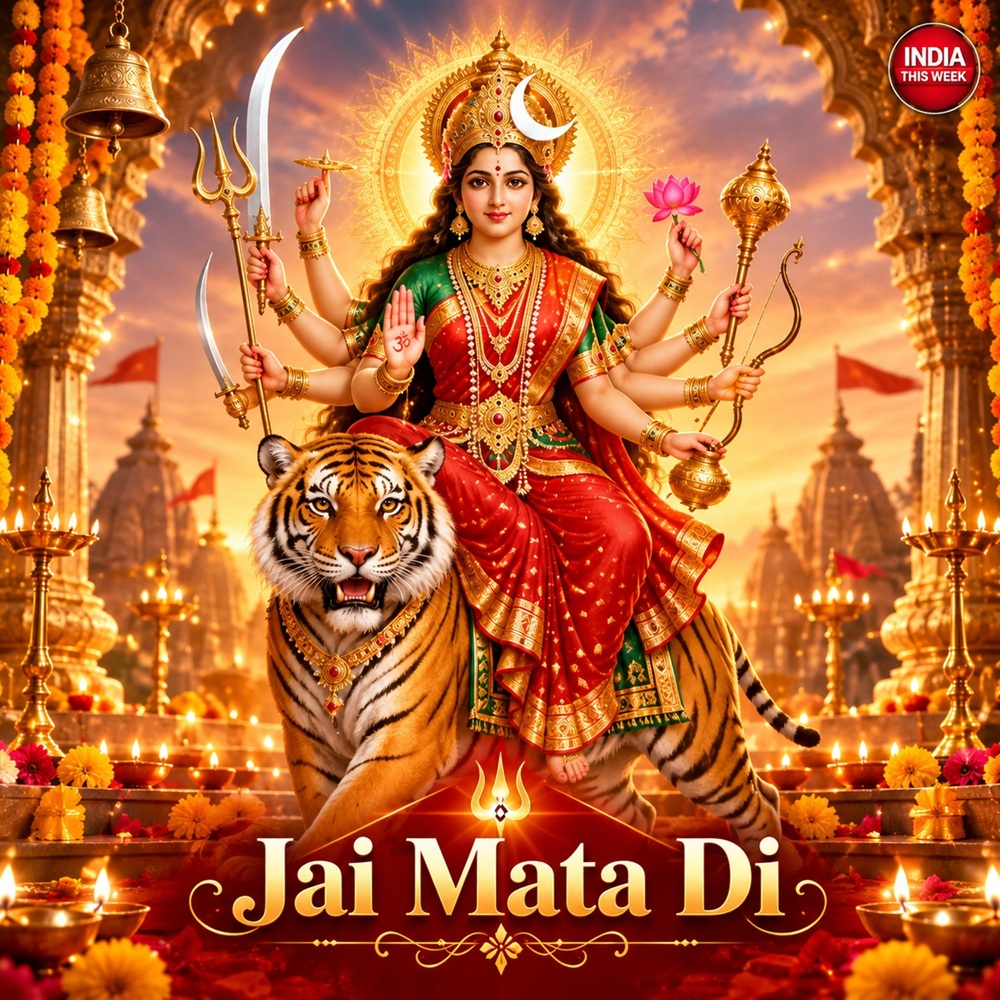
Nation Immersed in Devotion as Day 3 Worship Commences
The nationwide celebrations of Sharad Navratri 2026 reached peak spiritual enthusiasm across urban centers and rural heartlands as devotees observed the third day of the nine-night festival. Marking the worship of Maa Chandraghanta—the third avatar of Navadurga—temples, community grounds, and households witnessed heavy footfall and elaborate early-morning aarti ceremonies.
According to Vedic traditions, Maa Chandraghanta represents divine courage, peace, and protection, depicted with a crescent moon shaped like a bell on her forehead. Adhering to the popular daily color calendar, worshippers across the country wore red attire to symbolize strength and protective vitality during morning rituals and evening cultural gatherings.
Regional Festivities, Garba Operations, and Pandal Preparations
The ongoing Sharad Navratri 2026 festival has transformed public spaces into hubs of cultural expression. In Gujarat and Maharashtra, massive open-air venues hosted tens of thousands of dancers participating in traditional Garba and Dandiya-Raas routines that continued late into the night. Local administrations deployed extra security personnel and transport services to manage high night-time traffic.
Simultaneously, in West Bengal, Assam, and Odisha, artisan guilds finalized complex pandal structures housing handcrafted clay idols of Goddess Durga ahead of Maha Shashthi. Civic authorities across major metros issued safety advisories governing crowd management, electrical safety, and noise pollution standards to ensure smooth public celebrations.
| Serial No. | Regional Celebration Zone | Dominant Cultural Tradition | Key Festival Highlights |
| 1 | Western India (Gujarat/Maharashtra) | Night-Long Garba & Dandiya-Raas | Community Circle Dancing Around Sacred Lamps |
| 2 | Eastern India (Bengal/Assam/Odisha) | Art-Themed Durga Puja Pandals | Idol Installations & Traditional Dhak Drumming |
| 3 | Northern India (Delhi/UP/Punjab) | Akhand Jyot & Fasting Observances | Ramlila Stagings & Kanya Pujan Preparations |
| 4 | Southern India (TN/Karnataka/AP) | Golu Doll Displays & Temple Pujas | Elaborate Tiered Altar Decorations |
Calendar Overview: Ashtami, Navami Alignment and Dussehra Schedule
As Sharad Navratri 2026 progresses toward its second half, astrologers and Vedic scholars highlighted a rare lunar calendar alignment occurring this year. Due to overlapping lunar tithis, both Durga Ashtami (worship of Maa Mahagauri) and Maha Navami (worship of Maa Siddhidatri) fall on October 19 according to major Panchang schedules.
The festival will conclude with Vijayadashami (Dussehra) on Tuesday, October 20, marked by idol immersions (Visarjan) in water bodies and the traditional burning of Ravan effigies.
| Serial No. | Navratri Event / Observance | Assigned Gregorian Calendar Date | Spiritual Significance / Primary Ritual |
| 1 | Ghatasthapana / Navratri Day 1 | Sunday, October 11, 2026 | Invocation of Divine Energy & Kalash Setup |
| 2 | Navratri Day 3 (Current Day) | Tuesday, October 13, 2026 | Maa Chandraghanta Puja & Red Attire |
| 3 | Maha Shashthi | Friday, October 16, 2026 | Unveiling of Durga Puja Pandals & Idols |
| 4 | Durga Ashtami & Maha Navami | Monday, October 19, 2026 | Kanya Pujan, Sandhi Puja & Havan Rituals |
| 5 | Vijayadashami / Dussehra | Tuesday, October 20, 2026 | Idol Immersion & Ravan Dahan Celebrations |
Summary of Key Event Metrics and Festive Guidelines
The table below consolidates primary operational metrics governing the national celebration.
| Serial No. | Key Operational Metric | Official Status / Record | Community & Public Impact |
| 1 | Primary Focus Topic | Sharad Navratri 2026 | Nationwide nine-night festival |
| 2 | Current Observance Date | Day 3 (October 13, 2026) | Maa Chandraghanta Worship (Red Theme) |
| 3 | Peak Devotional Days | October 19 (Ashtami & Navami) | Mass Kanya Pujan & Fasting Breaks |
| 4 | Culmination Date | October 20, 2026 (Vijayadashami) | Dussehra Effigy Burning & Visarjan |