
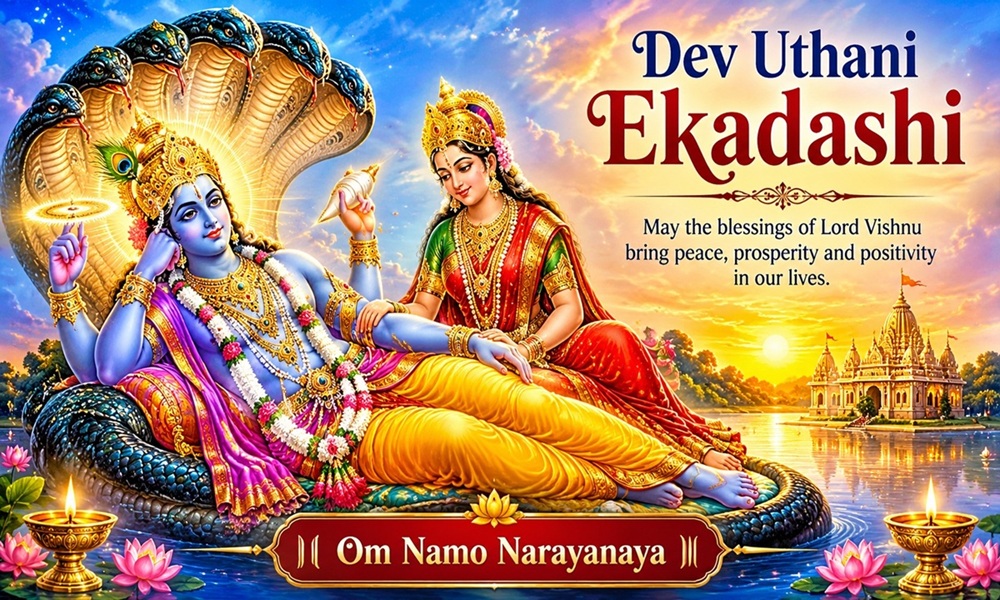
Sacred Festival Marks the Awakening of Lord Vishnu and End of Chaturmas
Observed with deep devotion across Indian households and temples today, Dev Uthani Ekadashi 2026 falls on Friday, November 20. Also revered as Prabodhini Ekadashi, Devutthana Ekadashi, and Kartiki Ekadashi, this auspicious occasion occurs on the eleventh lunar day (Ekadashi) of the bright fortnight (Shukla Paksha) in the Hindu month of Kartik.
According to sacred Vaishnava and Smarta traditions, Dev Uthani Ekadashi 2026 celebrates the divine awakening of Lord Vishnu from his four-month-long cosmic sleep known as Yoga Nidra.
Lord Vishnu enters this spiritual repose on Devshayani Ekadashi during the month of Ashadha, initiating the four-month monsoon period called Chaturmas.
With the Lord’s awakening today, Chaturmas formally concludes, reopening the auspicious calendar for Hindu weddings, housewarmings, sacred thread ceremonies, and new ventures.
Dev Uthani Ekadashi 2026 Tithi Timings, Shubh Muhurat, and Parana Schedule
The table below outlines official Panchang timings for New Delhi and northern India governing the fasting observance, auspicious prayer windows, and fast-breaking (Parana) schedule.
| Serial No. | Panchang Event / Muhurat | Official Date & Time (IST) | Religious & Observance Significance |
| 1 | Primary Smarta Vrat Date | Friday, November 20, 2026 | Observed by most households via Udaya Tithi. |
| 2 | Ekadashi Tithi Begins | 7:15 AM on November 20, 2026 | Marks start of sacred Kartik Shukla Ekadashi. |
| 3 | Ekadashi Tithi Ends | 6:31 AM on November 21, 2026 | Transitions into Dwadashi lunar phase. |
| 4 | Abhijit & Vijay Muhurat | 11:45 AM–12:28 PM & 1:53–2:35 PM | Best daytime windows for Vishnu worship. |
| 5 | Godhuli (Evening) Muhurat | 5:26 PM to 5:52 PM (Nov 20) | Ideal time for Deep Daan & waking rituals. |
| 6 | Smarta Vrat Parana Window | 1:11 PM to 3:18 PM (Nov 21) | Performed after Hari Vasara ends at 12:07 PM. |
| 7 | Vaishnava Vrat & Parana | Vrat Nov 21; Parana 6:49–8:56 AM (Nov 22) | Followed by specific Vaishnava temple sects. |
Religious Significance and Connection to Tulsi Vivah
Highlighting the spiritual depth of Dev Uthani Ekadashi 2026, scriptures such as the Padma Purana describe this day as one of the most meritorious fasts of the year. Devotees believe that observing a sincere fast and worshiping Lord Vishnu alongside Goddess Lakshmi washes away past sins and brings peace, prosperity, and spiritual clarity to families.
Additionally, Dev Uthani Ekadashi 2026 initiates the sacred festivities of Tulsi Vivah, the ceremonial wedding of Goddess Tulsi (holy basil) with Lord Shaligram, an aniconic representation of Lord Vishnu.
Many families construct a small mandap using fresh sugarcane stalks around the household Tulsi plant, adorning her in a red chunari and bangles while offering yellow garments to Lord Shaligram.
Performing Tulsi Vivah on Ekadashi or the following Dwadashi day symbolizes divine harmony and marks the traditional start of the Indian wedding season.
Sacred Vrat Katha: The Legend of Vrinda and Lord Vishnu
Reciting or listening to the traditional Vrat Katha remains an essential ritual during Dev Uthani Ekadashi 2026. According to ancient Puranic lore, a mighty demon king named Jalandhar once terrorized the heavens and earth, remaining invincible due to the unwavering chastity and devotion of his virtuous wife, Vrinda.
To protect cosmic order and restore peace, Lord Vishnu assumed Jalandhar’s form, thereby breaking Vrinda’s protective vow and enabling Lord Shiva to defeat the tyrant.
Upon discovering the deception, a grief-stricken Vrinda cursed Lord Vishnu to turn into stone before sacrificing herself.
Honoring her supreme devotion, Lord Vishnu transformed into the sacred Shaligram stone and blessed Vrinda to manifest as the holy Tulsi plant, promising that no offering to him would ever be accepted without Tulsi leaves and that he would wed her every Kartik Shukla Ekadashi.
Step-by-Step Puja Vidhi and Evening Awakening Rituals
Observing the sacred rituals of Dev Uthani Ekadashi 2026 begins before sunrise with a purifying bath and wearing clean yellow or light-colored garments. Devotees clean their home altar, sprinkle Gangajal, and take a solemn Sankalpa (vow) to observe either a waterless (Nirjala) fast or a fruit-and-milk (Phalahar) fast according to personal health.
During morning and afternoon prayers, worshipers bathe Lord Vishnu’s idol or Shaligram stone with water and Panchamrit, offering sandalwood paste, yellow flowers, fruits, and sweets accompanied by fresh Tulsi leaves.
Chanting sacred mantras such as Om Namo Bhagavate Vasudevaya and reciting the Vishnu Sahasranama elevates spiritual focus throughout the day.
In the evening during Godhuli Muhurat, families light ghee lamps (Deep Daan) around the courtyard and ring bells while blowing conch shells to joyfully welcome Lord Vishnu from his slumber.
Fasting Rules and Proper Parana Guidelines for Devotees
Completing the observance of Dev Uthani Ekadashi 2026 requires strict adherence to traditional dietary and Parana rules. Throughout Friday, fasting devotees avoid grains, rice, pulses, onions, garlic, and tamasic foods, while maintaining truthfulness, patience, and charitable generosity.
On Saturday, November 21, Smarta devotees must break their fast strictly during the prescribed Parana window between 1:11 PM and 3:18 PM, after the Hari Vasara period concludes at 12:07 PM.
Before consuming their first meal of sattvik food, devotees offer food, clothes, or financial donations to deserving recipients and priests to fulfill the spiritual merit of the vow.