
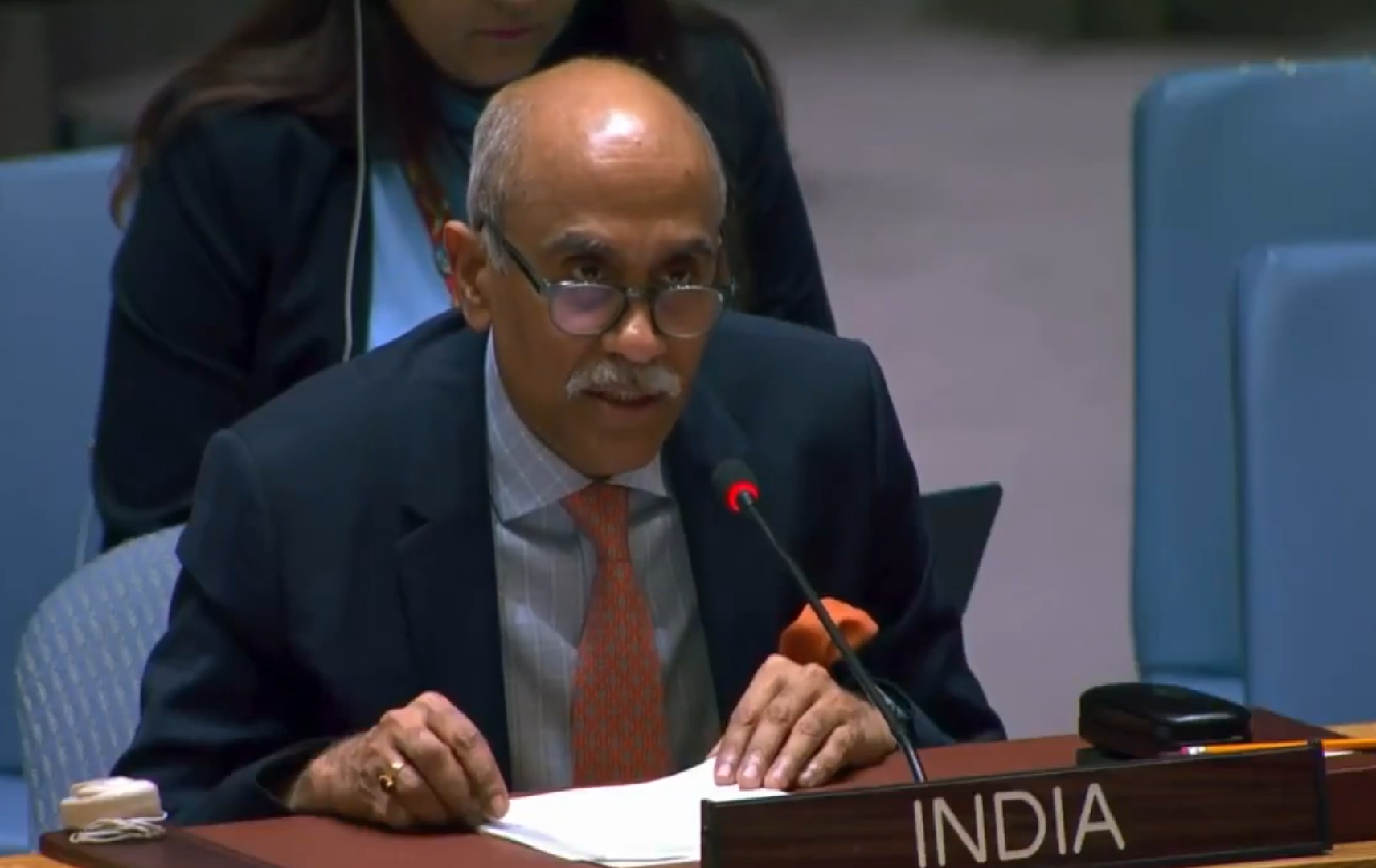
New Delhi Advocates Human-Centric Safeguards in Modern Warfare
Addressing a high-level United Nations Security Council debate in New York, the India AI conflict UN Security Council intervention called for strict human accountability in warfare. Speaking on behalf of India, Permanent Representative Ambassador Harish Parvathaneni emphasized that rapid technological advances are transforming modern conflict zones.
While artificial intelligence and autonomous systems offer analytical capabilities, India stressed that human judgment and meaningful human oversight must remain central to all military decisions.
Delegating life-and-death choices entirely to automated algorithms poses severe ethical, legal, and humanitarian risks.
Therefore, New Delhi urged member states to establish clear international norms ensuring human-centric control over emerging defense technologies.
India’s UN Security Council Position on AI and Emerging Tech in Conflicts
The table below outlines key diplomatic principles, security warnings, and multilateral governance proposals presented by India at the United Nations.
| Serial No. | Diplomatic / Security Pillar | India’s Official UNSC Position | Global Strategic Impact |
| 1 | Core Governance Principle | Human-Centric AI Approach | Keeps human judgment above algorithms. |
| 2 | Autonomous Weapons Stance | Strict Meaningful Oversight | Warns against unchecked lethal autonomy. |
| 3 | Counter-Terrorism Priority | Prevent Terrorist Tech Misuse | Blocks non-state access to drones & AI. |
| 4 | International Legal Compliance | Uphold Humanitarian Law | Demands accountability in conflict zones. |
| 5 | Diplomatic Representative | Ambassador Harish Parvathaneni | Delivered statement at UNSC debate. |
Warning Against Terrorist Misuse of Drones and Digital Tools
A central pillar of the India AI conflict UN Security Council address focused on counter-terrorism and non-state actors. Ambassador Parvathaneni warned that terrorist groups increasingly exploit low-cost commercial drones, encrypted networks, and artificial intelligence tools to execute cross-border attacks.
When hostile non-state networks acquire advanced autonomous capabilities, regional peace and civilian infrastructure face immediate danger.
Consequently, India called for stronger multilateral export controls, intelligence sharing, and technical cooperation to deny terrorists access to emerging weapons technologies.
Consistent with its long-standing counter-terrorism advocacy at the UN, New Delhi stressed that global security frameworks must evolve faster than illicit digital supply chains.
Balancing Technological Innovation with Global Peace and Stability
Throughout the India AI conflict UN Security Council debate, Indian diplomats balanced caution with constructive vision. India recognizes that responsible artificial intelligence can strengthen peacekeeping surveillance, disaster relief, and early-warning systems.
However, deploying autonomous weapon systems without transparent human command undermines international humanitarian law and increases the risk of accidental escalation.
Leading developing nations in advocating ethical technology governance, India continues bridging advanced tech innovation with responsible global stewardship.
Shaping International Norms for Responsible Defense Technology
As major powers accelerate military AI investments, the India AI conflict UN Security Council message resonates strongly across the Global South.
Ensuring that machines assist rather than replace human moral responsibility remains vital for preserving international peace in the coming decade.