
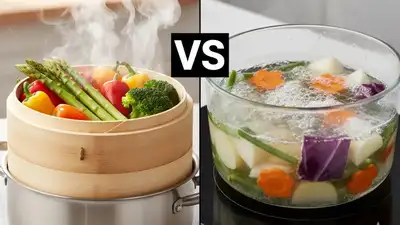
Steaming vs boiling vegetables — which cooking method keeps more nutrients, flavor, and color? Learn the science, health, and Ayurvedic insights here.
Vegetable Steaming vs. Boiling: The question of whether to steam or boil vegetables has long been a source of debate. People are unaware that this culinary conundrum can significantly alter the nutrients that veggies provide as well as their flavor and look. One approach keeps the vegetables light and fresh, while the other softens and comforts. While steaming cooks vegetables without coming into direct touch with water, boiling involves completely submerging them in water. Although steaming and boiling are both traditional cooking methods, many health-conscious chefs disagree on which method preserves more nutrients in vegetables that are good for your health.
The Effects of Steaming Vegetables
Steaming allows vegetables to cook slowly without coming into direct contact with the water, as the steam rises from the boiling water. In a steamer basket or colander, the vegetables are positioned above the liquid, and the steam uniformly softens them without sacrificing flavor. The majority of the nutrients are retained since they are not in direct contact with water, particularly the water-soluble vitamins like vitamin C and the B-complex group. This explains why steamed veggies frequently have a brighter appearance and a fresher flavor.
Additionally, the greens continue to be colorful; for example, the broccoli keeps its delightful crunch and the carrots deepen in color. Vegetables that are steamed retain their natural sweetness and develop a crisp, well-balanced flavor.
Also read : Rose Water for Glowing Skin: Benefits, Uses & Beauty Secrets
Additionally, you can add a pinch of herbs or a few drops of lemon juice to the boiling water. It adds no calories and mildly improves flavor and scent.

The Effects of Boiling Vegetables
Boiling is a straightforward and well-known cooking technique. In this one, though, the vegetables are cooked at 100 degrees Celsius until they are tender after being fully immersed in boiling water. It is quick, easy, and perfect for days when you have a lot of cooking to do or are multitasking. Numerous nutrients are lost into the water when using the boiling process. Only when the water is used in a curry, dal, or soup can the nutrients be preserved.
When veggies are boiled for an extended period of time, they frequently become softer and eventually turn mushy or tasteless. This occurs as a result of boiling the vegetable, which dissolves its cell walls and releases some of its inherent flavor. But for starchy veggies like potatoes, sweet potatoes, and beets, boiling works best since it makes them creamier and simpler to digest.
Because the leftover water is rich in nutrients, think again before throwing it away. For an added boost, use it to knead roti dough or to add to soups and curries.
Important Distinctions Between Steaming and Boiling for Vegetables
Cooking Method: In the steaming method, vegetables are cooked using steam, whereas in the boiling approach, they are immersed in water.
Retention of Nutrients: Steaming reduces the loss of certain vitamins. Vitamins are lost when the water is not used after they have dissolved in the boiling process.
Texture: When vegetables are boiled, they become soft and mushy, but when they are steamed, they remain firm, crisp, and colorful.
Flavor: Steaming preserves the vegetables’ natural, somewhat sweet flavors. When veggies are boiled, they grow softer and require seasoning.
Time and Ease: Compared to the booking approach, steaming takes a little longer and involves additional setup.
Steaming is more about caring, whereas boiling is more about convenience. Vegetables retain all of their natural nutrients when they are steamed.
Also read : Top Fall Drinks to Boost Immunity This Autumn
Which Method Preserves More Nutrients in Vegetables: Steaming or Boiling?
Although the rough fibers in vegetables are broken down by both cooking processes, steaming is more advantageous. It preserves the molecules that are good for digestion, particularly in cruciferous vegetables like broccoli, cauliflower, and cabbage. Boiling, however, may remove some of the nutrients.
Because steaming preserves prana, or life energy, in food, Ayurveda refers to it as a sattvic cooking technique. Food that has been steam-cooked feels fresher, lighter, and more invigorating.