
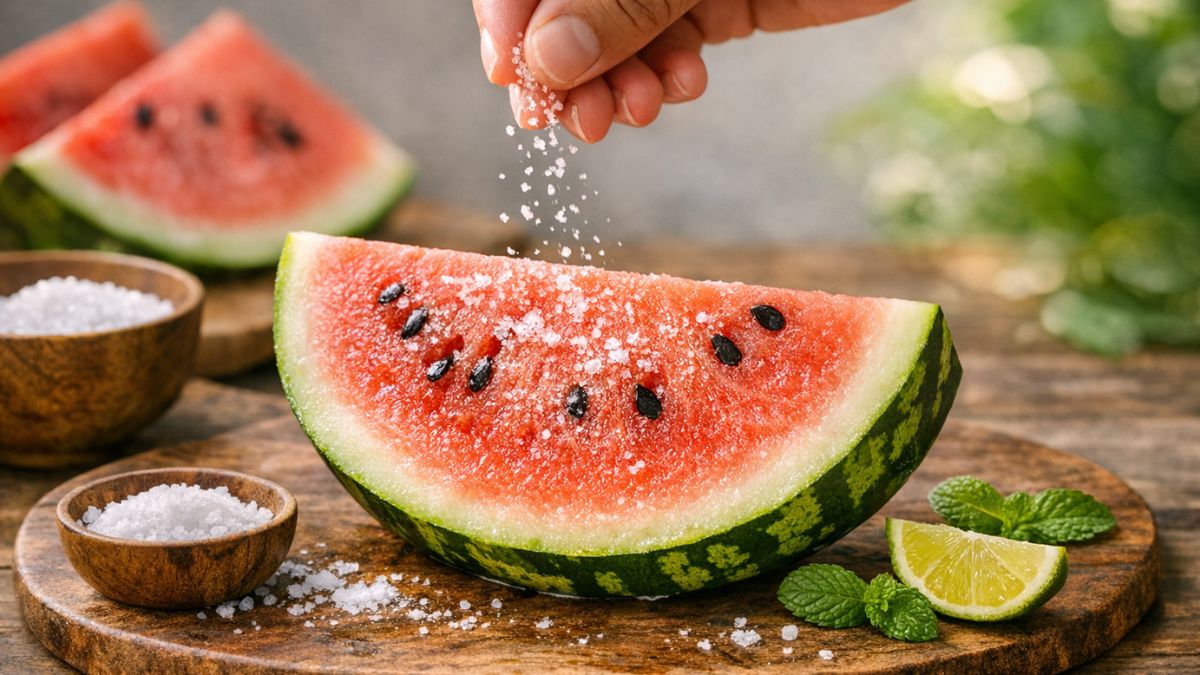
New Delhi: If you’ve ever had fruit chaat, you know the magic a pinch of black salt can bring. From watermelon to apples to guava, adding black salt elevates the flavor, giving fruits a tangy, savory twist. But beyond taste, there’s more to this age-old ingredient than meets the eye.
What Is Black Salt and Why It’s Added to Fruits
Black salt, also known as kala namak, is a mineral-rich rock salt processed with herbs and charcoal. This processing gives it its signature slightly tangy flavor and a strong sulfur-like aroma. While not everyone enjoys the smell, the flavor is widely appreciated, particularly in fruits and traditional drinks such as buttermilk, nimbu paani, or jaljeera.
A practical benefit of adding black salt to fruits is that it slows down the browning of cut fruits left out for a while. This keeps fruits looking fresh longer while enhancing flavor, making it a useful addition beyond its culinary appeal.
Black Salt with Fruits: What Research Says
Scientific studies have also looked at the benefits of combining black salt with fruits. Research published in Current Research in Complementary and Alternative Medicine indicates that black salt may improve nutrient absorption, or bioavailability, from the fruits you consume. The same study suggests that black salt helps reduce oxidation in fruits, which explains why fruits do not darken as quickly when sprinkled with it.
Read More : Chaitra Navratri Day 3: Devotees Worship Goddess Chandraghanta for Strength and Courage
Health Benefits of Adding Black Salt to Fruits
When used in moderation, black salt offers several health benefits:
- Aids Digestion: Stimulates bile production to help break down food efficiently.
- Reduces Bloating and Gas: Particularly after heavy meals, black salt can help ease discomfort.
- Balances Electrolytes: Makes it a common addition to summer drinks to maintain hydration.
- Lower Sodium Option: Compared to regular table salt, black salt has slightly lower sodium content, making it a relatively better option when used carefully.
Side Effects and Safe Consumption of Black Salt
While beneficial in moderation, black salt is still a salt, and overconsumption can lead to health issues. Intake above 3 grams per day may cause:
- Electrolyte imbalance, stressing kidneys and increasing urination.
- Stomach irritation or bloating.
- Elevated sodium levels, particularly risky for those with high blood pressure.
- Dental issues like fluorosis due to excess fluoride.
For healthy adults, the recommended safe range is 2–3 grams per day. It’s important to consider other high-sodium foods in your diet to avoid exceeding this limit.
Black Salt in India and the Social Media Trend
In India, fruits are an essential part of the diet, especially in hot weather. They hydrate and provide energy, and black salt often becomes the go-to add-on. However, social media trends promoting black salt as a detox solution have led some people to overuse it.
The key is moderation: a pinch or two is sufficient. Use black salt strategically, particularly in summer, rather than daily. Balancing use is more important than following trends.
In conclusion, black salt is more than just a flavor enhancer for fruits—it offers real health benefits when used wisely. By combining taste, tradition, and science, it remains a staple in Indian cuisine, proving that a little pinch can go a long way.