
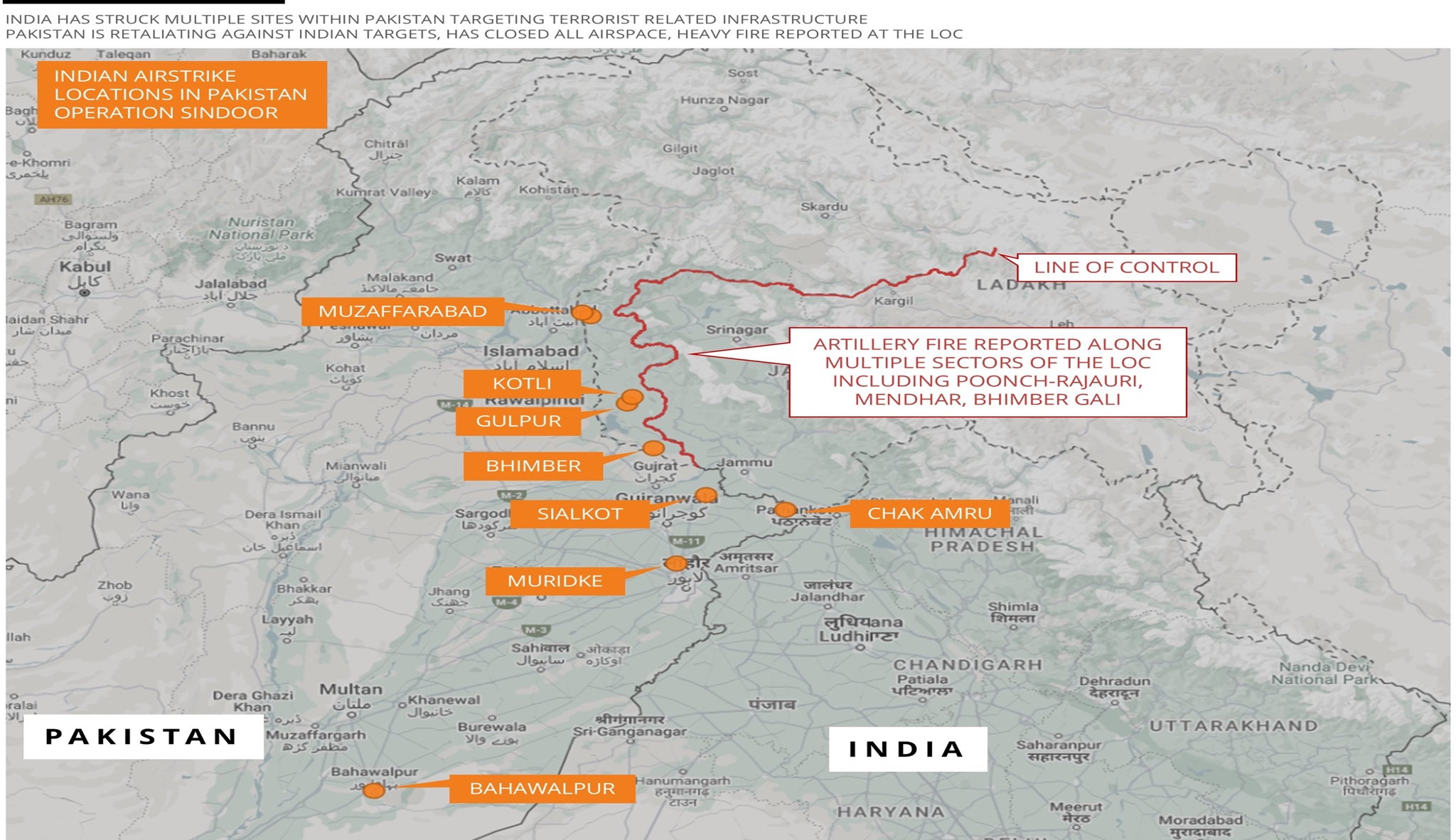
Why Bahawalpur, Kotli, and More Were Chosen in Operation Sindoor
In the early hours of May 7, 2025, India launched ‘Operation Sindoor,’ a coordinated military operation targeting nine terrorist infrastructure sites across Pakistan and Pakistan-Occupied Kashmir (PoK). This action was a direct response to the Pahalgam attack on April 22, which resulted in the deaths of 26 civilians, including 24 Hindu tourists. The operation aimed to dismantle key logistical, operational, and training infrastructure used by groups such as Jaish-e-Mohammed (JeM), Lashkar-e-Taiba (LeT), Hizbul Mujahideen, and other affiliated networks.
- Bahawalpur—Jaish-e-Mohammed Headquarters
Bahawalpur, located in southern Punjab, Pakistan, was one of the primary targets of Operation Sindoor. The city is widely known to be the headquarters of Jaish-e-Mohammed, the terrorist organization led by Masood Azhar. JeM has been linked to several high-profile attacks in India, including the 2001 Parliament attack and the 2019 Pulwama suicide bombing. Intelligence sources have confirmed that JeM intends to use Jamia Masjid Subhan Allah as its new location. The complex, spanning 16 acres, serves as a training facility, including water training and horseback riding, and is situated only eight kilometers away from Bahawalpur’s army cantonment, which houses 30,000 troops of the 31 Corps of the Pakistan Army.
- Muridke – Lashkar-e-Taiba Base and Training Ground
Approximately 40 kilometers north of Lahore, Muridke is the long-established nerve center of Lashkar-e-Taiba and its charitable wing, Jamaat-ud-Dawa. Spread over more than 200 acres, the Muridke facility includes training areas, indoctrination centers, and logistical support infrastructure. India accuses LeT of having orchestrated the 2008 Mumbai attacks, among others. The 26/11 attackers received their training here.
- Kotli – Bomber Training and Terror Launch Base
Kotli, located in Pakistan-Occupied Kashmir, has been flagged repeatedly by India as a major training ground for suicide bombers and insurgents. According to sources, the Kotli facility has the capacity to host over 50 trainees at any given time. The Pakistani army has established training camps in the Kotli area to instruct local residents in weapon usage. These camps are being used to recruit and groom young men as potential terrorists.
- Gulpur – Launchpad for Attacks in Rajouri and Poonch
Gulpur is believed to have been used repeatedly in 2023 and 2024 as a forward launchpad for operations into Jammu and Kashmir’s Rajouri and Poonch districts. According to sources, the site was used as a staging area for terrorists who carried out attacks on Indian security convoys and civilian targets in those regions.
- Sawai – LeT Camp Linked to Kashmir Valley Attacks
Sawai has been linked to attacks in northern Kashmir, particularly in Sonmarg, Gulmarg, and Pahalgam. The camp is believed to have been used for training and indoctrination of militants involved in these attacks.
- Sarjal and Barnala – Infiltration Routes
Located close to the International Border and the Line of Control, Sarjal and Barnala are considered gateway points for infiltration. These areas have been used by militants to cross into Indian territory and carry out attacks.
- Mehmoona – Hizbul Mujahideen Presence
The Mehmoona camp, located near Sialkot, was used by Hizbul Mujahideen, the terror group historically active in Kashmir. Though the group has seen a decline in recent years, Indian officials maintain that remnants continue to be trained and directed from across the border, particularly from areas like Mehmoona, where local support networks remain intact.
Conclusion
The precision strikes carried out during Operation Sindoor were aimed at dismantling the infrastructure of terrorist organizations operating from Pakistan and Pakistan-Occupied Kashmir. Each target was carefully selected based on its strategic importance and involvement in cross-border terrorism. While the operation was a response to the Pahalgam attack, it also served as a message to those supporting and harboring terrorist activities. The international community continues to monitor the situation closely, urging both India and Pakistan to pursue diplomatic avenues to prevent further escalation.