
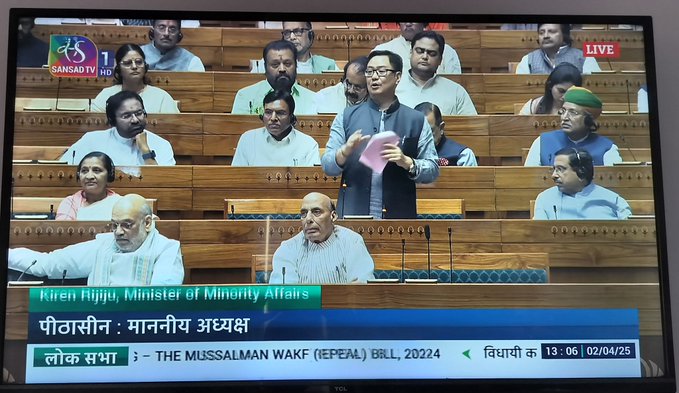
Watch Live: Kiren Rijiju Unveils Waqf Amendment Bill in Lok Sabha, Focusing on Transparency and Reform
Kiren Rijiju Unveils Waqf Amendment Bill in Lok Sabha to Streamline Property Management
New Delhi — In a significant move towards reforming the management of Waqf properties, Union Minister Kiren Rijiju presented the Waqf Amendment Bill in the Lok Sabha. The bill aims to address issues of inefficiency, lack of transparency, and arbitrary provisions within the existing framework. By removing outdated laws and introducing measures to enhance transparency, this proposed legislation seeks to streamline the governance of Waqf properties across the country.
हमने जो नया प्रावधान किया है, उसमें सभी अनावश्यक और मनमाने प्रावधानों को हटाया गया है। देश में पहले से मौजूद कानूनों को समाहित करते हुए, हमने कार्य प्रबंधन में पारदर्शिता को प्राथमिकता दी है : केंद्रीय मंत्री @KirenRijiju in LokSabha #WaqfAmendmentBill #WaqfBill #WaqfBoard pic.twitter.com/nmQfkXmqLG
— SansadTV (@sansad_tv) April 2, 2025
Kiren Rijiju emphasized the government’s commitment to creating a more transparent and accountable system of management for Waqf properties, which are held in trust for religious, educational, and social purposes. These reforms are expected to bring about more efficient utilization of Waqf assets, ensuring that they contribute to the welfare of the community and uphold their intended purpose.
Key Features of the Waqf Amendment Bill
The Waqf Amendment Bill is designed to overhaul the existing regulations surrounding Waqf properties. One of the most crucial aspects of the bill is the elimination of arbitrary provisions that have, in the past, led to mismanagement and corruption. By aligning with existing laws in the country, the bill seeks to create a harmonized legal framework for Waqf management.
Some key provisions of the bill include:
-
Removal of Unnecessary Provisions: Many clauses in the previous framework were seen as outdated and redundant. The bill aims to streamline these provisions to make the system more efficient.
-
Increased Transparency: One of the core objectives is to ensure greater transparency in the management of Waqf properties. The bill mandates the creation of detailed audit reports and the publication of financial statements for public access.
-
Establishment of an Oversight Mechanism: A new oversight body will be formed to monitor the proper utilization of Waqf properties and ensure that they are used in the best interests of the community.
-
Revocation of Arbitrary Powers: The amendment seeks to eliminate powers that were previously given to certain authorities without sufficient accountability. This change is expected to reduce corruption and bring more focus on the proper administration of these properties.
-
Digitization of Waqf Records: In line with the government’s push for digitalization, the bill also proposes the digitization of Waqf property records, ensuring better tracking, management, and transparency.
Importance of Reforming the Waqf Property System
The Waqf system has long been a cornerstone of religious and community welfare in India. However, the management of these properties has often been marred by issues of inefficiency, lack of accountability, and corruption. These challenges have hindered the full potential of Waqf assets to serve the communities they were intended to benefit.
By focusing on transparency and accountability, the Waqf Amendment Bill aims to restore public trust in the management of these properties. The bill also seeks to create a framework where Waqf institutions can thrive and contribute positively to society without facing bureaucratic hurdles or mismanagement.
The inclusion of digitization is another crucial aspect, as it allows for real-time access to records, making it easier for stakeholders to monitor and manage Waqf properties. This move aligns with the government’s broader vision of promoting digital governance and reducing paper-based corruption.
Kiren Rijiju’s Statement in Lok Sabha
During his address in the Lok Sabha, Kiren Rijiju stressed the importance of reforming the Waqf system to ensure that it remains relevant and effective in today’s context. He remarked that the government’s approach focuses on bringing greater efficiency in the management of Waqf properties, which are often valuable assets for the community.
“We have removed all unnecessary and arbitrary provisions that were a part of the old law. The reforms are aimed at making the Waqf management process transparent and effective,” Rijiju said. “The Waqf Amendment Bill is in line with our commitment to improving governance and empowering local communities to manage their resources more efficiently.”
Potential Impact of the Waqf Amendment Bill
If passed, the Waqf Amendment Bill is expected to have a transformative impact on the governance of Waqf properties across the country. By focusing on transparency and efficiency, the bill will ensure that these properties are better managed and utilized, leading to increased public trust in the system.
Furthermore, with the establishment of an oversight mechanism and the digitization of records, the Waqf properties will be subject to regular scrutiny, reducing the chances of misuse and corruption. The audit reports and financial statements will offer a clear picture of how Waqf resources are being used, empowering the public and stakeholders to hold authorities accountable.
In the long run, this reform is expected to optimize the use of Waqf properties, potentially leading to the development of infrastructure, schools, healthcare centers, and other community-oriented initiatives, in line with the intended goals of the Waqf system.
What’s Next for the Waqf Amendment Bill?
With the introduction of the bill in the Lok Sabha, the next step is a thorough review and discussion by lawmakers before it is put to a vote. If passed, the amendments will significantly alter the way Waqf properties are managed, making the process more transparent and accessible to the public.
The bill has generated significant interest, as many see it as a positive step towards greater accountability in the management of valuable religious and social assets. Experts and political observers are closely monitoring the progress of the bill, with expectations that it will set a precedent for future reforms in the governance of public and community assets in India.