
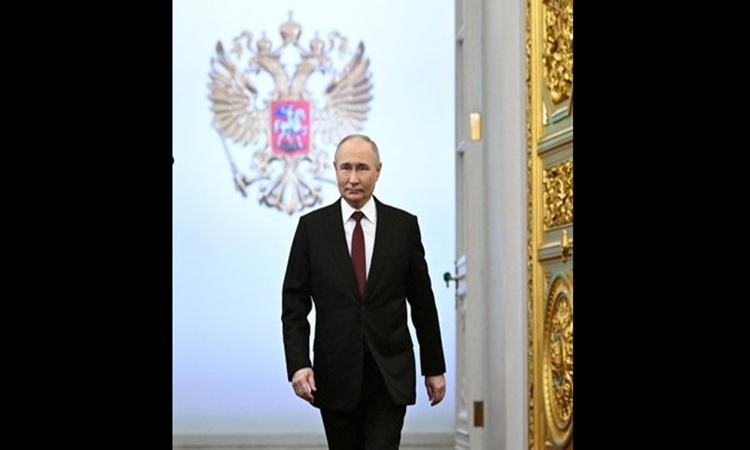
Delhi on Alert as Vladimir Putin Arrives for High-Stakes Visit
India is on high alert as Russian President Vladimir Putin lands in New Delhi on Tuesday evening for a two-day official visit. Authorities have deployed a multi-layered security grid across the national capital to ensure smooth movement and maximum protection during the trip.
Moreover, this is Putin’s most significant foreign visit since the International Criminal Court (ICC) issued an arrest warrant against him in March 2023. The development has drawn global attention, as the Russian leader continues international engagements despite intense geopolitical scrutiny.
Officials confirmed that key areas in Delhi, including diplomatic zones and major routes, remain under enhanced surveillance. Additionally, security agencies have increased coordination to assess any potential threat.
Why ICC Issued an Arrest Warrant Against Vladimir Putin
The ICC warrant, announced in March 2023, accuses President Putin of alleged involvement in the abduction of children from Ukraine during the ongoing Ukraine–Russia conflict. The ICC, headquartered in The Hague, issued the warrant under charges linked to war crimes.
Although the court was officially established in 2002, it now has 125 member states. Ukraine formally joined the ICC framework in January, which strengthened the court’s jurisdiction in the ongoing case.
The ICC’s mandate includes prosecution of genocide, war crimes, and crimes against humanity. However, many large powers remain outside its membership. This gap often raises debates on the court’s global reach and enforcement capacity.
Furthermore, the warrant has restricted Putin’s travel to ICC member nations, since those countries are legally obliged to detain individuals wanted by the court.
Why Putin Can Travel to India Without Legal Risk
Despite the warrant, Putin faces no arrest risk in India. The reason lies in New Delhi’s long-standing decision not to sign the Rome Statute, which established the ICC.
India chose not to join the treaty during the tenure of former Prime Minister Atal Bihari Vajpayee. The Indian delegation, led by Vasundhara Raje, flagged serious concerns during the negotiations. Moreover, India objected to the ICC’s authority over non-international armed conflicts and the absence of terrorism as a defined international crime within its jurisdiction.
New Delhi argued that such provisions could be misused and may infringe on national sovereignty. Therefore, India maintained its position and continues to stay outside the court’s membership.
Additionally, India follows a policy of strategic autonomy, making decisions based on national interest instead of external pressure. This principle allows India to engage with all countries, including Russia, without aligning with Western blocs.
India’s stance places it alongside major global powers like the United States, China, and Russia, which are also not ICC members.
Understanding the US Stand on ICC and Global Implications
The United States is also not a member of the ICC. Washington’s concern over ICC investigations has grown in recent years. Former President Donald Trump even imposed sanctions on the ICC’s then–chief prosecutor Karim Khan, accusing the court of unfairly targeting the US and Israel.
Moreover, the ICC recently issued arrest warrants for Israeli Prime Minister Benjamin Netanyahu and former Defence Minister Yoav Gallant over alleged war crimes in Gaza. The decision has further deepened the divide between the ICC and the US.
Trump also sanctioned Khan’s predecessor, Fatou Bensouda, during his first term in office. However, the Biden administration later lifted those sanctions. Although the US collaborates with the ICC on selective matters, it still resists giving the court binding authority.
This complex global landscape explains why Putin’s visit carries symbolic and diplomatic importance. While ICC member states face legal obligations, non-member states like India have more flexibility in hosting leaders wanted by the court.