
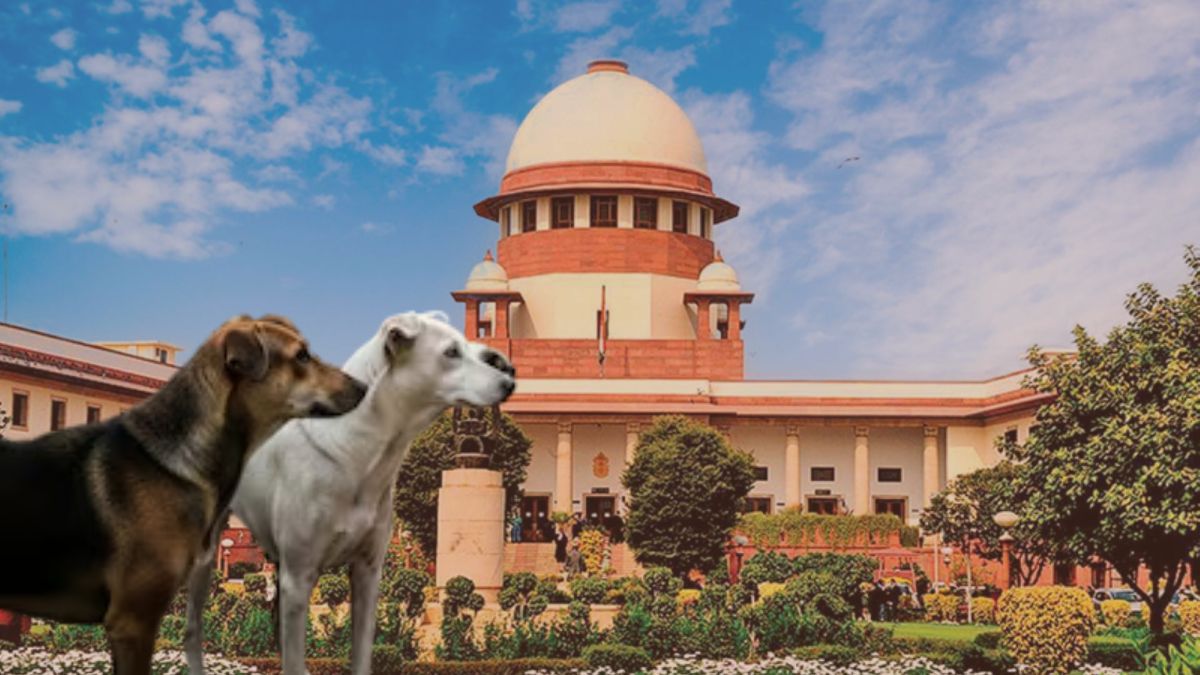
New Delhi ; The Supreme Court Stray Dogs Order has taken a strict turn as the apex court reiterated that the right to a dignified life under Article 21 also includes the right of citizens to move freely in public spaces without fear. The court has upheld its earlier directive to remove stray dogs from public premises across the country.
The Supreme Court Stray Dogs Order comes amid growing concerns over dog attacks, rabies cases, and public safety in urban and semi-urban areas. The court has also directed states and union territories to consider action against rabid and dangerous stray dogs.
Court Upholds Nationwide Removal of Stray Dogs from Public Spaces
As part of the Supreme Court Stray Dogs Order, the bench confirmed its previous directive issued on November 7, 2025, requiring the removal of stray dogs from educational institutions, hospitals, bus depots, railway stations, government offices, and sports complexes. Highways and expressways have also been directed to be cleared of stray cattle to prevent accidents.
The court stated that non-compliance with the Supreme Court Stray Dogs Order would be treated as contempt of court, and authorities failing to implement it could face legal consequences.
States Warned Over Non-Compliance and ABC Rules Implementation
The bench observed that failure by states to properly implement Animal Birth Control (ABC) Rules over the past two decades has worsened the situation. The Supreme Court Stray Dogs Order highlighted that proper enforcement earlier could have prevented the current crisis of increasing dog attacks and rabies cases.
The court also criticised state governments for negligence, stating that the situation has become “alarming” due to lack of action on animal population control measures.
Also read : Rahul Gandhi Slams PM Modi, Warns of “Economic Storm” in India
Supreme Court Stray Dogs Order Protects Officials From FIRs and Legal Harassment While Enforcing Directions
While issuing strict directions, the Supreme Court Stray Dogs Order also protected officials acting in compliance with the ruling. The court said that authorities carrying out their duties under the order should not face unnecessary FIRs or legal harassment.
Officials have been instructed to be allowed to perform their duties without interference, except in exceptional cases requiring judicial scrutiny.
Shelters, Vaccination, and Rabies Control Measures
According to the Supreme Court Stray Dogs Order, states will now be required to establish adequate shelter homes for stray dogs. Animals will be vaccinated and sterilised but will not be released back into public institutional areas.
Rabid and dangerous dogs may be euthanised under permissible legal frameworks. The court has also instructed agencies like NHAI to remove stray cattle from highways and relocate them to shelters or gaushalas.
Public Safety at the Centre of Supreme Court’s Ruling
The Supreme Court Stray Dogs Order underlined that public safety, especially for children, elderly citizens, and tourists, must be prioritised. The court noted rising incidents of dog bites and rabies-related deaths, calling the situation a serious public health concern requiring urgent nationwide action.