
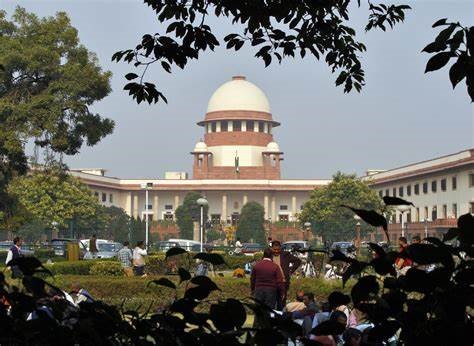
Supreme Court Slams Rahul Gandhi for Remarks on Savarkar During Bharat Jodo Yatra
New Delhi : In a significant development that has stirred political debate, the Supreme Court of India on Friday issued a strong rebuke to Congress leader Rahul Gandhi for his controversial comments on freedom fighter Vinayak Damodar Savarkar. The top court cautioned Gandhi to refrain from making disrespectful statements about national figures, emphasizing that historical contributions should be acknowledged with respect.
What Prompted the Rebuke?
The warning from the apex court stems from a defamation case filed over a speech Gandhi delivered on November 17, 2022, during his Bharat Jodo Yatra in Maharashtra’s Akola district. In the address, Gandhi allegedly made disparaging remarks about Savarkar, a revered figure in Indian history, particularly in Maharashtra, where he is widely respected.
Supreme Court’s Strong Words
During the hearing, a bench comprising Justice Dipankar Datta and Justice Manmohan expressed concern over Gandhi’s statements and questioned whether he was aware of the broader historical context.
“Does your client know Mahatma Gandhi also used ‘your faithful servant’ while addressing the Viceroy?” asked Justice Datta, directing the question at senior advocate AM Singhvi, who was representing Gandhi in court.
Justice Datta further remarked:
“Does your client know that his grandmother, when she was Prime Minister, also sent a letter praising the gentleman (Savarkar)? You don’t treat freedom fighters like this when you know the history.”
The bench urged Gandhi to understand the sensitivity of such remarks, especially about figures like Savarkar, who are “worshipped in Maharashtra.”
The Political and Legal Context
The rebuke comes amid heightened political activity, with the Congress party gearing up for the 2024 general elections. The BJP and its allies have often accused Rahul Gandhi of being disrespectful towards national icons associated with the Hindutva movement, of which Savarkar is a key historical figure.
Savarkar, known for his role in India’s freedom struggle and as a Hindutva ideologue, has always been a polarizing figure. While the right-wing hails him as a patriotic hero, sections of the Congress and the Left have often questioned his legacy, citing his mercy petitions to the British and ideological differences.
Historical Endorsements of Savarkar
In a move that surprised many observers, the Supreme Court referenced praise from both Mahatma Gandhi and Indira Gandhi for Savarkar, suggesting a more nuanced understanding of his legacy.
- Mahatma Gandhi reportedly used deferential language in his correspondence with the British, similar to that used by Savarkar in his mercy petitions—often cited critically by political opponents.
- Indira Gandhi, during her tenure as Prime Minister, reportedly praised Savarkar in formal communication, acknowledging his contributions to the freedom struggle.
These references were used by the court to highlight the complexity of history and urge Gandhi and other political figures to show restraint and responsibility in public discourse.
A Call for Responsible Speech
The court’s observations underscore the need for mature political dialogue, especially when referencing national icons. While freedom of expression remains a cornerstone of Indian democracy, the judiciary emphasized that freedom must be exercised with responsibility, especially by senior leaders and public representatives.
Justice Manmohan stated:
“You cannot make derogatory remarks and then hide behind freedom of speech. Leaders must be aware of the impact of their words.”
What’s Next?
The court did not issue any formal punishment but issued a stern warning to Rahul Gandhi to avoid further derogatory comments about Savarkar or other historical figures. The defamation case is still under consideration, and further hearings are expected in the coming weeks.
Conclusion
The Supreme Court’s rebuke of Rahul Gandhi serves as a reminder of the importance of historical sensitivity in political rhetoric. As the political climate heats up ahead of the elections, leaders are being called upon to uphold decorum and recognize the contributions of all freedom fighters—regardless of ideological leanings.