
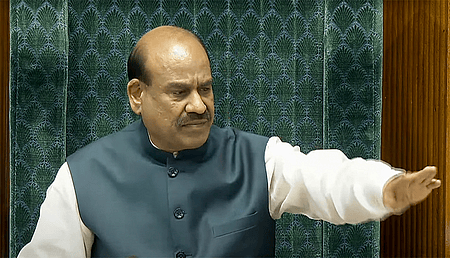
Speaker Om Birla Rebukes Sonia Gandhi Over “Bulldozer” Remark on Waqf Bill
New Delhi : A political storm brewed in India’s Lok Sabha on Friday after Lok Sabha Speaker Om Birla sternly reprimanded former Congress President Sonia Gandhi for her remarks regarding the controversial Waqf (Amendment) Bill. Gandhi had described the passing of the Bill as a “bulldozing” of parliamentary procedures, sparking an angry reaction from Birla, who asserted that her comments were an attack on the dignity of the House.
Gandhi’s comments, made during a meeting of the Congress Parliamentary Party (CPP) on Thursday, suggested that the Waqf Bill was rushed through the Lower House without proper debate. “Yesterday, the Waqf Bill was passed in the Lok Sabha. And today, it is scheduled to come up in the Rajya Sabha. The Bill was, in effect, bulldozed through,” Gandhi had said, further accusing the BJP government of using such measures to create permanent societal polarization.
The Congress leader also questioned the constitutionality of the Waqf (Amendment) Bill, calling it a direct assault on the Constitution and part of the BJP’s broader agenda. Gandhi’s remarks triggered an immediate response from Parliamentary Affairs Minister Kiren Rijiju, who raised the issue in the House, prompting Speaker Om Birla to issue a sharp rebuke.
Om Birla’s Stern Reprimand: A “Most Unfortunate” Statement
In his response, Om Birla expressed strong disapproval of Sonia Gandhi’s criticism of the parliamentary proceedings, particularly her use of the term “bulldozed.” The Speaker said, “It is highly unfortunate that despite the House sitting till late at night and passing the Bill after a long debate, a senior member is casting aspersions on the House proceedings. It is not appropriate.”
Birla went on to emphasize that the Bill had been debated for nearly 14 hours, with contributions from several members of various political parties, and passed in full accordance with parliamentary rules. He stressed that Gandhi’s remarks were an unwarranted attack on the integrity and dignity of the House, especially given the length of debate on the matter.
The Speaker’s response was met with surprise, as it marked an open confrontation between Sonia Gandhi, a senior leader of the Congress Party, and the Speaker, who is expected to maintain neutrality. Birla’s strong stance further fueled tensions between the BJP and the Congress, as both parties locked horns over the controversial Bill.
Congress Hits Back: “Parliament Becoming Modi’s Darbar”
The Congress Party quickly fired back at Birla’s reprimand. Congress Deputy Leader in the Lok Sabha Gaurav Gogoi accused the Speaker of being biased in favor of the ruling BJP and suggested that Parliament was becoming a “darbar” for Prime Minister Narendra Modi.
Speaking to the media, Gogoi stated, “It seems the House is slowly turning into Prime Minister Modi’s darbar.” His comments underscored the growing dissatisfaction among the Opposition over what they perceive as the government’s undue influence over parliamentary procedures.
Gogoi also highlighted the Congress Party’s disappointment with the Speaker’s handling of the situation. He noted that despite prior discussions with the Speaker’s office, there had been no improvement in how the government conducted its business in the House. “We had hoped to see a change after our meeting with the Speaker about how the government was turning Parliament into a darbar, but we are disappointed,” he added.
The Waqf Bill: A Point of Contention
The Waqf (Amendment) Bill, which aims to amend the Waqf Act of 1995, has been a point of contention in the current session of Parliament. The Bill seeks to improve the management of Waqf properties in India, but the Opposition, led by Congress, has strongly objected to it. They argue that the Bill grants excessive powers to the central government, particularly over the administration of Waqf properties, which are traditionally managed by religious bodies.
Sonia Gandhi and the Congress Party have argued that the Bill could undermine the secular fabric of India by concentrating control over Waqf properties in the hands of the government. Gandhi’s criticism of the BJP’s approach to the Bill is based on the belief that such legislation fosters polarization and undermines India’s constitutional guarantees of equality and secularism.
However, the BJP has defended the Bill, claiming it is necessary to streamline the administration of Waqf properties and curb corruption. The government has argued that the Bill is in line with its goal to modernize governance and bring transparency to the management of these assets.
The Larger Political Context
This incident is part of the ongoing political friction between the BJP and the Opposition, which has been escalating in recent months. The Congress Party has repeatedly accused the Modi government of stifling debate in Parliament and using its majority to push through critical legislation without adequate consultation or consideration.
In this case, the Waqf Bill is seen as emblematic of the broader political struggle between the BJP and the Congress. The confrontation between Sonia Gandhi and Om Birla has once again raised questions about the functioning of Parliament, the role of the Speaker, and the balance of power between the ruling government and the Opposition.
What’s Next for the Waqf Bill?
The Waqf Bill is now scheduled to be taken up in the Rajya Sabha, where the Opposition is likely to continue its efforts to block it. However, with the BJP’s majority in both Houses of Parliament, the Bill is expected to pass despite Opposition resistance.
As the debate on the Bill rages on, the political tensions in Parliament are expected to intensify, particularly as India approaches the 2024 general elections. The Congress Party has vowed to continue its opposition to the BJP-led government, and the conflict over the Waqf Bill is just one of many issues likely to dominate the political discourse in the coming months.