
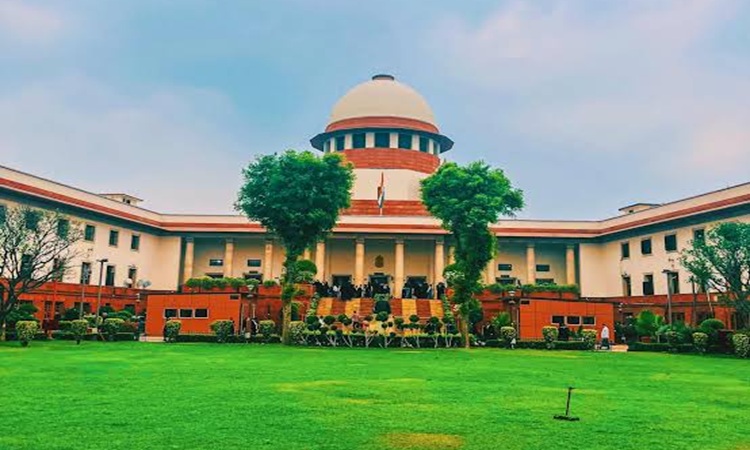
Supreme Court Reaffirms Authority of SIR Process
The Supreme Court of India has delivered a firm message to all state governments, stating that no authority can obstruct the SIR process electoral rolls, a key exercise aimed at ensuring voter list accuracy. The court made it clear that any administrative or political resistance to the process would not be tolerated.
While reinforcing this position, the court granted West Bengal a limited extension of one week to complete the Special Intensive Revision. The deadline, earlier fixed for mid-February, now stands extended to allow procedural compliance.
The observations came during hearings on a challenge filed by Mamata Banerjee, who questioned the manner in which the revision exercise was being carried out in the state. The case was heard by a bench led by Chief Justice of India Surya Kant along with Justices Joymalya Bagchi and Vipul M Pancholi.
The court clarified that it remains open to issuing further clarifications if required. However, it stressed that the continuity of the SIR process must remain unaffected across states.
Dispute Between State Government and Election Commission
At the core of the dispute lies the Election Commission’s decision to conduct a Special Intensive Revision of electoral rolls in West Bengal. The state government has raised concerns over alleged procedural irregularities and the deployment of thousands of micro-observers.
The Election Commission of India defended its actions, stating that it acted within its constitutional mandate to protect electoral integrity. The poll panel maintained that repeated requests for administrative cooperation did not receive timely responses from the state authorities.
During the proceedings, the court examined records showing that more than 8,500 officers were eventually offered by the state for the exercise. However, the bench questioned the delay in forwarding these details, noting that earlier compliance could have avoided the present dispute.
The court also reviewed communication timelines and found inconsistencies between the submissions of the two sides. While the Election Commission maintained that manpower details were not shared despite multiple reminders, the state government asserted that the required lists had been prepared and communicated.
This divergence reflects broader institutional friction between constitutional authorities and elected governments during sensitive electoral processes.
Also Read :Supreme Court Declines Bail for Kuldeep Singh Sengar in Unnao Custodial Death Case
Why the SIR Process Matters for Elections
The SIR process electoral rolls plays a crucial role in strengthening democracy by ensuring that voter lists remain accurate, updated, and free from duplication or wrongful inclusion. The exercise becomes especially significant ahead of major elections, where the credibility of the electoral process comes under heightened scrutiny.
The Supreme Court observed that obstructing such exercises risks undermining public confidence in democratic institutions. Therefore, it underlined the need for coordination rather than confrontation between states and the Election Commission.
Legal experts note that the court’s stance reinforces the constitutional independence of the poll body. At the same time, the limited deadline extension signals judicial sensitivity to administrative challenges faced by states.
As the SIR exercise continues in West Bengal, attention now shifts to whether cooperation improves on the ground. The court is expected to monitor compliance closely in the coming days.
The outcome of this case may also shape future interactions between state governments and the Election Commission during electoral roll revisions nationwide.