
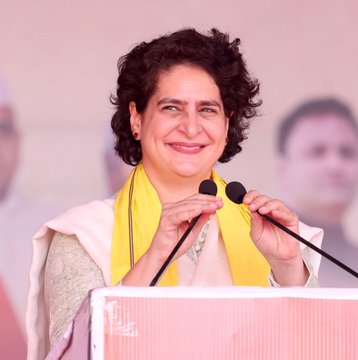
Samastha Kerala Criticizes Priyanka Vadra’s Absence in Waqf Bill Voting, Labels It a ‘Black Mark
Priyanka Vadra Criticized for Absence During Crucial Waqf Bill Voting: Samastha Kerala’s Strong Words
Priyanka Gandhi Vadra, the Member of Parliament (MP) from Wayanad, is facing strong criticism from the influential Samastha Kerala Jem-iyyathul Ulama, a prominent Muslim body in Kerala, following her absence during a critical vote on the Waqf Bill in the Lok Sabha. The editorial, published in the group’s mouthpiece, Suprabhatham, has labeled her absence a “black mark” on her political record, questioning her commitment to her duties as an elected representative.
The editorial, which has sparked intense debate across Kerala, criticized Priyanka Vadra for skipping the parliamentary session, particularly when a whip had been issued requiring MPs to be present. Samastha’s strong words have further fueled political discourse in the state, as the Waqf Bill has been a subject of significant attention in the recent Parliament session.
Samastha’s Editorial: A Direct Critique of Priyanka Vadra
The editorial in Suprabhatham did not hold back in its criticism, accusing Priyanka Vadra of violating parliamentary discipline. “By violating the whip and not attending the assembly, Priyanka has tainted herself,” the editorial read, suggesting that her absence was not only a personal failing but a blow to her political integrity. The critique went on to question her dedication to the issues under discussion in the Lok Sabha, especially those that concern the country’s minority communities.
Samastha’s criticism is significant given the organization’s influence among Kerala’s Muslim population, a major voting bloc in the state. The editorial pointed to her lack of involvement in the Waqf Bill debate as indicative of her seeming indifference to crucial issues facing minorities, particularly when the bill in question had garnered significant support across party lines.
The Waqf Bill and its Political Significance
The Waqf Bill, which seeks to address issues concerning the management of Waqf properties and strengthen their administration, has been a point of contention in recent legislative sessions. The bill was passed in both the Rajya Sabha and Lok Sabha, with 288 votes in favor and 232 against it in the latter. Despite the widespread political support, including backing from members of the Bharatiya Janata Party (BJP), Priyanka Vadra’s absence has raised eyebrows.
BJP MP Dinesh Sharma also pointed out the absence of Rahul Gandhi and other key members of the Gandhi family during the historic parliamentary discussions. “The parliament witnessed such a historic moment…Neither Rahul Gandhi, Priyanka Gandhi Vadra nor Sonia Gandhi spoke during the discussions. It was not known whether they were in favor or against it…Everyone knew that the bill was in the best interests of the minorities and leaders across party lines have voted in favor of the bill,” Sharma remarked in his comments.
The editorial’s suggestion that Priyanka Gandhi’s absence reflects a lack of seriousness and responsibility is especially poignant when considering the bill’s importance for minority communities, a demographic that has long been at the center of the Congress Party’s political agenda.
The Broader Implications of Priyanka Gandhi’s Absence
Samastha’s editorial is not just a criticism of Priyanka Gandhi but also reflects a broader dissatisfaction with the current state of Indian politics. The headline, “The Era of Inaction,” captures the organization’s sentiment toward the political leaders in the country who, according to them, are failing to fulfill their responsibilities when it matters most.
The editorial suggests that the leaders of today are increasingly disconnected from the issues that impact the common people, especially in a polarized political landscape. By questioning Priyanka Gandhi’s absence during such a crucial parliamentary moment, Samastha is calling attention to what it views as a lack of accountability among the political elite.
Impact on the Gandhi Family’s Political Image
Priyanka Gandhi’s absence is all the more significant considering her status as a prominent leader in the Congress Party. Her role as a key figure in Indian politics has often been associated with her commitment to upholding secularism, minority rights, and social justice—values that the Waqf Bill is meant to address. The critique from Samastha, along with comments from BJP leaders, adds fuel to the fire regarding the Gandhi family’s political commitment.
This incident also serves to highlight the growing dissatisfaction with the Congress Party’s performance, particularly in states like Kerala, where the party has historically had strong support. The growing frustration within Kerala’s Muslim community regarding the party’s perceived inaction in the face of important issues could have significant electoral consequences in future elections.
Conclusion: A Wake-Up Call for Priyanka Vadra?
The editorial in Suprabhatham has certainly struck a chord with political observers and voters alike. For Priyanka Gandhi, this public rebuke from a key Muslim organization in Kerala may serve as a wake-up call, urging her to reconsider her approach to her parliamentary duties and her engagement with the issues that matter to her constituents.
As the political climate in India continues to evolve, the coming months will likely reveal whether the criticism will have any lasting impact on Priyanka Vadra’s public image and whether it will shape the Congress Party’s strategy going forward, particularly in states like Kerala, where the Muslim vote plays a critical role.