
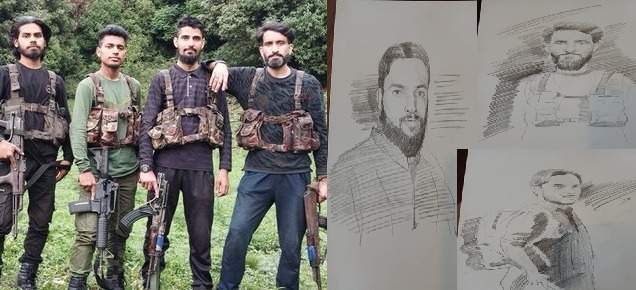
Photographs of Terrorists Behind Pahalgam Attack Released; Lashkar-e-Taiba Linked
In a significant development following the tragic terrorist attack in Pahalgam, Jammu and Kashmir, security agencies have released photographs of four individuals believed to be involved in the heinous act that claimed the lives of 26 tourists. The attack, which occurred yesterday, has sent shockwaves through the nation and prompted swift action from security forces and government officials.
Identified Terrorists Linked to Lashkar-e-Taiba
According to official sources, three of the four individuals have been identified as Asif Fauji, Suleman Shah, and Abu Talha. All three are reportedly linked to the Pakistan-based terror outfit Lashkar-e-Taiba (LeT), with at least two believed to be foreign nationals. The fourth individual remains unidentified.
The Resistance Front (TRF), a proxy group of Lashkar-e-Taiba, has claimed responsibility for the attack. In a statement released shortly after the incident, the TRF declared that the assault was a retaliatory measure against alleged Indian military operations in the region. However, experts suggest that the timing and scale of the attack indicate a well-coordinated plan aimed at destabilizing the region’s tourism industry and creating widespread fear.
Discovery of Photograph on Lashkar Commander’s Phone
In a breakthrough, security agencies discovered a photograph of the identified terrorists on the mobile phone of Lashkar-e-Taiba commander Junaid Ahmad Bhat. Bhat, who was killed in an encounter in Jammu and Kashmir’s Dachigam area in December, was a known figure in the region’s militant activities. The photograph, which surfaced during an investigation into Bhat’s network, has provided crucial leads in identifying the perpetrators of the Pahalgam attack.
According to the Kashmir Police, Bhat was involved in several civilian killings in Gagangir, Ganderbal, and other areas, making him a significant target for counterterrorism operations. The discovery of the photograph on his phone suggests that the identified terrorists may have been operating under his command or influence.
Government Response and Security Measures
In response to the attack, Union Home Minister Amit Shah has rushed to Kashmir to review the situation. During his visit, he met with Lieutenant Governor Manoj Sinha and Chief Minister Omar Abdullah to discuss the security situation and the ongoing investigation. The government has pledged to take all necessary measures to ensure the safety of tourists and residents in the region.
Security forces have intensified operations in Pahalgam and surrounding areas, with additional personnel deployed to track down the remaining terrorists and dismantle their networks. Authorities are also coordinating with intelligence agencies to gather information on the whereabouts of the unidentified fourth individual and any other associates linked to the attack.
Impact on Tourism and Local Economy
The attack has had a profound impact on the local economy, particularly the tourism sector, which is a significant source of income for the region. Local businesses, including hotels, restaurants, and handicraft shops, have reported a sharp decline in visitors following the incident. Tourism officials are working closely with security agencies to reassure potential visitors and restore confidence in the region’s safety.
Experts believe that the attack underscores the persistent threat posed by militant groups in Jammu and Kashmir and the need for continued vigilance and counterterrorism efforts. While the immediate focus remains on apprehending the terrorists involved, long-term strategies will be essential to address the root causes of militancy and promote peace and stability in the region.