
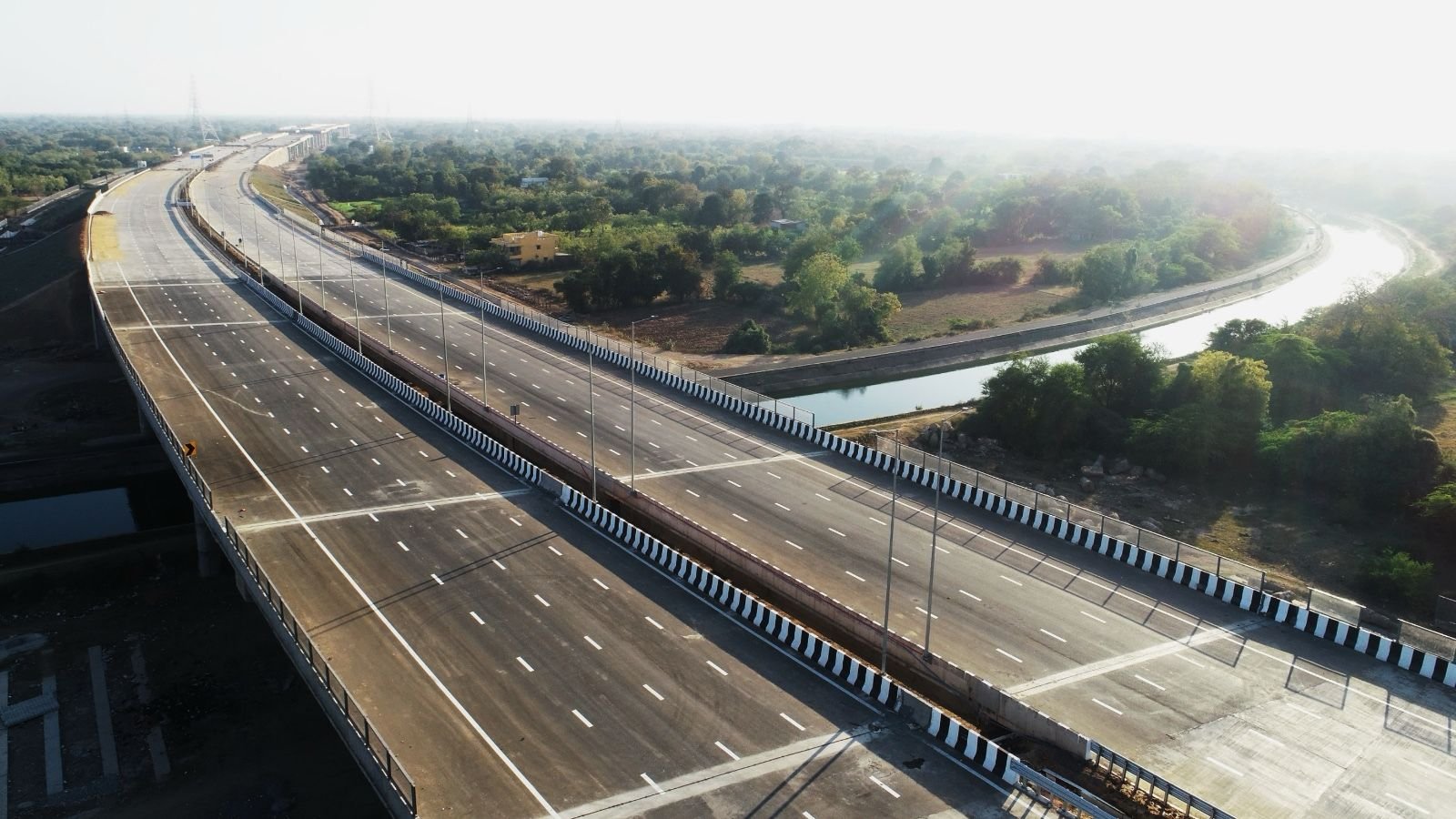
Only 20 Km Mumbai-Delhi Expressway in 8 Months; Slow Construction Progress Amid Delays
Mumbai-Delhi Expressway Faces Delays Despite 82% Construction Completion
The ambitious Mumbai-Delhi Expressway, which promises to halve the travel time between India’s two largest cities, continues to grapple with delays, despite significant progress in construction. According to the latest data from the Ministry of Road Transport and Highways (MoRTH), as of February 2025, 1,156 km of the 1,386 km expressway has been completed across several states. However, only 756 km of the expressway is fully operational, with ongoing challenges threatening to delay the project further.
The Current Status of the Mumbai-Delhi Expressway
The Mumbai-Delhi Expressway, touted to be the longest expressway in India once completed, is being developed with the promise of reducing travel time between the two cities from nearly 24 hours to just 12. Currently, NH-48, the existing route, spans 1,440 km and suffers from congestion, making it a less efficient route for travelers. The new expressway, designed with an 8-lane configuration and provisions to expand to 12 lanes in the future, is expected to significantly ease traffic flow and cut down travel times.
However, despite an initial report indicating that 82% of the construction work had been completed by June 2024, recent updates from MoRTH reveal that the pace of construction has slowed. Between June 2024 and February 2025, only 20 km of the expressway was constructed, which has raised concerns over the timely completion of the project.
Reasons Behind the Delays
The delays in the Mumbai-Delhi Expressway are primarily due to a mix of contractor slowdowns, land acquisition issues, and unforeseen challenges such as force majeure events. These factors have contributed to the delay in meeting the expected timelines for some of the critical segments, especially the stretch of the expressway between Surat and the Gujarat-Maharashtra border, which has experienced setbacks on five key packages.
In response to these concerns, MoRTH has assured the Rajya Sabha that all necessary steps are being taken to ensure the timely completion of the remaining sections of the expressway. However, as of now, the final cost and the exact completion date of the project remain uncertain, with the scheduled completion date now pushed to October 2025.
Economic and Strategic Importance of the Project
The Mumbai-Delhi Expressway is not just a crucial infrastructure project; it also holds immense economic significance. The expressway passes through important states like Haryana, Rajasthan, Madhya Pradesh, Gujarat, and Maharashtra, enhancing connectivity between multiple regions of the country. This will promote trade, facilitate regional economic growth, and improve transportation efficiency across these states.
In addition to economic benefits, the expressway will play a significant role in national security by ensuring better mobility of goods and services between Delhi and Mumbai, two of India’s most important commercial hubs.
The Future of the Expressway
Once completed, the expressway will not only cut down the travel time between Delhi and Mumbai to 12 hours but will also shorten the distance between the two cities. This development comes at a time when India is pushing for better connectivity to foster economic integration within the region and with neighboring countries.
The expressway will provide travelers with a smooth, faster alternative to the congested NH-48, making the journey much more convenient for both commercial and personal travelers. The expressway will also support higher-speed travel, with a design speed of 120 km/h, making it an ideal route for long-distance commuters and freight movement.
A Challenge for India’s Infrastructure Ambitions
The construction delays on the Mumbai-Delhi Expressway are a reminder of the challenges India faces in realizing its ambitious infrastructure goals. Large-scale projects of this magnitude often encounter delays due to factors beyond the government’s control, such as environmental clearances, land acquisition issues, and delays in contractor performance. However, MoRTH has emphasized its commitment to overcoming these challenges and ensuring the completion of the expressway by 2025.
In the meantime, the partial opening of the Mumbai-Delhi Expressway has already set a record, surpassing all existing expressways in the country, with more stretches of the highway expected to open soon.
Conclusion: A Step Toward Transforming Indian Infrastructure
The Mumbai-Delhi Expressway is more than just a road project; it represents a significant leap forward in India’s efforts to transform its infrastructure and improve connectivity across the country. While the project has faced delays, the overall progress made so far suggests that the expressway will indeed be a game-changer once completed. With its vast potential to reduce travel time, improve trade, and enhance security, the Mumbai-Delhi Expressway is an essential part of India’s growing infrastructure network.